Welcome, Guest

Sign in to learn, create, and do more with the product you love.

News & Updates

Filters:
Tag
high-speed printed circuit board
Blog
Guide to Low-Dk PCB Materials

If you’ve taken time to learn about PCB material options and layer constructions, you have probably seen the wide range of materials that are available on the market. Materials companies produce laminates with varying Dk values, Tg values, weave styles, CTI values, and mechanical properties to target various applications in the electronics industry.

printed circuit board, photo by the author
On-Demand Webinar
Learn to Collaborate Like a Pro with Altium Designer 23

Get ready to speed up your design process with new Altium Designer collaboration capabilities. Designing a PCB is a team effort. Engineers must work with customers, manufacturers, and other stakeholders to get the best results. You need help to bring your design to life, even if you're a one-person team.

freeway in the background of the city
Blog
Designing for V2X Communication: Wireless Protocols and Standards

If you’re waiting for truly connected cars on a grand scale, there is still a massive amount of work to be done, both on the hardware and software sides. Connected cars can only become a widespread reality once the automotive industry and telecom carriers can decide which protocol will work best for vehicle-to-everything (V2X) communication. PCB designers will then need to step in to create these systems and fit them into a vehicular environment.

Embedded thumbnail for Create and Snap to a Circular Grid (Polar Grid)
How to use Snapping
Create and Snap to a Circular Grid (Polar Grid)

Instructional on how to create polar grids, how to snap to them, and why you might want to use them.

Embedded thumbnail for How to Connect Polygons to Nets
Working with Polygons
How to Connect Polygons to Nets

This video covers how to easily connect a polygon to a net using just two clicks. With the Properties panel open and a polygon selected, click the "Assign net" button in the Properties panel.

Embedded thumbnail for Altium 365 Getting Started: Gerber Compare
Getting Started with A365
Altium 365 Getting Started: Gerber Compare

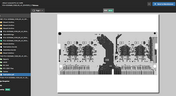
The task of comparing different versions of manufacturing files usually arises when the electrical engineer needs to check and confirm the manufacturer's edits or clarify details of changes before starting production. In Altium 365 you can perform an automatic comparison of Gerber files. 

Embedded thumbnail for Altium 365 Getting Started: Migrate to Altium 365 from other VCS
Getting Started with A365
Altium 365 Getting Started: Migrate to Altium 365 from other VCS

The development of electronic devices always involves the release of many different types of files. And these files are not static - they change as the project progresses. Traditionally, one way to manage data is to use a version control system such as Git or SVN. Unlike other VCSs, Altium 365 is the system designed specifically for managing project data.

Everything You Need to Know About Stitching Vias
Blog
Everything You Need to Know About Stitching Vias

This one area of PCB design can be contentious among some designers as it is related to copper pour, which it is often stated is not needed in most designs. Regardless of your feelings about copper pour, stitching vias have important uses in PCBs at low frequencies and at high frequencies.

Embedded thumbnail for How to get a BOM for a Multi-board Design
How-To's
How to get a BOM for a Multi-board Design

When designing a multi-board project, an up-to-date and accurate BOM for the entire device is a necessity. Watch this video to learn how to properly create a BOM for your multi-board project.

Embedded thumbnail for Remove Unused Pad Shapes
Working with Polygons
Remove Unused Pad Shapes

Unused pad shapes create holes in your copper geometries. You can quickly examine all pads in the design to remove unused pad shapes and restore previously removed pads. 

Embedded thumbnail for Effective use of "Objects for snapping" when creating a Footprint
How to use Snapping
Effective use of "Objects for snapping" when creating a Footprint

Learn how to effectively use snaps that allow you to create a component footprint quickly and conveniently

All About Box Build Assemblies
Blog
All About Box Build Assemblies

When you’re ready to manufacture a new device at production volume, there are many aspects of the product that must come together. The enclosure, cabling and connectors, embedded software/firmware, and of course the PCBA all have to be considered in totality. There is a quick way to get your product into a usable enclosure, complete with input power and cabling, and with a form factor that fits your PCBA. This overused route to a new product is a box build assembly. 

The Best Way to Review Your PCB Designs
On-Demand Webinar
The Best Way to Review Your PCB Designs

It is essential to ask questions and review the design approaches used with your team. Design reviews are essential in the design process, but they can be inconvenient for team members and lack traceability or history. To create the best designs, you need review methods that are as cutting edge as the boards you're making.

Ultra-HDI Technology is Not New
Blog
Ultra-HDI Technology is Not New

Printed circuit board fabricators have become skilled at manufacturing these technologies and also at understanding the reliability and producibility challenges associated with high-density-interconnect technology. Let’s look at where the PCB industry is at today. 

Embedded thumbnail for How to Control Routing in Altium Designer
How-To's
How to Control Routing in Altium Designer

The routing functionality in Altium Designer is constantly evolving. Check out this video to learn the basics of routing in Altium Designer. 

Embedded thumbnail for Polygon Creation
Working with Polygons
Polygon Creation

Learn how to create polygon pours to ensure proper copper distribution on your board.

Today's PCB Designers Are Driving Electronics Product Design
Blog
Today's PCB Designers Are Driving Electronics Product Design

What can the industry do to support PCB designers as they continue taking a more active role in product development? Here at Altium, there has been a progressive shift towards looking at the system level and creating tools that get designers more involved throughout the product development process. As the saying goes, over the wall engineering is over… today’s most successful products are built in a collaborative process.

Embedded thumbnail for Creating Guide Lines and Snap Points
How to use Snapping
Creating Guide Lines and Snap Points

Explanation of guides and snap points and how to create and use them.

Phased Array Antenna Design for 5G Applications
Blog
Phased Array Antenna Design for 5G Applications

As the 5G rollout progresses and researchers continue to discuss 6G, many new 5G-capable products operating in sub-GHz and mmWave bands are reaching the marketplace. Devices that will include a 5G-compatible front-end, whether small stations/repeaters or handheld devices, use phased arrays as high-gain antenna systems to provide high data throughput without losing range at higher frequencies.

Tag
PCB DFM Check
Blog
Getting Through a PCB DFM Check

In this article, we’ll discuss the key design features to implement, and steps to take prior to fabrication that will help prevent some common DFM problems. I’ll also provide examples of where I commonly see these PCB DFM problems in signal integrity circuits.

Spreading Inductance
Blog
What is Spreading Inductance?

If you’re working with a high-speed digital component, there are some simple power integrity rules that should be followed. However, there is one quantity that is sometimes ignored when building a PDN impedance simulation: the spreading inductance of your plane pair. Here are some points designers should know about the spreading inductance of a plane pair.

PCB Design Basics for New Designers
Blog
PCB Design Basics for New Designers

In this article, I’ll present some design basics that every new designer should follow to help ensure their design process is successful. Some of these points may challenge the conventional view of how circuit boards are constructed, but they are intended to help balance low noise signaling, manufacturability, and ease of solving a layout.

Selecting Materials for High Voltage PCB Design and Layout
Blog
Selecting Materials for High Voltage PCB Design and Layout

High voltage PCBs are subject to certain safety and reliability concerns that you won’t find in most other boards. If your fabrication house specializes in high voltage PCBs and keeps materials in stock, they can likely recommend a material set, as well as a standard stackup you might use for certain voltage ranges and frequencies. If you need to choose your own materials, follow the tips below to help you narrow down to the right material set.

Via tenting in PCB Layout
Blog
When to Use Tented Vias in Your PCB Layout

There are some guidelines I see many designers implement as a standard practice, often without thinking about it. Some of these practices are misunderstood or implemented without best practices. Others are implemented without thinking about the potential problems. One of these is the use of tented vias, which is sometimes implemented in a PCB layout by default. Is this always the right practice?

Capacitive load termination
Blog
How to Impedance Match and Terminate Capacitive Loads

The idea of a purely capacitive load is something of a fallacy. Yes, capacitors exist, but all capacitors are non-ideal, and it is this deviation from a theoretical capacitance that determines how to impedance match a load that exhibits capacitive behavior. Let’s take a look at this important aspect of interconnect design and see what it really means to terminate a capacitive load.

Using Altium 365 Over Your Vanilla Version Control System
Blog
Using Altium 365 Over Your Vanilla Version Control System

There are all sorts of version control systems out there that people have been using with their PCB design software. As discussed in Why Use a Version Control System, we looked at different options ranging for local hard drive storage to sophisticated online revisioning systems. In this article we will be reviewing the differences between a standard VCS and Altium 365.

Why Use a Version Control System in PCB Design
Blog
Why Use a Version Control System in PCB Design

Version Control Systems (VCS) have been around for many decades within the software world but can be surprisingly new to some folks in the electronics design industry. This article will cover what a VCS is, what it does, and why you should be using one for your PCB design projects.

IPC 6012 Class 3 Annular Ring
Blog
Meeting Standards: IPC 6012 Class 3 Annular Ring

Designers often conflate leftover annular ring and pad sizes - they need to place a sufficiently large pad size on the surface layer to ensure that the annular ring that is leftover during fabrication will be large enough. As long as the annular ring is sufficiently large, the drill hit will not be considered defective and the board will have passed inspection. In this article, I'll discuss the limits on IPC-6012 Class 3 annular rings as these are a standard fabrication requirement for high-reliability rigid PCBs.

PCB fabrication notes
Blog
Decoding PCB Fabrication Notes

Sending a board out for fabrication is an exciting and nerve-wracking moment. Why not just give your fabricator your design files and let them figure it out? There are a few reasons for this, but it means the responsibility comes back to you as the designer to produce manufacturing files and documentation for your PCB. It’s actually quite simple if you have the right design tools. We’ll look at how you can do this inside your PCB layout and how this will help you quickly generate data for your manufacturer.

HDI PCB design and HDI PCB manufacturing process
Blog
Design Basics for HDI and the HDI PCB Manufacturing Process

As the world of technology has evolved, so has the need to pack more capabilities into smaller packages. PCBs designed using high-density interconnect techniques tend to be smaller as more components are packed in a smaller space. An HDI PCB uses blind, buried, and micro vias, vias in pads, and very thin traces to pack more components into a smaller area. We’ll show you the design basics for HDI and how Altium Designer® can help you create a powerful HDI PCB.

All About PCB Test Points
Blog
Is It Printed or a Component? All About PCB Test Points

Test points in your electronic assembly will give you a location to access components and take important measurements to verify functionality. If you’ve never used a test point or you’re not sure if you need test points, keep reading to see what options you have for test point usage in your PCB layout.

How to Design to a Differential Impedance Specification
Blog
How to Design to a Differential Impedance Specification

The concept and implementation of differential impedance are both sometimes misunderstood. In addition, the design of a channel to reach a specific differential impedance is often done in a haphazard way. The very concept of differential impedance is something of a mathematical construct that doesn’t fully capture the behavior of each signal in a differential trace. Keep reading to see a bit more depth on how to design to a differential impedance spec and exactly what it means for your design.

Product Lifecycle Management in Electronics Manufacturing
Blog
Product Lifecycle Management in Electronics Manufacturing

An effective product lifecycle management (PLM) solution will integrate the tools and processes employed to design, develop and manufacture a new device. This solution goes beyond engineering activities to include the project management, process control, and financial management of the end-to-end business processes. PLM solutions create this collaborative environment where product development can flourish, bringing additional benefits in efficiencies and transparent communications, breaking silos, and speeding up the development process.

Tight versus loose coupling
Blog
Should You Use Tight vs. Loose Differential Pair Spacing and Coupling?

In this article, we want to get closer to a realistic description of tight coupling vs. loose coupling in terms of differential pair spacing, as well as how the differential pair spacing affects things like impedance, differential-mode noise, reception of common-mode noise, and termination. As we’ll see, the focus on tight coupling has its merits, but it’s often cited as necessary for the wrong reasons.

Tag
Embedded thumbnail for Teardrops for DFM
DFM and Fabrication Cost/Time Constraints
Teardrops for DFM

If you need to increase the width to any primitive, but need to maintain manufacturability, you can use teardrops. We’ll show you how to create a teardrop and specify the shape and size.

Embedded thumbnail for Creating a New Design Variant
How to work with Variants
Creating a New Design Variant

You can create variants and allow various changes to your design while maintaining all other versions in Altium Designer. We’ll show you how to create new variants using the variant manager and what you need to know to configure your variants correctly.

Embedded thumbnail for Query Language: Basic Concept Part I
Query Language
Query Language: Basic Concept Part I

In this video you will learn types of query language commands and what they can be used for.

Embedded thumbnail for Configuring the Vias Annular Ring
DFM and Fabrication Cost/Time Constraints
Configuring the Vias Annular Ring

The minimum dimension from the wall of the aperture to the edge of the pad is called an annular ring, and we can configure it with Altium Designer. We’ll show you how to get started and manage the annular ring in your design rules.

Embedded thumbnail for Design RF PCB: RF Materials for PCB
RF PCB Design
Design RF PCB: RF Materials for PCB

Unlike an ideal environment, PCB materials introduce losses into the propagated signal. In this, we tried to figure out what materials to choose for RF printed circuit boards.

Embedded thumbnail for Design for Manufacturing (DFM) Overview
DFM and Fabrication Cost/Time Constraints
Design for Manufacturing (DFM) Overview

During your design process, there are simple steps you can take to focus on Design for Manufacturing, or DFM. Altium Designer has a unique set of tools you can use to make the DFM process efficient ensuring manufacturability. In this overview video, we’ll talk about some of topics covered in upcoming videos about the DFM tools Altium Designer offers you.

Embedded thumbnail for Fixing Broken Component Models
Working with MCAD CoDesigner extension
Fixing Broken Component Models

If you have a broken component model that won’t transfer properly from ECAD to MCAD, Altium Designer will help. We’ll show you how to use the Make PCB Library tool, the Extract 3D models tool, and your MCAD tool to correct broken components and make them usable.

Embedded thumbnail for Query Language: What is It For?
Query Language
Query Language: What is It For?

A PCB project contains many different objects. How to manage them? How to find the right ones quickly and efficiently? This video starts the series about query language. Learn the language commands and how to use them and expand your possibilities!

Embedded thumbnail for Maintaining MCAD Constraints During Exchange
Working with MCAD CoDesigner extension
Maintaining MCAD Constraints During Exchange

The Altium Designer MCAD Co-designer panel and extension give you a few tools to create a model that is unified during the ECAD MCAD Exchange. We'll show you how to make sure your models are transferred correctly across the ECAD MCAD exchange.

Embedded thumbnail for Design RF PCB: Plane Connect -direct
RF PCB Design
Design RF PCB: Plane Connect -direct

It is bad practice to use thermal reliefs to connect pads in RF path circuits. We'll show you how to quickly and easily change pad-to-polygon connection style to direct connection.

Embedded thumbnail for Precise Selection with PCB Filter
How to work with Selection
Precise Selection with PCB Filter

Narrowing down a precise and accurate selection of objects can be difficult on a crowded board. Learn about the PCB Filter panel, how to use it to create queries to select objects on the PCB, and how to create design rules from these queries.

Embedded thumbnail for Rigid-Flex Board Shape Design in MCAD
Working with MCAD CoDesigner extension
Rigid-Flex Board Shape Design in MCAD

The MCAD Codesigner allows you to design or edit your board shape in the MCAD environment and have it pushed back to Altium Designer. We’ll show you how to configure the board shape, rigid and flex regions, and mounting holes.

Embedded thumbnail for Design RF PCB: routing (any angle, arc)
RF PCB Design
Design RF PCB: routing (any angle, arc)

It is worth taking a responsible approach to the shape and size of the RF signal conductors. In this video we will cover some practical aspects of working with routing such nets in Altium Designer.

Embedded thumbnail for Component Placement in Rigid-flex PCB
Working with MCAD CoDesigner extension
Component Placement in Rigid-flex PCB

With the MCAD CoDesigner you can quickly add and move components from your MCAD tool and update the design automatically in Altium Designer. We’ll show you how to add a new component, move components, change a component’s region in MCAD, and update your design in Altium Designer.

Embedded thumbnail for Transmission lines (coplanar)
RF PCB Design
Transmission lines (coplanar)

The boards use transmission lines to carry high-frequency signals. In addition to microstrip lines, coplanar transmission lines with a ground reference polygon are often found on boards. Coplanar transmission lines propagate the same wave type as microstrip transmission lines, but the electromagnetic field is more concentrated near the conductor, so coplanar lines have lower losses at high frequencies, less dispersion, and less interference to adjacent circuits.

Embedded thumbnail for How to Reuse Board Shapes in MCAD
Working with MCAD CoDesigner extension
How to Reuse Board Shapes in MCAD

You can use the MCAD Co-designer panel to reuse your board shape or geometry in your PCB. We’ll show you how to use the MCAD Co-designer panel in Altium Designer and how to copy your board shape and geometry from your MCAD tool to Altium Designer.

Tag
Your search returns no results.