Welcome, Guest

Sign in to learn, create, and do more with the product you love.

News & Updates

Filters:
Tag
Embedded thumbnail for Transmission lines (coplanar)
RF PCB Design
Transmission lines (coplanar)

The boards use transmission lines to carry high-frequency signals. In addition to microstrip lines, coplanar transmission lines with a ground reference polygon are often found on boards. Coplanar transmission lines propagate the same wave type as microstrip transmission lines, but the electromagnetic field is more concentrated near the conductor, so coplanar lines have lower losses at high frequencies, less dispersion, and less interference to adjacent circuits.

Embedded thumbnail for How to Reuse Board Shapes in MCAD
Working with MCAD CoDesigner extension
How to Reuse Board Shapes in MCAD

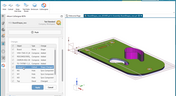
You can use the MCAD Co-designer panel to reuse your board shape or geometry in your PCB. We’ll show you how to use the MCAD Co-designer panel in Altium Designer and how to copy your board shape and geometry from your MCAD tool to Altium Designer.

PCB DFM Check
Blog
Getting Through a PCB DFM Check

In this article, we’ll discuss the key design features to implement, and steps to take prior to fabrication that will help prevent some common DFM problems. I’ll also provide examples of where I commonly see these PCB DFM problems in signal integrity circuits.

Embedded thumbnail for Selection filter - Panel Properties and PCB
How to work with Selection
Selection filter - Panel Properties and PCB

Learn how to configure the types of selected objects using the Selection Filter. In addition, you will learn about the Post Selection Filter and its features.

Spreading Inductance
Blog
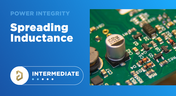
What is Spreading Inductance?

If you’re working with a high-speed digital component, there are some simple power integrity rules that should be followed. However, there is one quantity that is sometimes ignored when building a PDN impedance simulation: the spreading inductance of your plane pair. Here are some points designers should know about the spreading inductance of a plane pair.

Embedded thumbnail for PCB Origins During the ECAD MCAD Exchange
Working with MCAD CoDesigner extension
PCB Origins During the ECAD MCAD Exchange

Origins can vary from your MCAD tool and Altium Designer. With the MCAD Co-Designer panel Altium Designer can keep track of your origin point and make sure your design changes are exchanged correctly.

Embedded thumbnail for Global Editing Using Find Similar Objects
How to work with Selection
Global Editing Using Find Similar Objects

Editing multiple objects one by one can be a very time consuming process. Altium Designer makes this easy and efficient with the Find Similar Objects tool, which allows you to globally select and edit multiple objects at once.

PCB Design Basics for New Designers
Blog
PCB Design Basics for New Designers

In this article, I’ll present some design basics that every new designer should follow to help ensure their design process is successful. Some of these points may challenge the conventional view of how circuit boards are constructed, but they are intended to help balance low noise signaling, manufacturability, and ease of solving a layout.

Article preview
On-Demand Webinar
Efficient PCB Routing Using Gloss and Retrace Tools

The primary goal of your traces is to carry signals throughout your board without losses. To do this properly, you must familiarize yourself with the requirements for signals on the printed circuit board and how to optimize the topology of the board in terms of signal integrity. We will analyze the most popular routing cases applicable for using the Gloss and Retrace tools in Altium Designer to optimize your signal integrity.

Selecting Materials for High Voltage PCB Design and Layout
Blog
Selecting Materials for High Voltage PCB Design and Layout

High voltage PCBs are subject to certain safety and reliability concerns that you won’t find in most other boards. If your fabrication house specializes in high voltage PCBs and keeps materials in stock, they can likely recommend a material set, as well as a standard stackup you might use for certain voltage ranges and frequencies. If you need to choose your own materials, follow the tips below to help you narrow down to the right material set.

Embedded thumbnail for Shaping the PCB in MCAD
Working with MCAD CoDesigner extension
Shaping the PCB in MCAD

Through the MCAD Co-designer in Altium Designer, you can collaborate with a mechanical engineer to shape the PCB in your MCAD tool and keep it updated in Altium Designer. We’ll show you how in Altium Designer and in your MCAD tool.

Embedded thumbnail for Cross Select Mode
How to work with Selection
Cross Select Mode

Cross Select Mode is a unique tool that allows for cross-selection of objects between the schematic and PCB thanks to the Altium Unified platform. This makes it easy to look for specific components, as well as take advantage of component placement tools.

Via tenting in PCB Layout
Blog
When to Use Tented Vias in Your PCB Layout

There are some guidelines I see many designers implement as a standard practice, often without thinking about it. Some of these practices are misunderstood or implemented without best practices. Others are implemented without thinking about the potential problems. One of these is the use of tented vias, which is sometimes implemented in a PCB layout by default. Is this always the right practice?

Embedded thumbnail for Tools for Efficient Selection
How to work with Selection
Tools for Efficient Selection

Efficient selection tools can make a difference in how long and how clean your design can be. Learn how to utilize the Edit Select Menu tools in Altium Designer to take control over your layout.

Capacitive load termination
Blog
How to Impedance Match and Terminate Capacitive Loads

The idea of a purely capacitive load is something of a fallacy. Yes, capacitors exist, but all capacitors are non-ideal, and it is this deviation from a theoretical capacitance that determines how to impedance match a load that exhibits capacitive behavior. Let’s take a look at this important aspect of interconnect design and see what it really means to terminate a capacitive load.

Embedded thumbnail for Tools for Easily Selecting Objects in the PCB
How to work with Selection
Tools for Easily Selecting Objects in the PCB

Explore more than basic mouse movements by taking a look at the tools that Altium Designer has to offer for making selecting and moving objects in the PCB an easy task. This will increase your productivity and allow you to spend more time designing

Using Altium 365 Over Your Vanilla Version Control System
Blog
Using Altium 365 Over Your Vanilla Version Control System

There are all sorts of version control systems out there that people have been using with their PCB design software. As discussed in Why Use a Version Control System, we looked at different options ranging for local hard drive storage to sophisticated online revisioning systems. In this article we will be reviewing the differences between a standard VCS and Altium 365.
Why Use a Version Control System in PCB Design
Blog
Why Use a Version Control System in PCB Design

Version Control Systems (VCS) have been around for many decades within the software world but can be surprisingly new to some folks in the electronics design industry. This article will cover what a VCS is, what it does, and why you should be using one for your PCB design projects.

IPC 6012 Class 3 Annular Ring
Blog
Meeting Standards: IPC 6012 Class 3 Annular Ring

Designers often conflate leftover annular ring and pad sizes - they need to place a sufficiently large pad size on the surface layer to ensure that the annular ring that is leftover during fabrication will be large enough. As long as the annular ring is sufficiently large, the drill hit will not be considered defective and the board will have passed inspection. In this article, I'll discuss the limits on IPC-6012 Class 3 annular rings as these are a standard fabrication requirement for high-reliability rigid PCBs.

Embedded thumbnail for How to Work with The Polygon Manager
Working with Polygons
How to Work with The Polygon Manager

It is important to have a high-level view of all polygons on the PCB design. The Polygon Manager lets you rename polygons, set their pour order, perform re-pouring or disable pouring on selected polygons, add/scope the polygon connection style and clearance design rules, and add polygon classes for selected polygons.

Tag
Blog
What Target Impedance Should You Use in Your PDN?

A number of us on this blog and in other publications often bring up the concept of target impedance when discussing power integrity in high-speed designs. Some designs will be simple enough that you can take a “set it and forget it” approach to design a functional prototype. For more advanced designs, or if you’re fine-tuning a new board that has existing power integrity problems, target impedance is a real consideration that should be considered in your design.

Dual Power Supply Components Cover
Blog
An Overview of Dual Power Supply Design

Dual power supplies are circuits that generate two different output voltages from a single input source. The simplest method of generating dual output voltages is to use a transformer with two taps on the output winding. Bespoke transformers can have any voltage ratio depending on the number of windings in each part of the output side of the transformer.

Power planes inside PCB
Blog
Overlapping Planes in Your Mixed-Signal PCB Layout

With digital boards that are nominally running at DC, splitting up a power plane or using multiple power planes is a necessity for routing large currents at standard core/logic levels to digital components. Once you start mixing analog and digital sections into your power layers with multiple nets, it can be difficult to implement clean power in a design if you’re not careful with your layout.

Altium Designer interface
Blog
Follow Mixed Signal PCB Design Guidelines With the Best CAD Tools

High-speed digital PCBs are challenging enough to design, but what about mixed-signal boards? Many modern systems contain elements that operate with both digital and analog signaling, and these systems must be designed to ensure signal integrity in both domains. Altium Designer has the layout and signal integrity tools you need to ensure your mixed-signal PCB design does not experience interference and obeys important design standards. 

Blog
Get Ready for WiFi 7 under the 802.11be Standard

Just as WiFi 6 and 6E are starting to hit the market and new chipsets become available, WiFi 7 is in the works under the 802.11be standard.  While this technology still has not hit the market, I would expect more inquiries for experimental systems, evaluation modules, and surface-mountable modules to come up once the first chipsets become available. Now is the time to start thinking about these systems, especially if you’re developing evaluation products to support WiFi 7.

Protected electronic device
Blog
What Goes Into Rugged Electronics Design?

Rugged electronics need to take a punch mechanically, but there is more that goes into a rugged system than being able to survive a drop on the pavement. This is as much about enclosure design as it is about component selection and manufacturing choices. Mil-aero designers often use the term “harsh environment” to describe a number of scenarios where an electronic device’s reliability and lifetime will be put to the test. If you want to make your next product truly rugged, it helps to adopt some of their strategies in your PCB layout.

PCB Testing
Blog
PCB Testing 101: Important Methods and Metrics

There are many quality checks used to ensure a design will be manufacturable at scale and with high quality, but a lot of this can happen in the background without the designer realizing. No matter what level of testing and inspection you need to perform, it’s important to determine the basic test requirements your design must satisfy and communicate these to your manufacturer. If it’s your first time transitioning from prototyping to high-volume production, read our list of PCB testing requirements so that you’ll know what to expect.

DDR Memory Chip
Blog
Using SDRAM vs. DDR RAM in Your PCB Design

Embedded computers, vision devices, DAQ modules, and much more will all need some memory, whether it’s a Flash chip or a RAM module. Normally, something like a Flash memory chip or a small eMMC module would not be used for temporary storage as the device requires constant rewrites. Instead, if you happen to need a volatile memory solution, you would go for static (SRAM) or dynamic RAM (DRAM). If you need to decide which type of memory to use in your board, keep reading to see some of the basic design guidelines for SDRAM vs. DDR memory modules.

PCB with big ground planes
Blog
PCB Ground Plane Best Practices in Your Multilayer Stackup

Using a PCB ground plane in a stackup is the first step towards ensuring power and signal integrity, as well as keeping EMI low. However, there are some bad myths about ground planes that seem to persist, and I’ve seen highly experienced designers make some simple mistakes when defining grounds in their PCB layouts. If you’re interested in preventing excess emissions and ensuring signal integrity in your layout, follow these simple guidelines for implementing a PCB ground plane in your next board.

PCB Voltage Regulator Chip
Blog
Using an LDO vs. Switching Regulator in Your PCB

As much as we’d like, the power we supply to electronics isn’t always stable. Real power sources contain noise, they might exhibit power instability, or they dropout unexpectedly. Thankfully, we have power regulators to help prevent some of these problems. For low power devices, we generally see two types of power regulators: a low dropout regulator (LDO) or a switching regulator. You can mix and match these at different points along your power bus, but there’s still the matter of choosing whether to use an LDO vs. a switching regulator in your designs. 

Cloud storage on the phone
Blog
Using Altium 365 for Sharing Simulations in the Cloud

Post-layout simulators for your PCB are very valuable tools. If you’re working through a complex design, it’s a good idea to put it through some level of simulation and analysis to evaluate the design before manufacturing. This is all easy with the cloud collaboration tools in Altium 365 and Ansys field solvers thanks to the EDB Exporter utility in Altium Designer. These existing tools in Altium Designer and any of the Ansys field solver utilities give you a simplified way to share design data, EDB files, and simulation results with anyone on your design team. 

Manufacturers
Blog
How to Speed Up Your DFM Report Process in the Cloud

Experienced fabricators will tell you: any design could have some hidden DFM problem that will interfere with manufacturability, quality, or yield. Making use of your design rules is just the start of preventing DFM problems, you’ll want to collaborate with your manufacturer throughout the design process if you want to spot and correct DFM problems. Within Altium Designer, there are multiple reports you can generate for your projects that will help you summarize important information on your board for a client or a manufacturer.

Optoelectronics
Blog
The Digital Engineer's Guide to RF PCB Layout and Routing

With modern systems running at higher frequencies, incorporating multiple wireless protocols, and interfacing with many analog sensors, advanced designs require knowledge from digital and RF design disciplines. If you’re now starting to work in the RF realm and you need to design an all-analog or mixed-signal system, RF PCB layout will need to become a new specialty. If you’re a digital designer and you’re now jumping into high-frequency analog design, keep reading to learn more about RF PCB layout and routing.

Tracks on a finished PCB
Blog
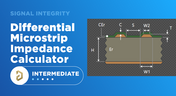
Microstrip Ground Clearance: How Close is Too Close?

If you take a look at any guidelines for controlled impedance traces, you’ll clearly see that the trace width is calculated without any ground pour near the trace. However, most designers will state that unused areas on each PCB layer should be filled in with grounded copper pour. If you bring some ground pour near a microstrip, you’ve now formed a coplanar waveguide arrangement. So now the question becomes, how much microstrip to ground clearance do you need to ensure you’ve hit your impedance goals?

Blog
PCB Layout Guidelines for Switching Power Supplies and Regulators

In this article, I want to briefly focus on how power supplies and regulators are different, although this should already be clear to most designers. For a power supply and for a PCB with an on-board regulator, the switching regulator layout will be a major determinant of overall system performance. Therefore, we’ll largely look at some layout guidelines for switching power supplies in terms of regulator layout.

PCB Sharing - What Data You Can Share in Altium 365
Blog
PCB Sharing and What Data You Can Share in Altium 365

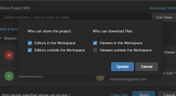
Altium 365 is giving design teams a new way to share and manage their design data. Most users are probably aware of project-level and component-level PCB sharing features, but sharing actually extends down to the level of individual files thanks to the managed content system within Altium 365. If you’ve ever wanted a single place to store and manage all of your design data, then Altium 365 is here to help you and your team stay organized.

Tag
Embedded thumbnail for Bottom Terminated Component Guide: Footprint Design Best Practices
How-To's
Bottom Terminated Component Guide: Footprint Design Best Practices

Want to create a reliable footprint for your PCB design? Watch our latest video with Zach Peterson and learn best practices for designing PCB footprints for bottom-terminated components. This tutorial covers how to properly design paste masks for QFNs, BGAs, and other bottom-terminated packages to prevent common assembly issues.

Embedded thumbnail for Design 4x Faster with Altium Designer 25
Altium Designer's 25 Quantitative Benefits
Design 4x Faster with Altium Designer 25

PCB CoDesign in Altium Designer 25 enables multiple engineers to collaborate on a single PCB design, saving over 10 minutes and 300+ clicks. With an intuitive compare-and-merge workflow, teams can efficiently resolve conflicts and streamline their design process. Check out this video to learn more, and use the Benefit Calculator to see your potential time savings: https://www.altium.com/benefit-calculator.

Embedded thumbnail for Empowering Hybrid Designs with Wire Bonding
New in Altium Designer 25
Empowering Hybrid Designs with Wire Bonding

Our latest whitepaper on Wire Bonding technology is now available! It explores the role of wire bonding in modern PCB design and how Altium Designer 25 enhances the process with dedicated features. Access it here: Wire Bonding Whitepaper.

Embedded thumbnail for 8 Times Faster Simulations Using Altium Designer 25
Altium Designer's 25 Quantitative Benefits
8 Times Faster Simulations Using Altium Designer 25

Speed up your simulations with Altium Designer 25—now up to 8x faster! Watch our comparison to see how built-in simulation slashes processing time, saving you valuable minutes on every task.

Embedded thumbnail for Harness Design Top 5 Improvements in Altium Designer 25
New in Altium Designer 25
Harness Design Top 5 Improvements in Altium Designer 25

Harness Design in Altium Designer 25 just got a major upgrade! This video showcases the top five new features that improve flexibility, organization, and efficiency in your wiring workflow. Watch now to see these enhancements in action and take your designs to the next level!

Embedded thumbnail for HitIQ uses Altium solutions to better understand brain injuries in sports sciences
Altium Stories
HitIQ uses Altium solutions to better understand brain injuries in sports sciences

Watch our video about HitIQ and theirs usage of Altium's software to develop a Smart Mouthguard, an advanced concussion management solution. Our software accelerated their development, improved accuracy, and its helpful for detecting and managing sports-related brain injuries.

Embedded thumbnail for Boost Team Productivity with Seamless Collaboration - Recording Preview
New in Altium Designer 25
Boost Team Productivity with Seamless Collaboration - Recording Preview

Discover how to enhance your PCB design workflow with Altium Designer and Altium 365. Learn to speed up tasks, enhance collaboration, connect teams, and optimize part selection—all in one seamless environment.

Embedded thumbnail for Altium Tutorial: Harness Design to Multi-Board Assembly Workflow
How-To's
Altium Tutorial: Harness Design to Multi-Board Assembly Workflow

Watch our latest tutorial on Harness Design and Multi-board, where we showcase best practices for Harness Design, MCAD collaboration, and manufacturing documentation generation to enhance your PCB assembly workflow.

Embedded thumbnail for Smart Mouthguard Impacting Concussion Science
Altium Stories
Smart Mouthguard Impacting Concussion Science

Check out our latest Customer Success Story about HitIQ, founded by former AFL player Nathan Murphy. HitIQ harnessed Altium’s design and collaboration tools to develop its Smart Mouthguard—an advanced concussion management solution. The team utilized Altium Designer’s Rigid-Flex PCB capabilities and Constraint Manager, along with Altium 365’s Web Viewer and Cloud Storage, to create a compact yet highly functional design while enhancing cross-functional collaboration.

Embedded thumbnail for The Hidden Dangers of PCB File Sharing (And the One Solution You Need)
How-To's
The Hidden Dangers of PCB File Sharing (And the One Solution You Need)

Protect your PCB designs from security risks! This video uncovers hidden vulnerabilities in traditional file-sharing methods and shows how encrypted file transfers can safeguard your intellectual property. Learn why email and unsecured cloud storage aren’t enough—and explore secure collaboration solutions used by leading companies.

Embedded thumbnail for Optimized for Success: Advanced PCB Features in Altium Designer - Recording Preview
New in Altium Designer 25
Optimized for Success: Advanced PCB Features in Altium Designer - Recording Preview

Unlock the power of Altium Designer 25 to streamline your PCB design process. With advanced features like dynamic phase matching and enhanced signal integrity tools, you’ll improve efficiency and reduce errors. Watch the webinar recording now to see how this release can elevate your design workflow!

Embedded thumbnail for Engineering collaboration across Disciplines with Altium 365 and Design+Industry
Altium Stories
Engineering collaboration across Disciplines with Altium 365 and Design+Industry

Watch how D+I Part of Capgemini leverages Altium 365 to connect engineering disciplines, enhancing collaboration between electronics, mechanical, and industrial design teams. Their refined design process showcases how diverse expertise drives innovation.

Embedded thumbnail for High-Speed PCB Design: Mastering EMI/EMC on 8+ Layer Boards
How-To's
High-Speed PCB Design: Mastering EMI/EMC on 8+ Layer Boards

Watch our tutorial on designing high-speed PCBs with eight or more layers while minimizing EMI/EMC issues. This video is a must-watch for engineers and designers working with high-speed digital systems, including FPGAs, microprocessors, and high-speed communication interfaces. Learn how to ensure your designs meet EMC standards and achieve optimal signal integrity.

Embedded thumbnail for Standard Stackup + Controlled Impedance Deep Dive
How-To's
Standard Stackup + Controlled Impedance Deep Dive

Check out our brand-new video where Tech Consultant Zach Peterson explores controlled impedance and controlled stackup design in PCB manufacturing. He breaks down their advantages and limitations, shows how to specify impedance in Altium Designer, and answers a viewer question about using controlled impedance with a standard stackup.

Embedded thumbnail for Kickstart Your Rigid-Flex Journey: Part IV - MCAD Integration
Kickstart Your Rigid-Flex Journey
Kickstart Your Rigid-Flex Journey: Part IV - MCAD Integration

The final episode of Kickstart Your Rigid-Flex Journey covers MCAD integration with Altium Designer. Hosted by Piet Callemeyn, this video walks through using MCAD CoDesigner, collaborating with mechanical engineers, and syncing design changes.

Full series available here: Kickstart Your Rigid-Flex Journey Series

Embedded thumbnail for Tackling Complexity: How Altium Designer 25 Handles Large PCB Designs - Recording Preview
New in Altium Designer 25
Tackling Complexity: How Altium Designer 25 Handles Large PCB Designs - Recording Preview

Discover how Altium Designer 25 enhances performance across schematic design, PCB layout, and documentation. Watch the webinar recording to see how it handles large and complex designs with ease!

Tag
Your search returns no results.