Welcome, Guest

Sign in to learn, create, and do more with the product you love.

News & Updates

Filters:
Tag
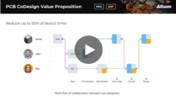
Embedded thumbnail for Coming Soon: PCB Layout Replication
How-To's
Coming Soon: PCB Layout Replication

PCB Layout Replication allows quick replication of layouts for repetitive circuitry blocks in a flat PCB design. In this short video we will show you how this new tool (scheduled for release on December 13th) eliminates the need to do repetitive tasks manually or for various workarounds like snippets or multi-channel designs.

Blog
Access to your Training Certificates on My Altium

Introduce an update on the My Altium user page that highlights your certificates and tracks your training progress, with one-click access to the Training Dashboard and Training Catalog pages. Easily view and share your certificates, keep an eye on your learning journey, and explore a variety of training resources.

Blog
Rigid-Flex PCBs: Advantages and Challenges

In this article, we will begin with a basic explanation of how rigid-flex technology differs from rigid board technology. We will then provide an overview of the advantages and conclude with a discussion of the challenges to be aware of.

Intrusive Soldering
Blog
When Should You Use Intrusive Soldering?

Through-hole components are frequently employed in power electronics, particularly when dealing with AC power from a wall outlet. In this article, you can delve into the intrusive soldering process and discover when it can be applied in PCB design.

Embedded thumbnail for Coming Soon: Constraint Manager
How-To's
Coming Soon: Constraint Manager

Constraint Manager simplifies PCB design by facilitating collaborative constraint definition from both Schematic and PCB. Learn more about this new feature, which streamlines the process of setting electrical clearances and creating rules while centralizing class management for time-saving convenience.

Embedded thumbnail for Debounce Circuit
Simulation in Altium Designer
Debounce Circuit

Learn how to simulate the circuit, identify a common issue, and walk through how to diagnose and correct any errors found in a seemingly well-designed debounce circuit. 

Embedded thumbnail for Import Component Footprints Faster with Altium Designer. Part II: Using an External Library, Internal IPC Compliant Footprint Wizard, and Datasheet-Based Creation
Import Component Footprints Faster with Altium Designer
Import Component Footprints Faster with Altium Designer. Part II: Using an External Library, Internal IPC Compliant Footprint Wizard, and Datasheet-Based Creation

In this video, we will guide you through three distinct manual component import methods; employing an external library, utilizing the internal IPC Compliant Footprint Wizard, or creating one yourself based on documentation.

Blog
What Makes a PCB Enclosure Rugged?

Whether you purchase products off-the-shelf or online, they all come housed within an enclosure. In some cases, these enclosures are intentionally ruggedized to withstand harsh environments or mechanical shocks. You can learn more about enclosures in this new and interesting article.

Embedded thumbnail for Import Component Footprints Faster with Altium Designer. Part I: Manufacturer Part Search & External Plugin
Import Component Footprints Faster with Altium Designer
Import Component Footprints Faster with Altium Designer. Part I: Manufacturer Part Search & External Plugin

In this video, we will demonstrate the first two methods of importing components into Altium Designer; through Manufacturer Part Search or by using an external plugin.

Blog
Concept Phase – Lid Assembly Design Part 2

We are continuing our journey through the lid assembly design phase of our Open Source Laptop project. In this section, we will discuss the layout of the test adapter and provide a demonstration of the first test for the display panel, along with the initial steps involved in assembling the boards.

Embedded thumbnail for Buck Converter
Simulation in Altium Designer
Buck Converter

Learn how to run a transient simulation, analyze the waveforms, and measurement techniques you can use to determine a voltage ripple with a buck converter as an example. 

Embedded thumbnail for Edge Plating in RF Design
How-To's
Edge Plating in RF Design

PCB Edge Plating provides additional noise suppression and improves EMC. In this video we provide you some practical tips for creating metalized PCB edges in Altium Designer.

Blog
Concept Phase – Lid Assembly Design Part 1

In the exciting next phase of the open-source laptop project we're (finally) diving into design, and getting hands-on with the display panel. Discover how we're selecting the right panel, integrating it seamlessly, and creating a custom DisplayPort adapter to illuminate the screen. Plus, learn how our choices impact features like microphones, webcams, and touch sensors, and how Altium can help bring it all to life. It’s not too late to join as we continue on this innovative journey!

Embedded thumbnail for Custom Paste Mask and Solder Mask
Custom Pad Stack in Altium Designer
Custom Paste Mask and Solder Mask

Altium Designer allows you to freely customize paste and solder mask shapes, which allows you to adapt your design for non-standard component footprints.

Embedded thumbnail for Colpitts Oscillator
Simulation in Altium Designer
Colpitts Oscillator

Learn how to effectively fix errors in circuit simulation and other problem-solving techniques using a Colpitts Oscillator design as an example. 

Embedded thumbnail for Custom Thermal Reliefs for Pads
Custom Pad Stack in Altium Designer
Custom Thermal Reliefs for Pads

Altium Designer allows you to add, remove, and edit thermal relief spikes anywhere on a pad, regardless of its shape. Using these can improve soldering and prevent manufacturing problems like tombstoning.

Embedded thumbnail for Notch Filter
Simulation in Altium Designer
Notch Filter

Learn how to run an AC sweep analysis, execute a Monte Carlo simulation, and interpret the results using a notch filter as an example. 

Tag
PCB with ice for best cooling
Blog
Thermal Management for Integrated Circuits

As anyone who designs and builds electronic devices knows, the device will generate heat when it’s switched on. Wherever current flows through an impedance, energy losses will manifest themselves as heat. Integrated circuit packaging is getting smaller to meet the trend for more compact devices but at the cost of poorer thermal properties. This article describes the basic thermal management approaches to consider in your next designs. 

Blog
Anatomy of Latitude Part Two: "Thread with a Needle” in the context of energy

We continue to explore the magic of energy conversion in a PWM transducer. Why is it magic? Theoretically, in a PWM transducer this happens without losses, isn't that magic? A PWM transducer, like a tailor with scissors, cuts the “fabric of energy” into pieces, and then, like a sewing machine, stitches the pieces of energy into a dress - DC Magnitude. What is a constant component and how can we get it? Let's explore!

Pulse Width Regulation Module
Blog
Anatomy of Latitude Part One: Pulse Width Modulation (PWM) as a Result of the Evolution of Linear Systems

There are different techniques in the world of technology to achieve various goals, both final and intermediate. Some techniques are so successful that they are commonly used with high efficiency. Electronics is no exception. The greatest example is the use of Pulse Width Modulation (PWM) signals (energy), which is applied in any modern electronic device. To apply PWM effectively, it is necessary to understand the engineering difficulties that engineers faced in the past, and the thoughts and ideas that subsequently were combined into effective, complete PWM power solutions.

Electrolytic capacitor
Blog
What Influences Electrolytic Capacitor Lifespan?

If you speak with a bunch of design engineers, you might quickly form the opinion that the electrolytic capacitor has a particularly dubious reputation. A faulty electrolyte mix used in these types of capacitors led to premature device failures, and quite often, a “bit of a mess” was made to the PCBs on which they were soldered. However, despite the problem of the capacitor plague, this article is focusing on helping the designer understand how to get many more years of useful life from an electrolytic capacitor.

Elegant writing
Blog
Creating Elegant and Readable Schematics

A schematic drawing will not only tell your PCB design software what needs to connect where, but it also communicates the purpose of a circuit to other people. It’s easy to create a schematic, but it can be harder to make a helpful schematic that can be quickly and easily read and comprehended by the reader. In this guide, based on years of industry experience, we will show you how to improve your schematic layout so that your designs are elegant and readable.

Copper rings
Blog
Must Have Rapid Prototyping Tools

Suppose your job involves rapidly iterating designs or creating a wide variety of products for clients. In that case, there are some essential tools available that can save you a tremendous amount of time, bringing high engineering risk devices to completion successfully. Whether you’re working on internal projects or developing high mix devices for clients as a consulting or freelance firm, these indispensable tools will help you ship a higher quality product in less time. 

Blog
Best Practices for Sharing PCB Files vs. Sharing PCB Projects

Even though today’s cloud platforms are immaculately secure and they allow a range of files to be easily shared, there are times where you should limit the data you’re sharing to only the critical files required. For PCB designers, this means either sharing entire design projects or sharing individual files with your manufacturer, customers, contractors, or collaborators. If you want to eliminate liabilities and keep your team’s design data secure, consider these best practices for sharing PCB design data with Altium 365.

Principial Schematic
Blog
Best Practices for Using Reference Designs

Best component companies will release reference designs for their new and legacy products to show designers an example application for a component. If the reference design is good enough and it very nicely illustrates how to quickly engineer around a few main components, I’m likely to use them in the design and the component maker has just earned my business. If you’re a newer designer and you’re wondering whether reference designs are right for your next project, follow these best practices so that you don’t make any mistakes with your reference design.

Traces on PCB
Blog
Transmission Line Fundamentals And Electromagnetic Fields, Part 1

When we deal with “abstract” aspects of electromagnetic fields and how they function, it can be easy to get lost in the weeds regarding them. The first part of this article will address an important aspect of transmission line fundamentals, namely how electromagnetic fields and waves propagate on a transmission line. This article’s end goal is to create a core understanding of these concepts so that when it comes time to design a PDS, the proper design methodologies are followed and a properly working PDS is achieved appropriately, the first time and every time.

BGA pads
Blog
Your Complete Guide to Via Stub Analysis

Via stubs are sometimes viewed as an annoyance, especially when you only need to make a transition between adjacent layers. For low speed, less-dense boards with low layer count, via stubs are an afterthought, or they may not receive consideration at all. For faster edge rates/higher frequencies, the conventional wisdom is to remove all via stubs. The question is: what exactly counts as “high frequency,” and how do you figure out the relevant length?

Thermal camera on people
Blog
Using a Thermal Camera for PCB Diagnostics

Unlike the clumsy human finger, a thermal camera can detect minute temperature differences across its view. This allows you to rapidly identify any components that are consuming current. Any parts or areas of your board that draw current will also generate heat that can easily be picked up by a thermal camera.

Soldering station
Blog
Complete Guide to DIY SMT Assembly In Your Office

I want to share a little secret with you in this article: Assembling SMT prototypes boards is not only easy, but it requires very little equipment. Using just a stencil, I can easily hand prototype down to 0.3 mm pitch ICs, and 0201 (imperial) sized passive components.  If you’re currently hand assembling boards with a soldering station, you need to stop this immediately and start using a stencil instead!

Road 2021
Blog
State of the Electronics Industry 2021

With the challenges of 2020 behind us, what challenges and opportunities lie ahead for hardware designers in 2021? In this article Vince Mazur, Technical Product Marketing Engineer at Altium, looks ahead to three emerging trends and share steps to address each one successfully in the year ahead.

Oscilloscope
Blog
The Mysterious 50 Ohm Impedance: Where It Came From and Why We Use It

When we talk about S-parameters, impedance matching, transmission lines, and other fundamental concepts in RF/high-speed PCB design, the concept of 50 Ohm impedance comes up over and over. Look through signaling standards, component datasheets, application notes, and design guidelines on the internet; this is one impedance value that comes up repeatedly. So where did the 50 Ohm impedance standard come from and why is it important?

Camera in water
Blog
Keeping Your Circuits Dry

For the home hobbyist, protecting their electrical devices usually means keeping the coffee cup or soda can away from anything that carries a large voltage. Good practice indicates that electrical devices should be housed in an enclosure to protect expensive components and reduce the risk of electric shocks from exposed circuitry. However, what do you do if the fantastic new device you’ve designed needs to work in a humid, damp, or dripping wet environment? 

PCB with old components
Blog
Tips for Updating Old PCB Designs with New Parts

Have you ever opened up an old design and wondered how much of it was still usable? Maybe you were contacted by an old client, and they want you to provide some updates on an old design. No matter what the situation is, there are times where updating old PCB designs with new parts makes sense. If done correctly and when armed with all the right information up front, you can cut down the total design time while preserving the best parts of your design in a new iteration. Here’s what you can do to update your old designs successfully and how your PCB design features can help.

Tag
Embedded thumbnail for From Concept to Reality: Updated 3D-MID Demo in Altium Designer 25
New in Altium Designer 25
From Concept to Reality: Updated 3D-MID Demo in Altium Designer 25

A walkthrough of the new 3D-MID capabilities in Altium Designer 25. Covers setting up a 3D PCB document, component placement on curved surfaces, routing with grids and sketches, exporting for LDS manufacturing, and generating a 3D pick-and-place file.

Embedded thumbnail for Take 66% of Your Time Back with Custom Pad Stack in Altium Designer 25
Altium Designer's 25 Quantitative Benefits
Take 66% of Your Time Back with Custom Pad Stack in Altium Designer 25

This video demonstrates the measurable productivity gains of using the Custom Pad Stack tool in Altium Designer 25. It compares a detailed QFN-32 footprint customization process across versions, showing a significant reduction in time and mouse clicks—2 min 5 sec vs. 6 min 2 sec, and 45 vs. 116 clicks.

Embedded thumbnail for PCB Stackups in Reverse?
How-To's
PCB Stackups in Reverse?

Watch our new tutorial on reverse PCB stackups — a unique approach that combines thin internal layers with thicker outer cores for specialized applications. Learn how to implement reverse stackups effectively in Altium Designer, understand key manufacturability constraints, and explore Rogers materials specifically suited for this technique.

Embedded thumbnail for Design Smarter - Harness, Multi-board, and MCAD CoDesign in Action
New in Altium Designer 25
Design Smarter - Harness, Multi-board, and MCAD CoDesign in Action

This webinar highlights how Altium Designer 25, with a Pro or Enterprise subscription, enables seamless ECAD-MCAD collaboration using Harness and Multi-board Design tools and the advanced MCAD CoDesigner. Viewers will learn how to integrate harness designs, optimize multi-board systems for enclosure fit, and synchronize designs with SolidWorks, PTC Creo, and Autodesk Inventor.

Embedded thumbnail for Unified Login in Altium Designer 25
New in Altium Designer 25
Unified Login in Altium Designer 25

We've unified the login experience across Altium Designer, Altium 365, and the Altium website—one set of credentials is all you need. This update simplifies access, enhances security, and improves session management for a smoother user experience.

Embedded thumbnail for Custom Ethernet Switch Powers Up: Assembly to Working Hardware Test
How-To's
Custom Ethernet Switch Powers Up: Assembly to Working Hardware Test

Watch our latest video as host Zach Peterson presents his custom Ethernet switch PCB. He walks through the design in Altium Designer, programs the firmware, and tests the board in a real server environment using both copper and fiber connections. This video showcases the complete journey from PCB design to fully functional hardware.

Embedded thumbnail for Mastering Pad and Via Templates (or Padstacks) in Altium Designer
How-To's
Mastering Pad and Via Templates (or Padstacks) in Altium Designer

Learn how to create, export, and reuse Pad and Via templates (Padstacks) in Altium Designer. This tutorial covers standardized libraries to optimize PCB design and ensure consistency across projects.

Embedded thumbnail for Power Rail Routing Mastery: Multiple Voltage Planes in Altium Designer
How-To's
Power Rail Routing Mastery: Multiple Voltage Planes in Altium Designer

Want to design a complex Power Distribution Network (PDN)? Watch our exclusive tutorial to learn expert techniques for routing 10+ power rails on a single PCB layer—while minimizing EMI and ensuring signal integrity.

Embedded thumbnail for Unveiling 99% Task Time Efficiency
Altium Designer's 25 Quantitative Benefits
Unveiling 99% Task Time Efficiency

This video showcases Altium Designer 25’s PCB Section View, a powerful tool for detailed circuit analysis and optimization. Learn how it enhances precision, improves performance, and simplifies complex PCB layouts with real-world applications.

Embedded thumbnail for Bottom Terminated Component Guide: Footprint Design Best Practices
How-To's
Bottom Terminated Component Guide: Footprint Design Best Practices

Want to create a reliable footprint for your PCB design? Watch our latest video with Zach Peterson and learn best practices for designing PCB footprints for bottom-terminated components. This tutorial covers how to properly design paste masks for QFNs, BGAs, and other bottom-terminated packages to prevent common assembly issues.

Embedded thumbnail for Design 4x Faster with Altium Designer 25
Altium Designer's 25 Quantitative Benefits
Design 4x Faster with Altium Designer 25

PCB CoDesign in Altium Designer 25 enables multiple engineers to collaborate on a single PCB design, saving over 10 minutes and 300+ clicks. With an intuitive compare-and-merge workflow, teams can efficiently resolve conflicts and streamline their design process. Check out this video to learn more, and use the Benefit Calculator to see your potential time savings: https://www.altium.com/benefit-calculator.

Embedded thumbnail for Empowering Hybrid Designs with Wire Bonding
New in Altium Designer 25
Empowering Hybrid Designs with Wire Bonding

Our latest whitepaper on Wire Bonding technology is now available! It explores the role of wire bonding in modern PCB design and how Altium Designer 25 enhances the process with dedicated features. Access it here: Wire Bonding Whitepaper.

Embedded thumbnail for 8 Times Faster Simulations Using Altium Designer 25
Altium Designer's 25 Quantitative Benefits
8 Times Faster Simulations Using Altium Designer 25

Speed up your simulations with Altium Designer 25—now up to 8x faster! Watch our comparison to see how built-in simulation slashes processing time, saving you valuable minutes on every task.

Embedded thumbnail for Harness Design Top 5 Improvements in Altium Designer 25
New in Altium Designer 25
Harness Design Top 5 Improvements in Altium Designer 25

Harness Design in Altium Designer 25 just got a major upgrade! This video showcases the top five new features that improve flexibility, organization, and efficiency in your wiring workflow. Watch now to see these enhancements in action and take your designs to the next level!

Embedded thumbnail for HitIQ uses Altium solutions to better understand brain injuries in sports sciences
Altium Stories
HitIQ uses Altium solutions to better understand brain injuries in sports sciences

Watch our video about HitIQ and theirs usage of Altium's software to develop a Smart Mouthguard, an advanced concussion management solution. Our software accelerated their development, improved accuracy, and its helpful for detecting and managing sports-related brain injuries.

Embedded thumbnail for Boost Team Productivity with Seamless Collaboration - Recording Preview
New in Altium Designer 25
Boost Team Productivity with Seamless Collaboration - Recording Preview

Discover how to enhance your PCB design workflow with Altium Designer and Altium 365. Learn to speed up tasks, enhance collaboration, connect teams, and optimize part selection—all in one seamless environment.

Tag
Your search returns no results.