Welcome, Guest

Sign in to learn, create, and do more with the product you love.

News & Updates

Filters:
Tag
Blog
Avoid These Top 3 Power Distribution Failures in PCB Design

Power distribution issues can silently undermine your PCB’s reliability. This article uncovers the top three failure modes and shows how Power Analyzer by Keysight helps you catch them early in the design phase and how Altium Agile Teams turns those checks into structured team action.

Embedded thumbnail for Do 90-Degree Bends Destroy Signal Integrity? The Surprising Answer
How-To's
Do 90-Degree Bends Destroy Signal Integrity? The Surprising Answer

Discover why the long-held belief about 90-degree PCB traces may be more myth than reality. This video explains key signal integrity principles and uncovers insights that can help you make more informed design decisions.

Embedded thumbnail for Taking Control Without Adding Complexity – Presentation Embedded World North America 2025
New in Altium Designer 20
Taking Control Without Adding Complexity – Presentation Embedded World North America 2025

See how Altium makes project oversight faster and smarter with automated workflows, real-time tracking, and connected design data without adding work for engineers. Watch our Embedded World North America 2025 presentation to learn more.

Embedded thumbnail for Demonstration Altium DISCOVER - Embedded World North America 2025
Embedded World 2025
Demonstration Altium DISCOVER - Embedded World North America 2025

Check out our live demo from Embedded World North America 2025 showcasing Octopart Discover. In this video, you’ll see how the platform helps reduce sourcing risk, shorten design cycles, and keep projects moving forward with confidence.

Embedded thumbnail for Altium Agile for Modern Electronics Development - Presentation Embedded World North America 2025
Embedded World 2025
Altium Agile for Modern Electronics Development - Presentation Embedded World North America 2025

Watch our presentation from Embedded World North America 2025 to learn how Altium Agile brings structure, visibility, and velocity to modern hardware development. Discover how multidisciplinary teams can eliminate workflow chaos, track progress in real time, and accelerate delivery without compromising quality.

Embedded thumbnail for Demonstration Altium DEVELOP - Embedded World North America 2025
Embedded World 2025
Demonstration Altium DEVELOP - Embedded World North America 2025

See how Altium Develop empowers engineering teams with fast, cloud-connected PCB design built for modern collaboration. This live demo from Embedded World North America 2025 showcases real-time co-creation, smooth MCAD-ECAD integration, and a design environment that lets you stay focused on what matters building great products.

Embedded thumbnail for From Collaboration to Co Creation – Presentation Embedded World North America 2025
Embedded World 2025
From Collaboration to Co Creation – Presentation Embedded World North America 2025

In this Embedded World North America 2025 presentation, learn how Altium enables electrical, mechanical, firmware, sourcing, and manufacturing teams to collaborate seamlessly in real time through shared data, shared context, and shared visibility. Experience how unified workflows reduce rework, speed up decision-making, and empower teams to deliver exceptional products faster.

Embedded thumbnail for PCB Design: Defining Electrical Clearances in High Voltage PCBs
How-To's
PCB Design: Defining Electrical Clearances in High Voltage PCBs

Unlock the essential principles behind defining electrical clearances for high-voltage PCB designs in our brand-new tutorial. Learn how to apply accurate, layer-specific clearance rules using IPC-2221 standards and harness the full power of Altium’s query system.

Blog
Wearable Electronics: Innovations, Challenges & Future Trends

This whitepaper examines how next-generation wearable electronics are evolving through advancements in flexible and rigid-flex design, smart materials, AI, energy innovations, and connectivity. Discover what’s required to transform early prototypes into scalable, reliable products across healthcare, sports, defense, fashion, and enterprise applications.

Embedded thumbnail for Demonstration Altium AGILE Enterprise - Embedded World North America 2025
Embedded World 2025
Demonstration Altium AGILE Enterprise - Embedded World North America 2025

Experience how Altium Agile Enterprise turns complex engineering collaboration into a streamlined, unified workflow. In this live demonstration from Embedded World North America 2025, you’ll see how multi-disciplinary teams can simplify processes, minimize rework, and maintain clear alignment from requirements through release. All within a single, powerful platform.

Blog
Streamlining Component Selection for Long Product Lifecycles

Electronic parts may now cycle from launch to end-of-life in just a few years, but many systems are expected to serve for 10–20+ years. Here’s how to build a component selection process that aligns engineering, procurement and design for longevity and stability.

Embedded thumbnail for Highlights from the Altium Booth at Embedded World North America 2025
Embedded World 2025
Highlights from the Altium Booth at Embedded World North America 2025

Check out our short recap of Altium’s participation at Embedded World North America 2025 in Anaheim. In the coming weeks, we’ll be sharing a few exciting presentations and demos featuring our new products: Altium Develop, Altium Agile, and Octopart Discover.

Blog
Using ECAD Software to Track Part Availability During PCB Design

As component lead-times extend and obsolescence becomes a persistent threat, PCB projects demand more than schematic capture and layout tools alone. This article details how ECAD software with embedded supply-chain intelligence can: unify engineering and procurement teams; provide visibility into stock levels, lead times and alternates; and enable proactive risk mitigation within the design loop.

Embedded thumbnail for USB-PD Business Card: Examination & Power Test
How-To's
USB-PD Business Card: Examination & Power Test

Join us as we explore a PCB business card received at the PCB West Conference. We'll take a closer look under the microscope to examine its intricate components, test its power delivery capabilities, and uncover the engineering marvel behind this tiny device.

Tag
Blog
How to Select Copper Foil for High-Frequency PCB Design

The PCB materials industry has spent significant amounts of time developing materials that provide lowest possible signal loss for products with RF applications. For high speed and high frequency designs, losses will limit signal propagation distance and distort signals, and it will create an impedance deviation that can be seen in TDR measurements. In this article, we'll look at the balance between copper foil losses and other types of losses in a PCB, as well as some strategies that are commonly used to overcome roughness.

Blog
Altium Designer 22.8 Update

We are happy to announce that the Altium Designer 22.8 update is now available. Altium Designer 22.8 continues to focus on improving the user experience, as well as performance and stability of the software, based on feedback from our users. Check out the key new features in the What's New section on the left side of this window!

What is Hybrid Beamforming?
Blog
What is Hybrid Beamforming?

In this article, we’ll look at beamforming implementation in an advanced method combining analog and digital techniques, known as hybrid beamforming. This method blends both digital and analog techniques to create multiple beams and thus reach multiple users with varying intensities. In the case of an RF imaging system or a radar system, hybrid beamforming in a MIMO technique also allows tracking of multiple targets with adjustable resolution.

Is your via impedance calculator accurate?
Blog
Why Most Via Impedance Calculators Are Inaccurate

The problem with every via impedance calculator that I have seen is simple: they are incomplete or totally wrong. The “incomplete” part refers to a lack of context; these calculators can roughly reproduce a well-known estimate from a legend like Howard Johnson in his Digital Design textbooks. However, these calculators never provide insight into what they are actually calculating, or where the calculated via impedance is accurate. Keep reading to see why these calculators get it so wrong, as well as the context surrounding via impedance.

Blog
Buck Converter Simulation in Altium Designer

When designing high power circuits (usually very high voltage and/or current), you’ll need to create a regulator from scratch and place it in your PCB layout. It's also the case that you may want to model a real component using discretes in a simulation in order to qualify the system's expected operating regime. As part of buck converter design, you can easily run a buck converter simulation directly in Altium Designer’s schematic editor. Here’s how you can access these features in the newest version of Altium Designer. 

PCIe 6.0 Overview
Blog
Overview of the PCIe 6.0 Standard

Just as you get used to PCIe 5.0, they decide to release another standard! The newest iteration of PCIe is Gen6, or PCIe 6.0. PCIe 6.0 brings a doubling of channel bandwidth through introduction of PAM-4 as the signaling method in high-speed differential channels. This signaling method is a first for PCIe, and it’s an important enabler of the doubled data rate we see in the current standard. In this article, I’ll run over the important points in the standard and what PCB designers can expect when designing these channels.

SPI vs. I2C For Memory Access
Blog
SPI vs. I2C: How to Choose the Best Protocol for Your Memory Chips

One of the common implementations of SPI and I2C in a PCB layout is as a protocol for reading and writing to an external Flash memory. Flash chips are a very common component in embedded systems and can offer high capacities of non-volatile memory up to Gb values. When choosing a memory chip, you'll want to match the application requirements and functionality with the bus speed you need for read and write operations in your memory chip. There is also the matter of the type of Flash memory you'll need to access (NOR vs. NAND).

Blog
Is There an SPI Trace Impedance Requirement?

There is no SPI trace impedance requirement? The reality is that SPI lines only start to need impedance control when the length of the interconnect becomes very long. And because there is no specific impedance requirement in the bus, you have some freedom in channel design and termination. So what exactly qualifies as “very long” and when is some termination method needed? We’ll break it down in this article.

The Skin Effect and EM Fields
Blog
The Skin Effect, Current Density, and the Electromagnetic Field

During this year's AltiumLive CONNECT event, I recall receiving an interesting question about the skin effect and the distribution of current due to the presence of ground in coplanar transmission lines. In this article, we'll look at the electric field around a transmission line carrying a signal, and how this might be impacted by the skin effect.

Packaging for your PCBAs
Blog
What You Need for PCB Packaging and Shipping

When you get your PCBA back from an assembler, you’ll notice the packaging materials used to pack and ship the PCBA. Those materials are specific to electronics, and if you build products on behalf of clients, it’s important to know the packaging materials used for packing and shipping electronics. In this article I’ll show the main set of materials and equipment used to package electronics assemblies.

PCB Output files
Blog
How to Make PCB Gerber Files in Altium Designer Step-by-Step

Once you've got your PCB layout finished and you're ready to start preparing for manufacturing, one of the critical steps is to create PCB Gerber files. When you're ready to create your Gerber files, you need the right set of CAM processor tools that can take data from your PCB layout. In this article, we'll guide you through this process of how to make PCB Gerber files and show some example tasks you might need to perform to generate them.

Teardrops on Differential Pairs?
Blog
Should You Place Teardrops on Differential Pairs?

One of the major factors impacting reliability of a PCBA is the use of teardrops on traces in the PCB. Like many aspects of reliability, the considerations also span into the signal integrity domain, particularly as more high-reliability products require greater data handling capabilities and run at higher speeds. In this article, I’ll break down the issues present in teardrop usage on differential pairs and how these may affect impedance.

Broken PCB
Blog
The High-Reliability PCBA Design and Test Challenge

High-reliability electronics must go through multiple rounds of testing and qualification to ensure they can withstand their intended operating environment. Designing to performance standards, whether the baseline IPC standards or more stringent industry standards, is the first step in ensuring a reliable circuit board. In this e-book, readers will gain a thorough look into PCB testing and analysis, starting from basic tests performed on bare boards and completed assemblies.

Where to place AC Caps on PCIe Lanes
Blog
AC Coupling Capacitors in PCIe Routing

Coupling capacitors find plenty of uses in analog applications and on differential protocols, acting essentially as high pass filters that remove DC bias carried seen on a signal. In the case of PCIe, there are a few reasons to place AC coupling capacitors on differential pairs beyond the fact that AC coupling capacitors are listed in the standard. In this article, we’ll look briefly at where to place coupling capacitors on PCIe links, as well as the reasons these are placed on PCIe links.

Tuning dialog
Blog
Altium Designer 22.7 Update

We are happy to announce that the Altium Designer 22.7 update is now available. Altium Designer 22.7 continues to focus on improving the user experience, as well as performance and stability of the software, based on feedback from our users. Check out the key new features in the What's New section on the left side of this window!

The Positive Impact of Supply Chain Visibility on Design to Cost
Blog
The Positive Impact of Supply Chain Visibility on Design to Cost

Design to cost is a lofty idea that is only perfectly executed when supply and demand for components are in perfect harmony. Unfortunately, the current landscape for component sourcing makes design to cost more of a balancing act rather than an exercise in price reduction. To help designers in their efforts to balance cost, capabilities, and procurement, we created this ebook to help users understand how modern supply chain tools can help in these complex design problems.

Tag
Embedded thumbnail for How to Validate Links Between Components and Footprints
How-To's
How to Validate Links Between Components and Footprints

Before importing or updating data from the circuit to the board, you must first verify that all components of the circuit are associated with Footprint. Watch this video to learn how to validate the links between your schematic components and footprints.

Embedded thumbnail for How to use Copy Room Format
How to work with Rooms
How to use Copy Room Format

Rooms allow you to use rules on specific areas of your design. This helps immensely with properly defining trace widths and hole sizes for specific components. We’ll show you how easy it is to assign rules to specific rooms in the PCB.

Embedded thumbnail for How To Do Versioning And Releases by Robert Feranec and Michal Faruga
Discovering Altium 365
How To Do Versioning And Releases by Robert Feranec and Michal Faruga

Meet Robert Feranec in an educational video on version control, project history, comments, comparison and other features in Altium Designer 

Active Links in Text
What's New in 22.6
Active Links in Text

You can now specify active links to components and nets within a text frame object on a schematic. This handy navigation aid makes it much easier not only to read the document, but also to work with it.

Active Links in Text
What's New in 22.6
文本中的活动链接

您现在可以在原理图上的文本框对象中,指定指向元件和网络的活动链接。使用此导航辅助工具,即可轻松读取和处理文档。

Multifunctional Pins
What's New in 22.6
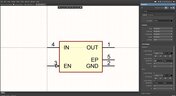
Multifunctional pins

You will often see that modern ICs consist of multi-functional pins. In this latest version of Altium Designer it has become far easier and much more convenient to work with such components.

Multifunctional Pins
What's New in 22.6
多功能引脚

常见的现代IC均由多功能引脚组成。在最新版Altium Designer中,我们能够更加轻松、方便地处理此类元件。

Embedded thumbnail for Using Rooms in Rules
How to work with Rooms
Using Rooms in Rules

Rooms allow you to use rules on specific areas of your design. This helps immensely with properly defining trace widths and hole sizes for specific components. We’ll show you how easy it is to assign rules to specific rooms in the PCB.

Embedded thumbnail for Creating a Schematic Symbol: Dealing with Power Pins
How to create a Schematic Symbol
Creating a Schematic Symbol: Dealing with Power Pins

Multiple schematic symbols often require the use of multiple power and ground pins. We’ll show you the difference between hidden and visible power pins, and the various methods you can use to use them in your design however it works best for you.

Embedded thumbnail for Allowing Permanent Display of Some Layers
How-To's
Allowing Permanent Display of Some Layers

This video demonstrates how to permanently display some layers in the PCB using the View configuration panel.

Embedded thumbnail for Creating Rooms in the PCB
How to work with Rooms
Creating Rooms in the PCB

If you want to create a room manually in the PCB or have them generated for the Schematic, Altium Designer allows you to create custom rooms. We’ll show you how to hand draw different rooms, how to create rooms by defining them through the room definition, and how to have them generated for the schematic and pushed through to the PCB by the Engineering Change Order.

Embedded thumbnail for Creating a Schematic Symbol - Placing Designators and Comments
How to create a Schematic Symbol
Creating a Schematic Symbol - Placing Designators and Comments

Placing your designator or comments can be done automatically, but that doesn’t mean they’re visible. We’ll walk you through how to make them visible and position them correctly no matter what orientation your symbol is with automatic positioning.

Embedded thumbnail for Creating a Schematic Symbol: Adding Additional Parts
How to create a Schematic Symbol
Creating a Schematic Symbol: Adding Additional Parts

Altium Designer makes it easy to add additional parts to your schematic library. We’ll show you how through copying and configuring your new components through the Pin Editor and the properties panel.

Embedded thumbnail for Component Placement Control Using Rooms
How to work with Rooms
Component Placement Control Using Rooms

Rooms give you more control over how and where your components are placed in your PCB. We’ll show you how to use room properties to limit what is allowed in and out of a room using the room definition and custom queries.

Embedded thumbnail for How to work with Differential Pair Classes?
How to Work with Differential Pairs
How to work with Differential Pair Classes?

Modern boards can contain a large number of differential pairs. For convenience, they are combined into differential pairs classes. In this video, we'll walk you through how to create and apply a differential pair class. 

Embedded thumbnail for Adding Rooms from the Schematic
How to work with Rooms
Adding Rooms from the Schematic

Rooms can be added directly from the schematic sheet. From the schematic sheet they are pushed to the PCB. Here we'll look at the rooms and component classes generated by default in the schematic, how to add and configure rooms manually, and how to push them to the PCB.

Tag
Your search returns no results.