Welcome, Guest

Sign in to learn, create, and do more with the product you love.

News & Updates

Filters:
Tag
Embedded thumbnail for Robotic Harvest: Securing Our Food Future
Altium Stories
Robotic Harvest: Securing Our Food Future

See how Altium's PCB design software, including Multi-board System Design and Harness Design capabilities, supports Muddy Machines, a company building autonomous robots for use in the agriculture industry. This video demonstrates the vital role of technology in creating resilient and efficient agricultural practices for the future.

Blog
Multi-Board PCB Signal Integrity: A Complete Guide

Our new article on signal integrity in multi-board PCBs covers essential aspects like connector pinouts, cable designs, and interconnect strategies. These factors ensure reliable performance in high-speed applications across industries such as military, aerospace, and AI.

Embedded thumbnail for Finding Alternate Field-Effect Transistors: Alternate Parts Series: Pt. 3
Octopart
Finding Alternate Field-Effect Transistors: Alternate Parts Series: Pt. 3

In Part 3 of "Expert Insights on Alternative Parts" series, Phil Salmony will demonstrate how Octopart identifies suitable alternative field-effect transistors (FETs). Octopart assists in narrowing down parameters to select the right component for any application. Learn to navigate Octopart's search and filtering tools to choose the best MOSFETs for your specific application.

Embedded thumbnail for Stay Ahead of the Curve: A Half-Year Review of Altium Designer Improvements -  Recording Preview
New in Altium Designer 24
Stay Ahead of the Curve: A Half-Year Review of Altium Designer Improvements - Recording Preview

In the last six months, we have implemented significant enhancements in Schematic Capture, PCB Design, and Harness Design in Altium Designer 24. Check out our webinar recording to learn how these new capabilities can keep you ahead in the electronics industry. You can find it here: July COM Webinar Recording

Embedded thumbnail for How Skeleton Technologies Uses Altium Solutions
Altium Stories
How Skeleton Technologies Uses Altium Solutions

Explore how Skeleton Technologies is transforming industries with their innovative supercapacitors made from “Curved Graphene” materials. These advancements are not only powering AI data centers and stabilizing electrical grids but are also unlocking new energy opportunities and driving progress towards a net-zero future.

Blog
Pi.MX8 Project - Board Layout Part 4

We invite you to explore a new chapter in the PiMX8 Project, focusing on the final stages of PCB layout design for the Pi.MX8 compute module. This installment covers critical topics such as routing power planes and signal delay tuning, essential for ensuring proper functionality and performance.

Embedded thumbnail for LDO Regulator Essentials: From Basics to Advanced. Part II: Voltage Drop and Regulation
LDO Regulator Essentials
LDO Regulator Essentials: From Basics to Advanced. Part II: Voltage Drop and Regulation

We are returning to our LDO Regulator Essentials series. In this installment, we will focus on understanding the required dropout voltage, detecting when the regulator is out of regulation, and analyzing the performance of the LDO under higher current conditions.

Blog
How Thermoformed Flex PCB’s are Designed and Fabricated

Thermoformed flexible PCBs are specially designed and fabricated by heating and molding them into specific shapes, making them suitable for compact and complex applications like automotive dashboards and wearable devices. This process involves precise temperature control and careful handling to ensure durability and quality. Discover more from Tara Dunn's new article.
Blog
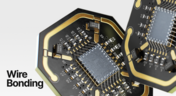
Boost Connection Integrity and Design Efficiency with Wire Bonding

Altium Designer's wire bonding feature enhances PCB design by supporting chip-up configurations for Chip on Board (CoB) designs. It offers easy validation of bond wiring in 3D views, ensuring accurate and efficient design processes. Check more about this feature on Altium's new feature page.
Blog
How High Frequency SMD Passives Work in a PCB Layout

High-frequency surface-mount device (SMD) passives like resistors and capacitors play a crucial role in PCB layouts, particularly in circuits operating above 1 GHz. Our article explores how these components function at high frequencies, their operational limits, and the importance of considering parasitic elements in design.


Embedded thumbnail for LDO Regulator Essentials: From Basics to Advanced. Part I: Basics
LDO Regulator Essentials
LDO Regulator Essentials: From Basics to Advanced. Part I: Basics

We invite you to join us for a new video series on LDO (Low Dropout) Regulators. In this series, we will cover everything you need to know about LDO regulators, from fundamental theory to practical implementation. In the first video, we will begin with an in-depth chapter on the theory behind these devices and their implementation in Altium Designer.

Blog
Essential DFM Tips for Aerospace Projects

Design for Manufacturing (DFM) is a crucial aspect of aerospace projects. This process ensures high-quality designs that meet the unique challenges of the aerospace industry, such as extreme conditions and stringent reliability standards. Learn more about essential DFM tips in our brand-new article.

Embedded thumbnail for Wearable Design Project - Part VII: PCB Layout part III
Wearable Design Project
Wearable Design Project - Part VII: PCB Layout part III

Check out the final installment of the video series on the Wearable Design Project. In this video, you will learn how to set the rigid and flex parts of the design, modify the board for the project, and complete the PCB routing. For a deeper dive into this project, you can find it on our Altium Community Workspace.

Embedded thumbnail for Optimize Connections and PCB Design with Wire Bonding
New in Altium Designer 24
Optimize Connections and PCB Design with Wire Bonding

Experience our new wire bonding feature, designed to enhance connection integrity and improve PCB design efficiency. One of the main capabilities includes support for chip-up wire bonding configurations and easy validation of bond wiring in 3D view. Don’t miss this opportunity—participate in our Beta Program and be among the first engineers to explore this impressive feature.

Altium 365 New Website
Blog
Altium 365 now has its own website!

Discover everything you need to know about Altium 365 and experience our suite of applications for secure, seamless, and streamlined collaboration. Visit now to explore how to streamline your electronic product development.
 

Embedded thumbnail for Innovative Jewelry: Startup Uses Altium to Embed Electronics
Altium Stories
Innovative Jewelry: Startup Uses Altium to Embed Electronics

Discover how Safety by Cilia transformed personal protection by utilizing Altium Designer and Altium 365 to create groundbreaking jewelry that also functions as a safety alarm. This device integrates GPS tracking, dual alarm options (both loud and silent), automatic audio recording, and rapid notification capabilities, all while maintaining an accessory that excels in both aesthetics and functionality.

Embedded thumbnail for Wearable Design Project - Part VI: PCB Layout part II
Wearable Design Project
Wearable Design Project - Part VI: PCB Layout part II

Join us for Part VI of the Wearable Design Project as Piet Callemeyn finalizes the PCB layout, focusing on rigid-flex design. Learn key strategies for optimizing your wearable tech design. Like, comment, and subscribe!

Tag
Molded Interconnect Devices
Blog
MIDs Make a Comeback as Vertical SMD Modules for Your PCB

Molded interconnect devices are essentially plastic molded substrates with traces running along any surface, including at right angles and running vertically. Altium users can use the new 3D Routing extension to design their own component carriers, which can be mounted vertically in a standard assembly process. If you’ve always wanted to vertically mount components or entire circuits, but without the expense of adding a flex section to your design, the new 3D Routing extension with HARTING’s component carrier designs provides a unique solution.

MCAD CoDesign Process
Blog
MCAD CoDesigner 2.9.0 is Out

Altium has released version 2.9.0 of the MCAD CoDesigner. This version has the option to exclude small components when transferring from ECAD to MCAD. The arc behavior was improved, and the support for splines in board shape and cutouts was added. With this release, you can now select a specific SOLIDWORKS configuration of a part to use on the board and view the improvements made for Siemens NX.

Rigid-Flex in Altium Designer
Blog
Support for Rigid-Flex in Altium Designer

Altium Designer's world-class PCB design features help users quickly get started with new rigid-flex designs and prepare them for manufacturing. Rigid-flex in Altium Designer starts with designing a manufacturable PCB layer stack complete with via transitions and any calculated impedance requirements. Keep reading to see how Altium Designer supports your flex and rigid-flex designs.

2+N+2 PCB Stackups
Blog
2+N+2 PCB Stackup Design for HDI Boards

Like any other advanced PCB, success in HDI design comes from designing the right stackup. One common HDI stackup used to support routing into moderate pin count, high-density BGA components is the 2+N+2 PCB layer stack for HDI boards. We’ll explore this stackup more in this article, as well as how it is related to other advanced stackups used in HDI PCBs.

PDF Viewer in Altium 365
Blog
PDF in Altium 365 Web Viewer

Altium 365 Web Viewer now includes a built-in PDF viewer that allows you to view PDF files in releases without an external PDF viewer application. Keep reading to learn about new key features that make your work easier

Rigid-Flex Applications
Blog
Flex and Rigid-Flex PCB Applications

There are two basic reasons for designing a flex circuit into your product: to build a compact and efficiently assembled device, or to make the circuit dynamically integrated with the mechanical function of the product. You may, of course, lean on both of these reasons for justifying the use of flex circuits. On this note, let’s look at some rigid-flex PCB applications and design examples to see the issues that spring to mind when designing flex circuits

Sharing Settings in Altium 365
Blog
Granular Sharing — Role and Group Management

With Altium 365, you can grant permission to teams or users based on the specific needs of a project. We have expanded Altium 365’s file-sharing setting, giving you more granular control over who can download source files and reshare projects with others

Use your DRCs
Blog
Design Rule Checking in the PCB Design Workflow

Any time you design a PCB, and you want to turn it into a real product, you will have to make sure the design obeys the constraints within the standard PCB manufacturing process. This imposes multiple rules on any design, and ECAD software will enforce design rules as you create the board to ensure you obey these important constraints. Make sure you enforce the right design rules at the beginning of the PCB design workflow 

How to select high frequency materials
Blog
Best Practices for High-Frequency PCB Material Selection

High frequency PCB design can seem esoteric, and I've heard many an engineer describe it as "black magic"! The subject is also a bit confusing, especially once someone asks which frequencies could be reasonably considered "high". Before you do anything inside the layout for a high-speed or RF PCB, you will need to pay attention to the materials being used in the board. If you're unsure which high frequency PCB materials you should use, then keep reading to learn more.

PCB Noise Reduction
Blog
PCB Noise Reduction: Do You Need Isolation, Shielding, or Filters?

Of all the noise and operational challenges designers face in their PCBs, there is one overarching problem that is arguably most popular: electronic noise. It could originate as an SI/PI problem, it could possibly arise from some external source, or it could be good old-fashioned crosstalk! These tend to fall into three categories: adding shielding, doing something to create isolation, or placing filters. Let's look at all of these as they tend to be the default solution set when confronted with many noise problems.

What’s New in Altium 365
Blog
What’s New in Altium 365: Version Control for Hardware, Layer Stackup in Web Viewer, and SOC 2 Type 1 Certification

In February, we hit a new record in the number of users on the platform. The Altium 365 user community is now 20,000 strong! You can now migrate from an external version control system to Altium 365 preserving the history of commits. We also received the SOC 2 Type 1 certification from KPMG, made layer stack available in the web viewer, and added the brand new capability to track tasks in the context of your design project. Keep reading to learn more!

Rigid-Flex in Altium Designer
Blog
Support for Rigid-Flex in Altium Designer

Rigid-flex in Altium Designer starts with designing a manufacturable PCB layer stack complete with via transitions and any calculated impedance requirements. Flex sections also need to be placed in the layer stack before moving into the PCB layout. Once inside the PCB editor, bending lines can be clearly defined in the PCB layout, and these can be visualized in Altium Designer's 3D PCB design tools. Keep reading to see how Altium Designer supports your flex and rigid-flex designs.

Specifying your stackup
Blog
Communicating PCB Layer Stackup Needs to Manufacturers

In the business of PCB design, communicating needs to manufacturers and vendors is a top priority. The context of our requests is sometimes lost either by not providing the correct information, not listing enough information, or not giving any information. Although the experienced PCB designer can take steps to specify everything they want to see in their PCB stackup, eventaully the manufacturer will handle that decision in an effort to balance available materials with processing capabilities and yield.

Risk Vs. Reward
Blog
Risk Vs. Reward

During the recent IPC APEX expo, there was a lot of discussion about SAP, or semi-additive PCB processes.  As with any new technology adoption there were people that are excited to jump right in and start designing with much finer feature sizes and work through the inevitable changes to the traditional thought process. Others are in a "let’s wait and see" mode and of course there are a few skeptics there as well, so keep reading to learn more.

Parasitic Extraction for your traces
Blog
Parasitic Extraction with an Electromagnetic Solver in PCB Routing

Parasitic extraction: the integrated circuit design community must grapple with this task on a daily basis, especially once gate features are reduced below ~350 nm and chips run at high switching speeds. The PCB community also has to deal with this idea in order to better design power delivery networks, interconnects with precise impedance, and properly quantify crosstalk and coupling mechanisms.
Tag
NEW
Embedded thumbnail for Proper Voltage Built a Universal Battery Platform with Altium
Altium Stories
Proper Voltage Built a Universal Battery Platform with Altium

Watch our latest customer success story to see how Proper Voltage partnered with Altium to accelerate high-power battery development for next-generation robotics. With our software, they streamlined collaboration, sped up design reviews, improved sourcing visibility, and reduced risk.

NEW
Embedded thumbnail for Improve Readability with Custom Pin Spacing
New in Altium's Software
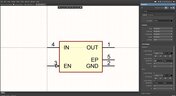
Improve Readability with Custom Pin Spacing

You can now control the vertical spacing of a pin’s designator and name with a custom margin. This setting can be applied globally via Schematic Preferences or adjusted individually in the Pin properties.

Embedded thumbnail for Does Decoupling Capacitor Placement Actually Matter?
How-To's
Does Decoupling Capacitor Placement Actually Matter?

Our new video tackles common questions about capacitor placement on a PCB. Expert Zach Peterson explains why placement is often less critical on multilayer boards with well-designed power and ground planes and shares the key insights most application notes leave out.

Embedded thumbnail for Teaching Power to Think - How Proper Voltage Accelerates Innovation with Altium
Altium Stories
Teaching Power to Think - How Proper Voltage Accelerates Innovation with Altium

Watch the video where you can find how Proper Voltage centralized communication, synchronized ECAD–MCAD development, and gained early insight into supply chain risks using Altium’s connected design platform.

Embedded thumbnail for  Detect Z-Axis Clearance Issues Earlier
New in Altium's Software
Detect Z-Axis Clearance Issues Earlier

The Z-axis clearance rule enables accurate verification of minimum interlayer copper spacing. It supports targeted constraints between net classes, differential pairs, and schematic parameter directives for advanced rule definition.

Embedded thumbnail for Fix Inconsistent Part Parameters in Your PCB Schematic
How-To's
Fix Inconsistent Part Parameters in Your PCB Schematic

Watch our latest video to learn what parameterization really means, why getting the manufacturer name and part number right is essential, and how to quickly identify inconsistencies across your schematic components using Altium’s Parameter Manager tool.

Embedded thumbnail for Create IPC-Aligned Footprints with Less Effort
New in Altium's Software
Create IPC-Aligned Footprints with Less Effort

The default value for the Solder Mask Expansion rule has been updated to improve consistency across design environments. In both PCB documents and rule-driven solder mask expansion within PCB library documents, the default setting is now 0 mil, replacing the previous default of 4 mil.

Embedded thumbnail for Via Dispersion: Why Propagation Delay Changes with Frequency
How-To's
Via Dispersion: Why Propagation Delay Changes with Frequency

Explore the concept of via dispersion and how it impacts propagation delay across frequencies. This tutorial walks through the math behind extracting delay from insertion loss and return loss S-parameters and explains why results can vary depending on your operating range.

Embedded thumbnail for Make Via Rule Configuration More Intuitive
New in Altium's Software
Make Via Rule Configuration More Intuitive

Set precise control over your routing via styles with new rule settings in the Physical View. Define minimum, maximum, and preferred values for both diameter and hole size, and easily switch between constraint ranges or template-based definitions for faster, more flexible design.

Embedded thumbnail for Coplanar Ground Done Right: PCB Design Best Practices
How-To's
Coplanar Ground Done Right: PCB Design Best Practices

When is coplanar ground actually useful and when does it provide no benefit at all? If you’ve ever wondered about this, check out our brand-new video where we tackle one of the most common questions in PCB design.

Embedded thumbnail for Import and Export with Modern Mechanical Models
New in Altium's Software
Import and Export with Modern Mechanical Models

We have expanded mechanical integration by adding support for SOLIDWORKS 2024 and SOLIDWORKS 2025 part models when importing 3D bodies into the design environment. This enhancement allows designers to work with the latest mechanical models created in SOLIDWORKS without the need for additional conversions or workarounds.

Embedded thumbnail for How to Input Via Delay in Altium for DDR Routing
How-To's
How to Input Via Delay in Altium for DDR Routing

In this video, we tackle a real viewer question about DDR3 routing across multiple PCB layers and show how via delay can silently eat into your skew margin before you’ve even finished routing, using Altium’s default 10-layer stackup as a reference.

Embedded thumbnail for Clearly Show Jumper Wires in Your Harness Designs
New in Altium's Software
Clearly Show Jumper Wires in Your Harness Designs

Support has been improved so that jumper wires connecting two cavities within the same connector are now properly shown in Layout Drawings, making the connector wiring easier to understand during documentation and review.

Embedded thumbnail for Why Datasheet PCB Guidelines Are Often Wrong
How-To's
Why Datasheet PCB Guidelines Are Often Wrong

Watch our brand-new video where we tackle the persistent issue of outdated PCB design guidelines still found in datasheets and application notes from major semiconductor manufacturers. Drawing on viewer comments, real-world datasheet examples, and insights from industry experts, we examine why recommendations such as splitting analog and digital ground planes (an approach rooted in the 1980s) continue to circulate despite their potential to cause EMC failures, signal integrity problems, and costly redesigns.

Embedded thumbnail for Keep Your Harness Designs in Sync with Library Updates
New in Altium's Software
Keep Your Harness Designs in Sync with Library Updates

The "Update From Libraries" feature has been enhanced to provide broader support for harness-related objects across both Wiring Diagrams and Layout Drawings. With this expansion, a wider range of harness components such as connectors, wires, splices, and associated attributes can now be synchronized directly with their corresponding library definitions.

Embedded thumbnail for How to Set Up Flex PCB Materials in Altium
How-To's
How to Set Up Flex PCB Materials in Altium

Discover how to set up flex and rigid-flex PCB materials in Altium with the Layer Stack Manager. In this tutorial, you’ll follow the key steps for defining polyimide cores, adhesive layers, coverlay, and stiffeners helping you build accurate, production-ready rigid-flex PCB designs.

Tag
Your search returns no results.