Welcome, Guest

Sign in to learn, create, and do more with the product you love.

News & Updates

Filters:
Tag
Embedded thumbnail for Improved Impedance Calculator
New in Altium Designer 20 Apr 29, 2020
Improved Impedance Calculator

The impedance calculator in the Layer Stack Manager now supports single and differential coplanar structures. This video shows how the impedance calculator has been improved with new coplanar transmission line structures, greater control over the dimensional properties of the physical structure, and modeling of Conductor Surface Roughness using Surface Roughness and Roughness Factor values. 

Embedded thumbnail for Propagation Delay Support
New in Altium Designer 20 Apr 27, 2020
Propagation Delay Support

In Altium Designer 20.0, you can now selectively monitor propagation delay along the whole connection or selected objects, such as tracks, pads, and vias.

Embedded thumbnail for New Routing Capabilities
New in Altium Designer 20 Apr 23, 2020
New Routing Capabilities

Advanced routing capabilities help you complete the most basic, as well as the most difficult, routing challenges. In Altium Designer 20.0, we’ve added intelligent control over pad entries that are capable of working with any combination of pad geometry as well as a new any angle routing mode that allows you to make beautiful traces that smoothly contours around obstacles.

Blog Apr 22, 2020
Any Angle Routing: When Should You Use It?

EDA tools have come a long way since the advent of personal computing. Now advanced routing features like auto-routers, interactive routing, length tuning, and pin-swapping are helping designers stay productive, especially as device and trace densities increase. Read full article in our blog:

Embedded thumbnail for New Length Tuning Engine
New in Altium Designer 20 Apr 21, 2020
New Length Tuning Engine

The tuning engine in Altium Designer has been redesigned and is now better than ever. Tuning sections can be picked up and moved to new locations on the track. What is truly remarkable is that the tunings are completely dynamic and change shape and fill patterns depending on the boundaries and surroundings.

Embedded thumbnail for How to Assign Names to Polygons
Working with Polygons Apr 3, 2020
How to Assign Names to Polygons

For some polygons, it is not always reasonable to use an automatically generated name so a custom name is needed. With a proper polygon name, you can quickly find the desired polygon in a list and correctly set the pour priority in relation to other polygons. By using unique names, you can create design rules that apply only to specified polygons.

Blog Mar 20, 2020
A Message from Altium on COVID-19

We understand that many of you, like ourselves, have transitioned to working remotely. This process comes with its challenges and we would like to offer all and any help we can to minimize disruptions for your teams and business.

Embedded thumbnail for How to Use View Mode in Altium Designer Without a License
How-To's Mar 16, 2020
How to Use View Mode in Altium Designer Without a License

In Altium Designer 20.0, you can use Altium Designer in Viewer mode when signed into your AltiumLive account and no active license is being used. The Altium Designer Viewer license can be used by anyone with an AltiumLive account and no other licenses or subscription is needed. The license can be activated from the License Management page. 

Blog Mar 2, 2020
About Altium Designer Home Page

With the new Altium Designer Home page, we are aiming to help users stay up to date with the latest features and productivity tricks available in Altium Designer. Learn more about the Home page in this documentation article.

Embedded thumbnail for Any Angle Routing
New in Altium Designer 20 Feb 26, 2020
Any Angle Routing

With any angle routing in Altium Designer, you're able to expertly maneuver around obstacles on a densely populated board, routing deep into your BGA, eliminating the need for extra signal layers. With an intelligent obstacle avoidance algorithm, you're able to avoid obstancles using tangential arcs, making the most efficient use of your board real estate.

Embedded thumbnail for Schematic Dynamic Data Model
New in Altium Designer 20 Feb 26, 2020
Schematic Dynamic Data Model

Recompiling large schematics can take up a lot of time. This is why Altium Designer uses a new dynamic data model, which incrementally and continuously compiles in the background eliminating the need to perform a full design compile.

Embedded thumbnail for Time Based Matched Lengths
New in Altium Designer 20 Feb 26, 2020
Time Based Matched Lengths

High-speed digital circuits depend on signals and data arriving on time. If traces are improperly tuned, flight times vary and data errors can be abundant. Altium Designer 20 introduces the calculation of the propagation time on traces and provides synchronized flight time for high-speed digital signals.

altium-community-forum
Blog Feb 25, 2020
Getting Connected: Altium’s User Community Forums

The Altium design environment is a complex and sophisticated set of software tools. Not surprisingly, becoming proficient with these tools will take some time, and you’ll need to practice every step of the design process from beginning to end. So what happens if you get stuck along the way?

Embedded thumbnail for Schematic Rendering
New in Altium Designer 20 Feb 25, 2020
Schematic Rendering

A smooth and fast schematic experience awaits thanks to DirectX in Altium Designer. This new implementation smoothes out zooming and panning, and also dramatically speeds up copy and paste functionality.

Embedded thumbnail for Properties Panel for Schematics
New in Altium Designer 20 Feb 24, 2020
Properties Panel for Schematics

In Altium Designer version 20.0, the Interactive Properties panel for schematics includes several functional improvements as well as productivity enhancements. The entire layout has been refined to optimize efficiency, icons and graphical previews have been improved, and there is now a smart parameters filter both for schematic lists and components. Dialogs for schematic properties, so beloved by our seasoned users, have returned stronger and better than ever.

Embedded thumbnail for Return Path Design Rule
New in Altium Designer 20 Feb 24, 2020
Return Path Design Rule

High-speed signals create electromagnetic fields that can cause cross-talk or data errors unless proper return paths are provided. Proper return paths allow noise currents to return to ground through a very low impedance, eliminating any problems. The new Return Path design rule monitors return paths and checks for a continuous signal return path on the designated reference layer above or below the signals targeted by the rule.

Embedded thumbnail for Sliding
New in Altium Designer 20 Feb 24, 2020
Sliding

Editing traces to improve signal integrity can be time consuming, especially when you have to edit individual arcs and serpentine tunings. Altium Designer 20 incorporates a new gloss engine and advanced push and shove capabilities to help speed up this process. which improves your productivity.

Embedded thumbnail for Creepage Distance Rule
New in Altium Designer 20 Feb 24, 2020
Creepage Distance Rule

This new design rule flags a violation when the creepage distance across non-conductive surface and edge regions of the board, between the targeted signals, is equal to or less than the specified creepage distance.

Embedded thumbnail for How to Place Lines on the Keepout Layer
How-To's Feb 24, 2020
How to Place Lines on the Keepout Layer

This video demonstrates how to place lines on the keepout layer.

Tag
Blog
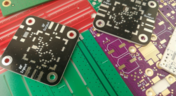
How Structural Electronics Enables 3D, Flexible, and Wearable Integration

Structural electronics integrates electronic functionality directly into the physical structure of a product, eliminating the need for traditional circuit boards. This article examines how advances in materials, additive manufacturing, and flexible substrates are enabling compact, 3D, and wearable systems with enhanced performance and design freedom.
Blog
Most Common Causes of PCB Assembly Rework and Scrap

Many PCB assemblies fail not because of exotic faults, but due to basic issues like incorrect BOM entries or footprint mismatches that force rework or scrap. This article dives into the most common causes and how to prevent costly defects in your design-to-manufacturing process.

Blog
Behind the Scenes with AI Embedded Development

Forget one-shot AI hacks Ari Mahpour shows the thoughtful, sustainable way to integrate AI into embedded firmware development. Learn the core principles (planning gate, HAL abstraction, observability, timeout design) that can help you push your efficiency 5-10 times in real hardware projects.

Blog
We're heading to PCB West 2025!

Join Altium at PCB West 2025 in Santa Clara, CA, on October 1! Stop by Booth 300 for the official launch of the new Altium platform, built on the foundation of Altium Designer and Altium 365. Be sure to check out our live demos of Altium Develop and Altium Agile.

Blog
Peak Electrical Performance in Multi-Board Designs With Advanced Simulation and Compliance Tools

Moving from single-board to multi-board systems is a leap in complexity. You must manage not just routing, but power, signal integrity, mechanical fit, and regulatory requirements across boards. In this article, you’ll discover how Altium’s advanced simulation and compliance tools help engineering teams overcome these challenges and deliver reliable multi-board solutions.

Blog
Executive Insights Into Electronic Product Development Gaps You Need To Close

Electronics hardware development is falling behind broader product development disciplines due to fragmented workflows, poor collaboration, and limited compliance visibility. This gap introduces risk, delays, and missed opportunities but executives see real business value in modernizing electronics development through better integration, traceability, and lifecycle visibility.

Blog
Sourcing For High-Mix Low-Volume Electronics Manufacturing

High-mix, low-volume (HMLV) electronics manufacturing requires agile sourcing strategies to handle shifting BOMs, erratic lead times, and component volatility. All while controlling costs and ensuring compliance. Cloud-based tools like Altium provide real-time component visibility, BOM collaboration, and supplier integrations to help navigate HMLV complexities.

Blog
One Vision, Three Powerful Solutions: Introducing Altium Discover, Altium Develop, and Altium Agile

We are excited to announce the launch of three new platform-based solutions that will transform the way electronic products are designed, built, and delivered: Altium Discover, Altium Develop, and Altium Agile. These solutions are designed to simplify processes, accelerate innovation, and make collaboration seamless across the entire electronics lifecycle. Together, they realize the purpose of Altium and Renesas: To Make Our Lives Easier.

Blog
The Top 5 Workflow Bottlenecks Slowing Down Mechanical Engineering Teams

Mechanical engineering teams frequently encounter delays from fragmented communication, disconnected toolchains, and inefficient synchronization processes. This article examines five critical workflow bottlenecks and highlights how ECAD-MCAD integration with real-time, bidirectional updates can eliminate rework and accelerate design iterations.
Tag
Embedded thumbnail for Snapping When Creating Routes
How to use Snapping
Snapping When Creating Routes

Learn how to effectively use snapping to facilitate routing.

Embedded thumbnail for How to edit or manage your board shape in Altium Designer | Rigid-flex
How to Work with Rigid-Flex PCBs
How to edit or manage your board shape in Altium Designer | Rigid-flex

Altium Designer 21 features many powerful tools for creating and editing your rigid-flex board shape. We’ll show you how to use to the board planning mode to create board shape and define regions as well as edit their properties for easy identification and functionality.

Embedded thumbnail for How Breville Innovates 4x Faster with Altium
Discovering Altium 365
How Breville Innovates 4x Faster with Altium

Learn how Breville, a consumer electronics company from Australia, was able to speed up its product development process by at least four times with Altium 365. 

Embedded thumbnail for How to use the Property Panel in Altium Designer
How-To's
How to use the Property Panel in Altium Designer

How to use the Property Panel in Altium Designer: The properties panel is your information hub for all objects in Altium Designer. Watch this video to learn how to best use the properties dialog in Altium Designer. 

Embedded thumbnail for How to Improve Routing Using Glossing
How-To's
How to Improve Routing Using Glossing

Routes for your design can get messy, leading to inefficiency and waste. Altium Designer’s Glossing features can help! We’ll show you how to clean up your interactive routing as you route, how to gloss tracks already routed, and some tips and tricks to clean them up exactly how you want them.

Embedded thumbnail for Tenting Vias in Altium Designer
How-To's
Tenting Vias in Altium Designer

This video shows how to tent vias in Altium Designer by using design rules. Since vias are often located very close to pads, during assembly, solder paste sometimes flows into vias, which, in turn, leads to poor soldering quality. To avoid this, cover vias with a solder mask layer.

Embedded thumbnail for How to Create and Validate Return Paths in Altium Designer
How-To's
How to Create and Validate Return Paths in Altium Designer

For high-speed projects where there are lines with a given impedance, it is important to maintain a consistent return signal path. For the return signal, reference planes are created in the form of polygons and the polygons must maintain integrity along the entire path of the signal. This video shows how consistent return paths are created and validated. 

Embedded thumbnail for How to Edit Component Directly on PCB
How-To's
How to Edit Component Directly on PCB

Once you’ve pulled your components with an ECO into the PCB you may need to edit them. We’ll show you how to edit your components in the PCB view.

Embedded thumbnail for How to Control Tuning in Altium Designer
How-To's
How to Control Tuning in Altium Designer

When dealing with high frequency boards, it is necessary to match the timing of certain nets and differential pairs. In this video, we’ll go over how to use the tuning tool to match trace lengths based on the design rules. Using the Interactive Length Tuning command, you will begin tuning and can then use the Properties panel to configure the properites of the tuning segment.

Embedded thumbnail for How to Use Text Justification
How-To's
How to Use Text Justification

This video demonstrates how to use the justification function to align text on the PCB.

Embedded thumbnail for How to control net propagation delay
How-To's
How to control net propagation delay

When dealing with high-frequency boards it's necessary to match the timing of certain nets and differential pairs. In this video, we’ll go over how to use the tuning tool to match trace lengths based on design rules. 

Embedded thumbnail for How to Edit or Manage Board Shape
How-To's
How to Edit or Manage Board Shape

Board shapes can be edited and managed several different ways in Altium Designer. We’ll show you how using 2D and 3D modes and models as well as importing from DXF or DWG.

Embedded thumbnail for How to define The Impedance Profile For a Coplanar Stripline
How to Work with Differential Pairs
How to define The Impedance Profile For a Coplanar Stripline

In this video, we show how to determine the impedance of a coplanar stripline. The impedance is configured on the Impedance tab of the Layer Stack Manager. When calculating the impedance, the Layer Stack Manager takes into account the material parameters and the distance to the return conductors.

Embedded thumbnail for How to Create Complex Keepout Shapes
How-To's
How to Create Complex Keepout Shapes

Keepout regions are easy to create in Altium Designer, but they can be complex. We’ll show you a few ways to make creating your more complex keepout shapes easier and more efficient.

Embedded thumbnail for How to Use a Courtyard Layer for the Component Boundary
How-To's
How to Use a Courtyard Layer for the Component Boundary

In this video, you will see how to use the courtyard layer as a component boundary.

Embedded thumbnail for Creating High-speed Signal Classes with xSignals
How To Work with High-Speed Projects
Creating High-speed Signal Classes with xSignals

You can create, configure, and utilize xSignals in Altium Designer to make your design process more efficient and effective. We’ll show you how to do it manually, using the more comprehensive Create xSignals command, and using the xSignal wizard.

Tag
Your search returns no results.