Welcome, Guest

Sign in to learn, create, and do more with the product you love.

News & Updates

Filters:
Tag
Length Tuning Impedance
Blog
What is the Impedance of Length-Tuning Structures?

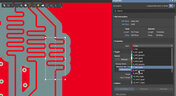
Do length-tuning structures create an impedance discontinuity? The answer is an unequivocal “yes”, but it might not matter in your design depending on several factors. Applying a length-tuning structure is equivalent to changing the distance between the traces while meandering. Therefore, you will have a change in the odd-mode impedance of a single trace. The question then becomes: does this deviation in trace impedance in a length tuning structure matter?

Embedded thumbnail for Creating a Schematic Symbol - Placing Designators and Comments
How to create a Schematic Symbol
Creating a Schematic Symbol - Placing Designators and Comments

Placing your designator or comments can be done automatically, but that doesn’t mean they’re visible. We’ll walk you through how to make them visible and position them correctly no matter what orientation your symbol is with automatic positioning.

Embedded thumbnail for Creating a Schematic Symbol: Adding Additional Parts
How to create a Schematic Symbol
Creating a Schematic Symbol: Adding Additional Parts

Altium Designer makes it easy to add additional parts to your schematic library. We’ll show you how through copying and configuring your new components through the Pin Editor and the properties panel.

Designing the Next-Generation Electronics
Blog
A-SAP™ – What do you need to know?

The continued miniaturization of both packaging and component size in next-generation electronics is becoming harder and harder to work around and presents a significant challenge for both PCB designers and PCB fabricators. To effectively navigate the constraints of the traditional subtractive-etch PCB fabrication processes, PCB designs require advanced PCB fabrication capabilities while pushing the limits of finer feature size, higher layer counts, multiple levels of stacked micro vias and increased lamination cycles.

Embedded thumbnail for Component Placement Control Using Rooms
How to work with Rooms
Component Placement Control Using Rooms

Rooms give you more control over how and where your components are placed in your PCB. We’ll show you how to use room properties to limit what is allowed in and out of a room using the room definition and custom queries.

Pin-package and Via Delay Values
Blog
Pin-Package Delay and Via Delay in High Speed Length Tuning

Take a look at the inside of some integrated circuit packages, and you’ll find a number of wires bonded to the semiconductor die and the pads at the edge of the component's package. As a signal traverses makes its way along an interconnect and into a destination circuit, signals need to travel across these bond wires and pads before they are interpreted as a logic state. As you look around the edge of an IC, these bond wires can have different lengths, and they incur different levels of delay and contribute to total jitter.

Embedded thumbnail for How to work with Differential Pair Classes?
How to Work with Differential Pairs
How to work with Differential Pair Classes?

Modern boards can contain a large number of differential pairs. For convenience, they are combined into differential pairs classes. In this video, we'll walk you through how to create and apply a differential pair class. 

Embedded thumbnail for Adding Rooms from the Schematic
How to work with Rooms
Adding Rooms from the Schematic

Rooms can be added directly from the schematic sheet. From the schematic sheet they are pushed to the PCB. Here we'll look at the rooms and component classes generated by default in the schematic, how to add and configure rooms manually, and how to push them to the PCB.

6-Layer PCB Design
Blog
6-Layer PCB Design Guidelines

Once you’ve run out of room on your 4-layer PCB, it’s time to graduate to a 6-layer board. The additional layer can give you room for more signals, an additional plane pair, or a mix of conductors. How you use these extra layers is less important than how you arrange them in the PCB stackup, as well as how you route on a 6-layer PCB. If you’ve never used a 6-layer board before, or you’ve had EMI troubles with this stackup that are difficult to solve, keep reading to see some 6-layer PCB design guidelines and best practices.

Component Management
On-Demand Webinar
Help Ensure The Best Designs With Component Management

There are many aspects to designing a PCB. One of the larger aspects has to do with managing your components. We all need components for our designs, but are those components in our library and designs up-to-date or even purchasable? These questions need to be answered before we can safely use them. If not, we could just be wasting our time designing with invalid components. Altium Designer® has several tools to help you manage the components in your libraries and designs.

Altium Designer Interface
Blog
Altium Designer 22.5 Update

We are happy to announce that the Altium Designer 22.5 update is now available. Altium Designer 22.5 continues to focus on improving the user experience, as well as performance and stability of the software, based on feedback from our users. Check out the key new features in the What's New section on the left side of this window!

Are Hybrid PCB Stackups Reliable?
Blog
How Reliable is Your Hybrid PCB Stackup?

PCB stackups often incorporate slightly dissimilar materials that could pose a reliability problem. Hybrid PCBs are one case where the PCB stackup will include different materials, typically a standard FR4 laminate and a PTFE laminate for RF PCBs. Designers who want to take the lead on material selection when designing their hybrid stackups should consider these factors that affect reliability. As with any PCB stackup, make sure you get your fabricator involved in the manufacturing process early to ensure reliability problems do not arise during production.

Embedded thumbnail for How to Draw a Board Outline Using Coordinates
How-To's
How to Draw a Board Outline Using Coordinates

In this video, we cover how to draw a curve by using coordinates. This can be very helpful when creating a board outline.

Embedded thumbnail for Creating a Schematic Symbol: Mapping out the Component
How to create a Schematic Symbol
Creating a Schematic Symbol: Mapping out the Component

When creating a schematic symbol, one of your first tasks will be creating a component symbol. We’ll show you how to map out a component in the Schematic Library Editor by creating and configuring the component, adding pins, and creating graphics.

Monte Carlo vs Sensitivity Analysis
Blog
Monte Carlo Simulation vs. Sensitivity Analysis: What’s the Difference?

In a previous article about circuit simulation and reliability, I looked at how Monte Carlo analysis is commonly used to evaluate circuits that are subject to random variations in component values. Sensitivity analysis is a bit different and it tells you how the operating characteristics of your circuit change in a specific direction. Compared to a Monte Carlo simulation, sensitivity analysis gives you a convenient way to predict exactly how the operating characteristics will change if you were to deliberately increase or decrease the value of a component.

Embedded thumbnail for How and When to Use Rooms
How to work with Rooms
How and When to Use Rooms

Rooms are an extremely valuable tool within the Altium Designer PCB environment, but how and when do you use rooms? If you need to control component placement and layout, assign a specific design rule to a group of items, or if you have repeated channels that need similar layouts in your multichannel design, rooms can make it much easier.

Simulation, Build and Test
Blog
Creating Continuous Integration Pipelines for FPGAs

Field Programmable Gate Arrays, or FPGAs, have become ubiquitous amongst high-speed, real-time digital systems. The speed at which FPGAs operate continues to increase at a dizzying pace but their adoption into Continuous Integration pipelines seems not to trail as closely. In this article we will review the concept of CI pipelines, their application to FPGAs, and look at examples on how to set this up.

Embedded thumbnail for MCAD CoDesigner Quick Start: Autodesk Fusion 360
Working with MCAD CoDesigner extension
MCAD CoDesigner Quick Start: Autodesk Fusion 360

MCAD CoDesigner is built to address the challenges of electronic product design by enabling seamless collaboration between your electrical and mechanical engineers. This video will show you how to start collaborate between Altium Designer and Autodesk Fusion 360. 

Embedded thumbnail for Component Placement Control for DFM
DFM and Fabrication Cost/Time Constraints
Component Placement Control for DFM

Component placement is a crucial part of making sure your design is manufacturable, so you need to be able to control placement. We’ll show you how, through rules and courtyard layers to maintain accessibility and manufacturability in your entire design through component placement control.

Collaborators Visualization
Blog
Soft Locks [Conflict Prevention] in Altium 365

Conflicts can occur when multiple people work on the same project simultaneously. The user might not realize that they are not looking at the latest version of the documentation, leading to problems later. To address this issue, Altium features an intuitive graphical user interface that allows you to examine conflicts quickly and carefully

Tag
NEW
Blog
Eliminate Your Design Friction with Agile Teams

Design friction from scattered data and disconnected tools slows down PCB development and leads to rework. This webinar shows how Agile Teams streamlines collaboration, aligns domains, and helps teams deliver faster with fewer errors.

Blog
What is the Best Cloud PCB Design Software?

Not all cloud PCB tools are created equal, especially when design complexity increases. This article breaks down key differences between cloud-native and hybrid solutions, helping engineers choose the right approach for performance and scalability.

Blog
From Rework to Revenue: Digital PCB DFMA

This article explores how traditional, manual DFMA workflows lead to costly rework, delays, and poor collaboration across engineering teams. It shows how a connected, digital approach enables better data integrity, faster design cycles, and improved manufacturing outcomes.

Blog
How to Choose the Right Components for Your BOM

A strong BOM can make the difference between smooth production and costly delays. Discover a practical approach to choosing components that stay available, meet compliance requirements, and keep your project on schedule.

Blog
From Scattered Requirements to Confident Product Development

See how the Requirements Portal transforms disconnected requirements into a single, live source of truth that engineers can trust at every stage of a project! Real customer stories in the article prove it’s already helping teams cut down on rework and bring products to market faster.

Blog
What is the Best PCB Design Tool For Students?

Students need PCB software that’s intuitive, affordable, and useful for building real skills. This article compares the strengths and weaknesses of leading design tools, from hobbyist platforms to industry-standard software.

Blog
What Is Collaborative Engineering?

Collaborative engineering is all about breaking down silos so electrical, mechanical, and sourcing teams can work as one with shared data and real-time updates. This article shows how that approach helps you spot issues early, reduce rework, and get products out the door with fewer surprises.

Blog
Bend Reliability: How Trace Geometry and Materials Impact Flex Lifespan

Focused on durability under repeated mechanical stress, this piece details how routing strategy, copper thickness, adhesive systems, and bend radius selection determine flex lifespan. Engineers will find actionable recommendations for reducing strain concentration and improving long-term performance in high-cycle applications.

Blog
PCB Design Process: The EDA Design Approach

Dive into how a modern EDA workflow transforms PCB design by linking electrical, mechanical, and manufacturing requirements from idea to final release. With constraint‑driven integration, you can cut down on respins and bring better boards to market faster.

Blog
Getting Started for Mechanical Engineers

Explore our collection of MCAD Collaboration walkthroughs, where you’ll discover how to synchronize mechanical constraints and keepouts, maintain traceability with advanced history and revision control, and streamline electromechanical connectivity through harness synchronization. These topics and many more are covered in this article.

Blog
Are Your ECAD Tools Holding Back Engineers’ Productivity?

The article highlights that productivity issues often stem from tool limitations rather than engineer effort, especially as project complexity grows. ECAD tools that offer clear version control, cross-discipline integration, and workflow awareness are key to sustaining efficiency.

Tag
Embedded thumbnail for Empower Your Designs with Advanced Power Analysis
How-To's
Empower Your Designs with Advanced Power Analysis

Power Analyzer brings clarity. Agile Teams brings control. Combined, they help teams deliver reliable hardware with confidence.

Embedded thumbnail for Component Selection Process Tips for PCB Design
How-To's
Component Selection Process Tips for PCB Design

Explore our new component selection tutorial and learn Zach Peterson’s proven approach to finding and choosing parts that take your electronic designs from good to exceptional.

Embedded thumbnail for Signal Analyzer by Keysight Promo Video
How-To's
Signal Analyzer by Keysight Promo Video

Design faster, collaborate smarter, and catch signal integrity issues early with Altium Agile Teams and the Signal Integrity Analyzer by Keysight — both integrated directly into Altium Designer Agile. Check out our new promo video to learn more.

Embedded thumbnail for NFC Reader Testing: Flashing and Validating the Project
How-To's
NFC Reader Testing: Flashing and Validating the Project

Join Zach Peterson as we build and test an NFC reader board from start to finish. You’ll see how a custom NFC reader goes from manufacturing to working hardware, with step-by-step guidance on firmware flashing, power checks, and RFID tag detection.

Embedded thumbnail for Power Analyzer by Keysight Promo Video
How-To's
Power Analyzer by Keysight Promo Video

Unlock faster, more reliable PCB design with Altium Designer Agile Teams and Power Analyzer by Keysight. Integrated directly inside Altium Designer, this powerful combination enables fast, secure, and adaptive collaboration helping engineering teams move quickly, stay aligned, and scale confidently. Watch this short video to see how this software improves your PCB design process.

Embedded thumbnail for Do 90-Degree Bends Destroy Signal Integrity? The Surprising Answer
How-To's
Do 90-Degree Bends Destroy Signal Integrity? The Surprising Answer

Discover why the long-held belief about 90-degree PCB traces may be more myth than reality. This video explains key signal integrity principles and uncovers insights that can help you make more informed design decisions.

Embedded thumbnail for Taking Control Without Adding Complexity – Presentation Embedded World North America 2025
New in Altium Designer 20
Taking Control Without Adding Complexity – Presentation Embedded World North America 2025

See how Altium makes project oversight faster and smarter with automated workflows, real-time tracking, and connected design data without adding work for engineers. Watch our Embedded World North America 2025 presentation to learn more.

Embedded thumbnail for Demonstration Altium DISCOVER - Embedded World North America 2025
Embedded World 2025
Demonstration Altium DISCOVER - Embedded World North America 2025

Check out our live demo from Embedded World North America 2025 showcasing Octopart Discover. In this video, you’ll see how the platform helps reduce sourcing risk, shorten design cycles, and keep projects moving forward with confidence.

Embedded thumbnail for Altium Agile for Modern Electronics Development - Presentation Embedded World North America 2025
Embedded World 2025
Altium Agile for Modern Electronics Development - Presentation Embedded World North America 2025

Watch our presentation from Embedded World North America 2025 to learn how Altium Agile brings structure, visibility, and velocity to modern hardware development. Discover how multidisciplinary teams can eliminate workflow chaos, track progress in real time, and accelerate delivery without compromising quality.

Embedded thumbnail for Demonstration Altium DEVELOP - Embedded World North America 2025
Embedded World 2025
Demonstration Altium DEVELOP - Embedded World North America 2025

See how Altium Develop empowers engineering teams with fast, cloud-connected PCB design built for modern collaboration. This live demo from Embedded World North America 2025 showcases real-time co-creation, smooth MCAD-ECAD integration, and a design environment that lets you stay focused on what matters building great products.

Embedded thumbnail for From Collaboration to Co Creation – Presentation Embedded World North America 2025
Embedded World 2025
From Collaboration to Co Creation – Presentation Embedded World North America 2025

In this Embedded World North America 2025 presentation, learn how Altium enables electrical, mechanical, firmware, sourcing, and manufacturing teams to collaborate seamlessly in real time through shared data, shared context, and shared visibility. Experience how unified workflows reduce rework, speed up decision-making, and empower teams to deliver exceptional products faster.

Embedded thumbnail for PCB Design: Defining Electrical Clearances in High Voltage PCBs
How-To's
PCB Design: Defining Electrical Clearances in High Voltage PCBs

Unlock the essential principles behind defining electrical clearances for high-voltage PCB designs in our brand-new tutorial. Learn how to apply accurate, layer-specific clearance rules using IPC-2221 standards and harness the full power of Altium’s query system.

Embedded thumbnail for Demonstration Altium AGILE Enterprise - Embedded World North America 2025
Embedded World 2025
Demonstration Altium AGILE Enterprise - Embedded World North America 2025

Experience how Altium Agile Enterprise turns complex engineering collaboration into a streamlined, unified workflow. In this live demonstration from Embedded World North America 2025, you’ll see how multi-disciplinary teams can simplify processes, minimize rework, and maintain clear alignment from requirements through release. All within a single, powerful platform.

Embedded thumbnail for Highlights from the Altium Booth at Embedded World North America 2025
Embedded World 2025
Highlights from the Altium Booth at Embedded World North America 2025

Check out our short recap of Altium’s participation at Embedded World North America 2025 in Anaheim. In the coming weeks, we’ll be sharing a few exciting presentations and demos featuring our new products: Altium Develop, Altium Agile, and Octopart Discover.

Embedded thumbnail for USB-PD Business Card: Examination & Power Test
How-To's
USB-PD Business Card: Examination & Power Test

Join us as we explore a PCB business card received at the PCB West Conference. We'll take a closer look under the microscope to examine its intricate components, test its power delivery capabilities, and uncover the engineering marvel behind this tiny device.

Embedded thumbnail for Altium Develop: Returning to Our Roots
How-To's
Altium Develop: Returning to Our Roots

Lawrence Romine unveils Altium’s groundbreaking approach to product development with Altium Develop. This innovative solution realigns the company with its core mission - empowering individual engineers and small teams. Explore the strategic vision behind creating a product that seamlessly balances accessibility, robust functionality, and intuitive design.

Tag
Your search returns no results.