Welcome, Guest

Sign in to learn, create, and do more with the product you love.

News & Updates

Filters:
Tag
Embedded thumbnail for Draftsman Document: Snapping
How-To's
Draftsman Document: Snapping

Snapping using the grids and snapping tools in Altium Designer’s Draftsman Editor gives you a lot of control over how you create and annotate primitives and components. We’ll show you how easy it is to use snapping in the Drafstman Editor.

Embedded thumbnail for High Speed: XSignals
How-To's
High Speed: XSignals

You can create, configure, and utilize xSignals in Altium Designer to make your design process more efficient and effective. We’ll show you how to do it manually, using the more comprehensive Create xSignals command, and using the xSignal wizard.

Embedded thumbnail for DFM and fab cost/time constraints: What is annular ring and how to configure it
How-To's
DFM and fab cost/time constraints: What is annular ring and how to configure it

The minimum dimension from the wall of the aperture to the edge of the pad is called an annular ring, and we can configure it with Altium Designer. We’ll show you how to get started and manage the annular ring in your design rules.

Embedded thumbnail for Altium 365 Getting Started: Gerber Compare
How-To's
Altium 365 Getting Started: Gerber Compare

The task of comparing different versions of manufacturing files usually arises when the electrical engineer needs to check and confirm the manufacturer's edits or clarify details of changes before starting production. In Altium 365 you can perform an automatic comparison of Gerber files.

Embedded thumbnail for Polygon Pours
Working with Polygons
Polygon Pours

Polygon pours are used to create copper geometries on your board. You can prioritize polygon pour order, hide them to make it easier to work on your board, and repour them to resolve design rule conflicts.

Embedded thumbnail for How to Use the MCAD CoDesigner?
How-To's
How to Use the MCAD CoDesigner?

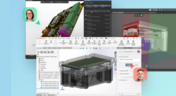
This video shows how the ECAD and MCAD engineers now can communicate directly while staying within their own design environment. The MCAD engineer is able to push design information directly from their design software straight into Altium Designer. Any changes can be reviewed, accepted, or denied by the receiving party. This process of pushing and reviewing design changes is bi-directional, meaning that both the MCAD or ECAD engineer can push and review changes to the other. 

chip with neon illumination
Blog
How Does the Package PDN Impact Power Integrity?

Whenever we say something to the effect of “components can’t work without a correctly designed PCB,” we only have to look at component packaging for evidence. It is true that component packages come with parasitics that affect signal integrity, but there is one area that we don’t often look at in terms of component packaging: power integrity.

Embedded thumbnail for Creating Additional Snap Points Using a 3D Model
How to use Snapping
Creating Additional Snap Points Using a 3D Model

Demonstration of using snap points with 3D models and how they can assist in the placement of said models.

electrical circuit with microcontroller
Blog
Designing Custom Hardware with Microcontrollers

In this article, we’ll look at all that is required to start creating your own custom microcontroller-based hardware designs. You’ll see that there actually isn’t too much to this, as microcontroller manufacturers over the years have tried to make the learning curve less steep and their devices more, and more accessible. This is both from an electrical point of view but also – equally importantly – from a programming point of view.

Embedded thumbnail for Polygon Connect Styles
Working with Polygons
Polygon Connect Styles

Define how vias and pads connect to polygons with a design rule. Customize the thermal relief width, number, and rotation as well as the air gap width.

Embedded thumbnail for How to work with Component Classes?
How to Work with Classes
How to work with Component Classes?

Modern printed circuit boards can contain a large number of components, which makes them difficult to work with. In this video we will show what component classes can be on a PCB, how to create custom component classes and how they can be useful for us. 

high-speed printed circuit board
Blog
Guide to Low-Dk PCB Materials

If you’ve taken time to learn about PCB material options and layer constructions, you have probably seen the wide range of materials that are available on the market. Materials companies produce laminates with varying Dk values, Tg values, weave styles, CTI values, and mechanical properties to target various applications in the electronics industry.

printed circuit board, photo by the author
On-Demand Webinar
Learn to Collaborate Like a Pro with Altium Designer 23

Get ready to speed up your design process with new Altium Designer collaboration capabilities. Designing a PCB is a team effort. Engineers must work with customers, manufacturers, and other stakeholders to get the best results. You need help to bring your design to life, even if you're a one-person team.

freeway in the background of the city
Blog
Designing for V2X Communication: Wireless Protocols and Standards

If you’re waiting for truly connected cars on a grand scale, there is still a massive amount of work to be done, both on the hardware and software sides. Connected cars can only become a widespread reality once the automotive industry and telecom carriers can decide which protocol will work best for vehicle-to-everything (V2X) communication. PCB designers will then need to step in to create these systems and fit them into a vehicular environment.

Embedded thumbnail for Create and Snap to a Circular Grid (Polar Grid)
How to use Snapping
Create and Snap to a Circular Grid (Polar Grid)

Instructional on how to create polar grids, how to snap to them, and why you might want to use them.

Embedded thumbnail for How to Connect Polygons to Nets
Working with Polygons
How to Connect Polygons to Nets

This video covers how to easily connect a polygon to a net using just two clicks. With the Properties panel open and a polygon selected, click the "Assign net" button in the Properties panel.

Embedded thumbnail for Altium 365 Getting Started: Gerber Compare
Getting Started with A365
Altium 365 Getting Started: Gerber Compare

The task of comparing different versions of manufacturing files usually arises when the electrical engineer needs to check and confirm the manufacturer's edits or clarify details of changes before starting production. In Altium 365 you can perform an automatic comparison of Gerber files. 

Embedded thumbnail for Altium 365 Getting Started: Schematic Compare
Getting Started with A365
Altium 365 Getting Started: Schematic Compare

The schematic sheets in a project are subject to change over time, and sometimes it may be necessary to compare several different versions and detect differences between them. In Altium Designer you can easily perform an automatic comparison of any revisions of schematic documents. 

Tag
Blog
How Structural Electronics Enables 3D, Flexible, and Wearable Integration

Structural electronics integrates electronic functionality directly into the physical structure of a product, eliminating the need for traditional circuit boards. This article examines how advances in materials, additive manufacturing, and flexible substrates are enabling compact, 3D, and wearable systems with enhanced performance and design freedom.

Blog
Most Common Causes of PCB Assembly Rework and Scrap

Many PCB assemblies fail not because of exotic faults, but due to basic issues like incorrect BOM entries or footprint mismatches that force rework or scrap. This article dives into the most common causes and how to prevent costly defects in your design-to-manufacturing process.

Blog
Behind the Scenes with AI Embedded Development

Forget one-shot AI hacks Ari Mahpour shows the thoughtful, sustainable way to integrate AI into embedded firmware development. Learn the core principles (planning gate, HAL abstraction, observability, timeout design) that can help you push your efficiency 5-10 times in real hardware projects.

Blog
We're heading to PCB West 2025!

Join Altium at PCB West 2025 in Santa Clara, CA, on October 1! Stop by Booth 300 for the official launch of the new Altium platform, built on the foundation of Altium Designer and Altium 365. Be sure to check out our live demos of Altium Develop and Altium Agile.

Blog
Peak Electrical Performance in Multi-Board Designs With Advanced Simulation and Compliance Tools

Moving from single-board to multi-board systems is a leap in complexity. You must manage not just routing, but power, signal integrity, mechanical fit, and regulatory requirements across boards. In this article, you’ll discover how Altium’s advanced simulation and compliance tools help engineering teams overcome these challenges and deliver reliable multi-board solutions.

Blog
Executive Insights Into Electronic Product Development Gaps You Need To Close

Electronics hardware development is falling behind broader product development disciplines due to fragmented workflows, poor collaboration, and limited compliance visibility. This gap introduces risk, delays, and missed opportunities but executives see real business value in modernizing electronics development through better integration, traceability, and lifecycle visibility.

Blog
Sourcing For High-Mix Low-Volume Electronics Manufacturing

High-mix, low-volume (HMLV) electronics manufacturing requires agile sourcing strategies to handle shifting BOMs, erratic lead times, and component volatility. All while controlling costs and ensuring compliance. Cloud-based tools like Altium provide real-time component visibility, BOM collaboration, and supplier integrations to help navigate HMLV complexities.

Blog
One Vision, Three Powerful Solutions: Introducing Altium Discover, Altium Develop, and Altium Agile

We are excited to announce the launch of three new platform-based solutions that will transform the way electronic products are designed, built, and delivered: Altium Discover, Altium Develop, and Altium Agile. These solutions are designed to simplify processes, accelerate innovation, and make collaboration seamless across the entire electronics lifecycle. Together, they realize the purpose of Altium and Renesas: To Make Our Lives Easier.

Blog
The Top 5 Workflow Bottlenecks Slowing Down Mechanical Engineering Teams

Mechanical engineering teams frequently encounter delays from fragmented communication, disconnected toolchains, and inefficient synchronization processes. This article examines five critical workflow bottlenecks and highlights how ECAD-MCAD integration with real-time, bidirectional updates can eliminate rework and accelerate design iterations.

Tag
Embedded thumbnail for Assigning Impedance Profiles for Differential Pairs
How to Work with Differential Pairs
Assigning Impedance Profiles for Differential Pairs

When you assign an impedance profile to a differential pair you open up several options for control over your routes. We'll show you how to do just that, as well as how to fix errors that may pop up and how to create classes for differential pairs based on assigned impedance profiles.

Embedded thumbnail for How to Highlight or Select Net Connections in the PCB
How-To's
How to Highlight or Select Net Connections in the PCB

We’ll show you how to highlight net selections so you can easily track where connections are made. We’ll show you how to hide and show nets, and how to use the view configuration and PCB panels to view and highlight nets across your design, and how to assign net colors in both the PCB and the schematic.

Embedded thumbnail for Remove Unused Via Pads
How to Design a BGA
Remove Unused Via Pads

The Remove Unused Pad Shapes tool in Altium Designer gives you control over the via pads in your design. We’ll show you how to use it to increase the usable area of power and ground polygons, increase the density of conductors between hole rows, and fixing incorrect connections.

Embedded thumbnail for Tent Vias under BGA
How to Design a BGA
Tent Vias under BGA

When via are located close to component pads some soldering issues can arise, but this can be fixed with Tented vias. We’ll show you how to manually tent vias and how to tent vias through the Design Rules.

Embedded thumbnail for Via-in-Pad for BGA
How to Design a BGA
Via-in-Pad for BGA

We’ll teach you how to use Via-in-pad to reduce inductance, improve signal integrity, and improve power distribution system performance in BGA designs.

Embedded thumbnail for Using HDI Stackups during BGA Design
How to Design a BGA
Using HDI Stackups during BGA Design

Micro Vias and Buried Vias play an important role in high density interconnection layer stackups (HDI Stackups). We’ll show you how to add via and create rules to allow you to take full advantage of the HDI Stackup.

Embedded thumbnail for Automatic Fanout With BGA
How to Design a BGA
Automatic Fanout With BGA

When routing a BGA it can be necessary to use automatic fanout to make the routing process easier and faster. We’ll show you how to run the automatic fanout for routing a BGA and how the rules can affect the outcome of the route.

Embedded thumbnail for Specifying NSMD and SMD for BGA
How to Design a BGA
Specifying NSMD and SMD for BGA

BGA layouts use two types of pads: SMD, Solder Mask Pads, or NSMD, Non-Solder Mask Pads. Here we’ll walk you through the differences and how to specify and edit them for your layout.

Embedded thumbnail for Via Shielding and Stitching
Via Stitching
Via Shielding and Stitching

Altium Designer gives you full control over your via shielding and stitching. We’ll show you how to use our shielding and stitching tools, how to alter their parameters, and how to remove any unwanted via shielding and stitching.

Embedded thumbnail for xSignals for DDR3 and DDR4
How To Work with High-Speed Projects
xSignals for DDR3 and DDR4

In a high-speed design, DDR3 and DDR4 memory chips can utilize xSignal classes to match track lengths from the controller to the memory chip easily and quickly using the xSignals wizard.

Embedded thumbnail for High-Speed Tuning
How To Work with High-Speed Projects
High-Speed Tuning

If you use high-speed interfaces like USB 3.0, PCIE, or DDR3/DDR4, you need to use match length tuning to ensure that they work properly. We’ll show you why and how, as well as demonstrating the different tools for length tuning.

Embedded thumbnail for Using Document Parameters with Draftsman
How to Work with Draftsman
Using Document Parameters with Draftsman

The Draftsman Editor in Altium Designer uses document parameters to allow fine grain control over the draftsman document. We’ll show you how you can use the document parameters in your Draftsman document. 

Embedded thumbnail for High-Speed Features of Creating a Stack
How To Work with High-Speed Projects
High-Speed Features of Creating a Stack

The foundation of any high speed design is the layer stack. We’ll show you some of Altium Designer’s powerful layer stack creation features.

Embedded thumbnail for High-Speed Return Paths
How To Work with High-Speed Projects
High-Speed Return Paths

For high speed designs it is critical to maintain your return path for adequate signal integrity. We’ll show you how, using best practices and error resolutions in Altium Designer.

Embedded thumbnail for Working with Design Variants
How to Work with Draftsman
Working with Design Variants

Altium Designer’s Draftsman Document allows for several different board views and variants that you can work with. We’ll show you how to add new variants and work with their properties to display exactly what you need in your Draftsman Document

Embedded thumbnail for Creating Schematics in High-speed Projects
How To Work with High-Speed Projects
Creating Schematics in High-speed Projects

There are several powerful features in Altium Designer for creating schematics in high speed projects. We’ll show you a few, such as how to utilize nets, net classes, blankets, design rules, and differential pairs.

Tag
Your search returns no results.