Welcome, Guest

Sign in to learn, create, and do more with the product you love.

News & Updates

Filters:
Tag
Embedded thumbnail for Design Faster with Altium Designer 25
Altium Designer's 25 Quantitative Benefits
Design Faster with Altium Designer 25

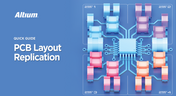
Every second and every click count in the product development cycle. See how the new PCB Layout Replication feature in Altium Designer 25 boosts your efficiency in the PCB design process. Want to improve even more? Check out our Benefit Calculator now!

Embedded thumbnail for Creating PCB Drill Drawings and Tables in Altium Designer
How-To's
Creating PCB Drill Drawings and Tables in Altium Designer

If you want to learn more about drill drawings and tables in your PCB designs using Altium Designer, this tutorial is a must-watch. In the video, our Tech Consultant Zach Peterson walks you through multiple methods for generating these critical fabrication documents, including automatic Gerber outputs and custom drawings.

Embedded thumbnail for Streamlining Team Collaboration in Industrial PCB Projects - Recording Preview
New in Altium Designer 25
Streamlining Team Collaboration in Industrial PCB Projects - Recording Preview

This webinar recording shows how Altium Designer and Altium 365 improve team collaboration in industrial PCB projects. It covers features like version control, live commenting, task tracking, and JIRA integration to help teams work more efficiently and reduce costly errors.

Blog
Preparing for Prototype: Final Component Validation

Final component validation is the last critical check before building a prototype, ensuring all parts are accurate, available, and viable. This article shows how Altium’s integrated tools—like SiliconExpert, Z2Data, Octopart, and BOM Portal—help teams avoid costly surprises and prepare with confidence.

Blog
Getting Started with Harness Design in Altium Designer 25

Explore the essential steps and tools for Harness Design in Altium Designer 25, from initial setup to final documentation. The article highlights how the unified design environment streamlines the entire process, improving efficiency and project integration.

Blog
The Future of PCB Design Starts Here

Altium Designer is constantly evolving, with powerful new features and updates on the way. Get an exclusive first look at what’s coming next—visit our Coming Soon page to stay up to date with the latest innovations.

Blog
Simplify Harness-to-System Connections for Better PCB Design Outcomes

Struggling to keep harness and system designs in sync? In our brand-new article we explore how integrating PCB and harness design workflows can eliminate errors, improve collaboration, and accelerate your development process. Discover a smarter approach to connecting your harness to the system.

Embedded thumbnail for AC Coupling Capacitors: Placement for High-Speed PCB Design
How-To's
AC Coupling Capacitors: Placement for High-Speed PCB Design

Learn the facts about AC coupling capacitor placement in high-speed PCB designs. In this video, Zach Peterson explores the ongoing debate: should AC coupling capacitors be placed near the transmitter or the receiver in high-speed differential pairs?

Embedded thumbnail for Coming Soon: Export 3D-MID Tracks as Centerline Curves
New in Altium Designer 25
Coming Soon: Export 3D-MID Tracks as Centerline Curves

Coming Soon: 3D-MID Track-to-Centerline Export allows you to export conductive tracks on 3D substrates as precise centerline curves within STEP files—enabling seamless integration with advanced 5-axis manufacturing processes. Explore more upcoming upgrades on our Coming Soon page.

Embedded thumbnail for Advanced xSignal and Impedance Control Techniques - Recording Preview
New in Altium Designer 25
Advanced xSignal and Impedance Control Techniques - Recording Preview

This webinar recording explores advanced xSignal and impedance control techniques in Altium Designer 25. It covers defining xSignals, managing impedance profiles, differential pairs, and delay tuning—all essential for high-speed PCB design. Full recording you find here: April 2025 COM Webinar Recording.

Embedded thumbnail for Coming Soon: Embedded 3D Models for Harness Designs
How-To's
Coming Soon: Embedded 3D Models for Harness Designs

Coming soon: the Embedded 3D Models for Harness Designs feature will automatically include Parasolid-format 3D models in your harness layout drawings. This improves integration with MCAD CoDesigner, enabling seamless synchronization between electrical and mechanical design domains. To see more upcoming upgrades, visit our Coming Soon page.

Embedded thumbnail for Make Smarter Design Decisions with Signal Analyzer by Keysight
New in Altium Designer 25
Make Smarter Design Decisions with Signal Analyzer by Keysight

Discover how to simplify your workflow and boost design confidence with Signal Analyzer by Keysight—a complete extension available right inside Altium Designer 25. This whitepaper shows you how to analyze impedance, delay, and insertion/return loss without ever leaving your design environment.

Blog
Printed Electronics: The Future of Flexible and Cost-Effective Circuit Design

This article explores the rise of printed electronics as a lightweight, flexible, and cost-effective alternative to traditional PCB design. It highlights key benefits like reduced manufacturing costs, sustainability, and new design possibilities—especially in wearables, medical devices, and automotive applications. 

Embedded thumbnail for Unveiling 86% Task Time Efficiency in Altium Designer 25
Altium Designer's 25 Quantitative Benefits
Unveiling 86% Task Time Efficiency in Altium Designer 25

Watch how Altium Designer 25 saves time on PCB visualization. This short video shows a side-by-side comparison of the same task done in Altium Designer 25 vs. an external CAD tool—revealing big time and click savings. A great teaser to highlight the value of the unified design environment and promote the Benefit Calculator.

Embedded thumbnail for AGND vs PGND: Proper Net Tie Connections in Power Regulator PCB Design
How-To's
AGND vs PGND: Proper Net Tie Connections in Power Regulator PCB Design

What’s the difference between AGND and PGND — and when should you use a net tie? Zach Peterson breaks down proper PCB layout for buck converters, grounding best practices, and why component placement matters in switching regulator designs.

Blog
New Routing Possibilities with Ultra HDI

Explore how Ultra HDI technology is redefining PCB design. This article breaks down the benefits and manufacturing considerations of Ultra HDI, and how it enables next-level routing density and miniaturization in advanced electronics.

Tag
Blog
Rigid-Flex PCBs: Advantages and Challenges

In this article, we will begin with a basic explanation of how rigid-flex technology differs from rigid board technology. We will then provide an overview of the advantages and conclude with a discussion of the challenges to be aware of.

Intrusive Soldering
Blog
When Should You Use Intrusive Soldering?

Through-hole components are frequently employed in power electronics, particularly when dealing with AC power from a wall outlet. In this article, you can delve into the intrusive soldering process and discover when it can be applied in PCB design.

Blog
What Makes a PCB Enclosure Rugged?

Whether you purchase products off-the-shelf or online, they all come housed within an enclosure. In some cases, these enclosures are intentionally ruggedized to withstand harsh environments or mechanical shocks. You can learn more about enclosures in this new and interesting article.

Blog
Concept Phase – Lid Assembly Design Part 2

We are continuing our journey through the lid assembly design phase of our Open Source Laptop project. In this section, we will discuss the layout of the test adapter and provide a demonstration of the first test for the display panel, along with the initial steps involved in assembling the boards.

Blog
Concept Phase – Lid Assembly Design Part 1

In the exciting next phase of the open-source laptop project we're (finally) diving into design, and getting hands-on with the display panel. Discover how we're selecting the right panel, integrating it seamlessly, and creating a custom DisplayPort adapter to illuminate the screen. Plus, learn how our choices impact features like microphones, webcams, and touch sensors, and how Altium can help bring it all to life. It’s not too late to join as we continue on this innovative journey!

Blog
Unleashing the Power of Concurrent PCB Design

Concurrent PCB Design is essential to unlocking the full potential of engineering teams and delivering innovative products that meet the demands of the modern world. Learn more about the main capabilities and the numerous benefits of this upcoming feature in Altium Designer.

Blog
Crosstalk Reduction and Elimination Techniques in Altium Designer

Whether you're designing a digital board with a ton of traces, or an RF board operating at very high frequencies, any electronic device with propagating signals will experience crosstalk. Learn more about some sure-fire ways you can reduce crosstalk in your high-speed designs.

Blog
Baxandall Volume Control for Audio

The Baxandall volume control is an especially useful, flexible, and simple-to-implement circuit for numerous audio designs. In this article, we will demonstrate how to design this type of equipment.

Blog
RF Power Amplifier Module PCB Design

RF power amplifiers can be found in many wireless products, often integrated into chipsets or modems. However, in certain specialized systems, you might require higher power output at a specific frequency. This necessitates a discrete amplifier circuit to deliver that power. In this article, we present an example project for a power amplifier that you can incorporate into your RF project.

Blog
Avoid GIGO in Your PCB Simulation Tools

Simulation tools are extremely useful for understanding electromagnetic behavior in a design. Learn more about how to avoid obtaining inaccurate results during your PCB simulation process.

Tag
Embedded thumbnail for Searching for Errors in Schematic
Searching for Errors in Schematic

Searching for Errors: Errors and mistakes happen to everyone - from beginners to professionals. So we always preach how it is paramount for your design to be validated before pushing it to the PCB. But luckily it’s pretty easy to find and analyze any errors using Altium Designer. We’ll take a look at how to find and analyze errors in your schematic.

Embedded thumbnail for Creating Net Classes
Giu 2, 2020
Creating Net Classes

A Net Class is a collection of nets that can be used for creating a targeted design rule. So for example, you may want all power and ground nets to have a minimum track width to handle a specific current rating. So we’ll show you how to assign these nets to a NetClass. 

Embedded thumbnail for How to Transfer Libraries to Concord Pro
New in Altium Designer 20 Mag 6, 2020
How to Transfer Libraries to Concord Pro

This video demonstrates how the Library Migrator can quickly move database and integrated libraries to the Concord Pro workspace. Your design can be organized and verified in the Library Migrator before pushing it to the cloud. After migration, the Messages panel will display any missing information.

Embedded thumbnail for Improved Impedance Calculator
New in Altium Designer 20 Apr 29, 2020
Improved Impedance Calculator

The impedance calculator in the Layer Stack Manager now supports single and differential coplanar structures. This video shows how the impedance calculator has been improved with new coplanar transmission line structures, greater control over the dimensional properties of the physical structure, and modeling of Conductor Surface Roughness using Surface Roughness and Roughness Factor values. 

Embedded thumbnail for Propagation Delay Support
New in Altium Designer 20 Apr 27, 2020
Propagation Delay Support

In Altium Designer 20.0, you can now selectively monitor propagation delay along the whole connection or selected objects, such as tracks, pads, and vias.

Embedded thumbnail for New Routing Capabilities
New in Altium Designer 20 Apr 23, 2020
New Routing Capabilities

Advanced routing capabilities help you complete the most basic, as well as the most difficult, routing challenges. In Altium Designer 20.0, we’ve added intelligent control over pad entries that are capable of working with any combination of pad geometry as well as a new any angle routing mode that allows you to make beautiful traces that smoothly contours around obstacles.

Embedded thumbnail for New Length Tuning Engine
New in Altium Designer 20 Apr 21, 2020
New Length Tuning Engine

The tuning engine in Altium Designer has been redesigned and is now better than ever. Tuning sections can be picked up and moved to new locations on the track. What is truly remarkable is that the tunings are completely dynamic and change shape and fill patterns depending on the boundaries and surroundings.

Embedded thumbnail for How to Assign Names to Polygons
Working with Polygons Apr 3, 2020
How to Assign Names to Polygons

For some polygons, it is not always reasonable to use an automatically generated name so a custom name is needed. With a proper polygon name, you can quickly find the desired polygon in a list and correctly set the pour priority in relation to other polygons. By using unique names, you can create design rules that apply only to specified polygons.

Embedded thumbnail for How to Use View Mode in Altium Designer Without a License
How-To's Mar 16, 2020
How to Use View Mode in Altium Designer Without a License

In Altium Designer 20.0, you can use Altium Designer in Viewer mode when signed into your AltiumLive account and no active license is being used. The Altium Designer Viewer license can be used by anyone with an AltiumLive account and no other licenses or subscription is needed. The license can be activated from the License Management page. 

Embedded thumbnail for Any Angle Routing
New in Altium Designer 20 Feb 26, 2020
Any Angle Routing

With any angle routing in Altium Designer, you're able to expertly maneuver around obstacles on a densely populated board, routing deep into your BGA, eliminating the need for extra signal layers. With an intelligent obstacle avoidance algorithm, you're able to avoid obstancles using tangential arcs, making the most efficient use of your board real estate.

Embedded thumbnail for Schematic Dynamic Data Model
New in Altium Designer 20 Feb 26, 2020
Schematic Dynamic Data Model

Recompiling large schematics can take up a lot of time. This is why Altium Designer uses a new dynamic data model, which incrementally and continuously compiles in the background eliminating the need to perform a full design compile.

Embedded thumbnail for Time Based Matched Lengths
New in Altium Designer 20 Feb 26, 2020
Time Based Matched Lengths

High-speed digital circuits depend on signals and data arriving on time. If traces are improperly tuned, flight times vary and data errors can be abundant. Altium Designer 20 introduces the calculation of the propagation time on traces and provides synchronized flight time for high-speed digital signals.

Embedded thumbnail for Schematic Rendering
New in Altium Designer 20 Feb 25, 2020
Schematic Rendering

A smooth and fast schematic experience awaits thanks to DirectX in Altium Designer. This new implementation smoothes out zooming and panning, and also dramatically speeds up copy and paste functionality.

Embedded thumbnail for Properties Panel for Schematics
New in Altium Designer 20 Feb 24, 2020
Properties Panel for Schematics

In Altium Designer version 20.0, the Interactive Properties panel for schematics includes several functional improvements as well as productivity enhancements. The entire layout has been refined to optimize efficiency, icons and graphical previews have been improved, and there is now a smart parameters filter both for schematic lists and components. Dialogs for schematic properties, so beloved by our seasoned users, have returned stronger and better than ever.

Embedded thumbnail for Return Path Design Rule
New in Altium Designer 20 Feb 24, 2020
Return Path Design Rule

High-speed signals create electromagnetic fields that can cause cross-talk or data errors unless proper return paths are provided. Proper return paths allow noise currents to return to ground through a very low impedance, eliminating any problems. The new Return Path design rule monitors return paths and checks for a continuous signal return path on the designated reference layer above or below the signals targeted by the rule.

Embedded thumbnail for Sliding
New in Altium Designer 20 Feb 24, 2020
Sliding

Editing traces to improve signal integrity can be time consuming, especially when you have to edit individual arcs and serpentine tunings. Altium Designer 20 incorporates a new gloss engine and advanced push and shove capabilities to help speed up this process. which improves your productivity.

Tag
Your search returns no results.