Welcome, Guest

Sign in to learn, create, and do more with the product you love.

News & Updates

Filters:
Tag
NEW
Blog
Types of Simulation Tools For PCBs

PCB simulation isn’t one-size-fits-all and that’s where it gets interesting! Discover the wide range of tools available, from quick circuit checks to advanced multiphysics simulations, and how they help you design with confidence.

NEW
Embedded thumbnail for  Detect Z-Axis Clearance Issues Earlier
New in Altium's Software
Detect Z-Axis Clearance Issues Earlier

The Z-axis clearance rule enables accurate verification of minimum interlayer copper spacing. It supports targeted constraints between net classes, differential pairs, and schematic parameter directives for advanced rule definition.

NEW
Blog
Wiring the Future: The Shift to Unified Electromechanical Design

This article explores the shift from PCB-centric design to complex, system-level development where wiring and harnesses play a critical role in product performance. It highlights how unified electromechanical workflows and bi-directional ECAD–MCAD integration improve accuracy, reduce delays, and ensure reliable, production-ready designs.

NEW
Embedded thumbnail for Fix Inconsistent Part Parameters in Your PCB Schematic
How-To's
Fix Inconsistent Part Parameters in Your PCB Schematic

Watch our latest video to learn what parameterization really means, why getting the manufacturer name and part number right is essential, and how to quickly identify inconsistencies across your schematic components using Altium’s Parameter Manager tool.

Blog
Best Tools For PCB DFM Checks

Want to catch manufacturability issues before they turn into expensive delays? Discover the essential DFM tools from real-time checks to post-layout analysis that help you get your PCB right the first time.

Embedded thumbnail for Create IPC-Aligned Footprints with Less Effort
New in Altium's Software
Create IPC-Aligned Footprints with Less Effort

The default value for the Solder Mask Expansion rule has been updated to improve consistency across design environments. In both PCB documents and rule-driven solder mask expansion within PCB library documents, the default setting is now 0 mil, replacing the previous default of 4 mil.

Blog
Eliminate Your Design Friction with Agile Teams

Design friction from scattered data and disconnected tools slows down PCB development and leads to rework. This webinar shows how Agile Teams streamlines collaboration, aligns domains, and helps teams deliver faster with fewer errors.

Embedded thumbnail for Via Dispersion: Why Propagation Delay Changes with Frequency
How-To's
Via Dispersion: Why Propagation Delay Changes with Frequency

Explore the concept of via dispersion and how it impacts propagation delay across frequencies. This tutorial walks through the math behind extracting delay from insertion loss and return loss S-parameters and explains why results can vary depending on your operating range.

Embedded thumbnail for Make Via Rule Configuration More Intuitive
New in Altium's Software
Make Via Rule Configuration More Intuitive

Set precise control over your routing via styles with new rule settings in the Physical View. Define minimum, maximum, and preferred values for both diameter and hole size, and easily switch between constraint ranges or template-based definitions for faster, more flexible design.

Blog
What is the Best Cloud PCB Design Software?

Not all cloud PCB tools are created equal, especially when design complexity increases. This article breaks down key differences between cloud-native and hybrid solutions, helping engineers choose the right approach for performance and scalability.

Blog
From Rework to Revenue: Digital PCB DFMA

This article explores how traditional, manual DFMA workflows lead to costly rework, delays, and poor collaboration across engineering teams. It shows how a connected, digital approach enables better data integrity, faster design cycles, and improved manufacturing outcomes.

Embedded thumbnail for Coplanar Ground Done Right: PCB Design Best Practices
How-To's
Coplanar Ground Done Right: PCB Design Best Practices

When is coplanar ground actually useful and when does it provide no benefit at all? If you’ve ever wondered about this, check out our brand-new video where we tackle one of the most common questions in PCB design.

Embedded thumbnail for Import and Export with Modern Mechanical Models
New in Altium's Software
Import and Export with Modern Mechanical Models

We have expanded mechanical integration by adding support for SOLIDWORKS 2024 and SOLIDWORKS 2025 part models when importing 3D bodies into the design environment. This enhancement allows designers to work with the latest mechanical models created in SOLIDWORKS without the need for additional conversions or workarounds.

Embedded thumbnail for How to Input Via Delay in Altium for DDR Routing
How-To's
How to Input Via Delay in Altium for DDR Routing

In this video, we tackle a real viewer question about DDR3 routing across multiple PCB layers and show how via delay can silently eat into your skew margin before you’ve even finished routing, using Altium’s default 10-layer stackup as a reference.

Blog
How to Choose the Right Components for Your BOM

A strong BOM can make the difference between smooth production and costly delays. Discover a practical approach to choosing components that stay available, meet compliance requirements, and keep your project on schedule.

Embedded thumbnail for Clearly Show Jumper Wires in Your Harness Designs
New in Altium's Software
Clearly Show Jumper Wires in Your Harness Designs

Support has been improved so that jumper wires connecting two cavities within the same connector are now properly shown in Layout Drawings, making the connector wiring easier to understand during documentation and review.

Blog
From Scattered Requirements to Confident Product Development

See how the Requirements Portal transforms disconnected requirements into a single, live source of truth that engineers can trust at every stage of a project! Real customer stories in the article prove it’s already helping teams cut down on rework and bring products to market faster.

Embedded thumbnail for Why Datasheet PCB Guidelines Are Often Wrong
How-To's
Why Datasheet PCB Guidelines Are Often Wrong

Watch our brand-new video where we tackle the persistent issue of outdated PCB design guidelines still found in datasheets and application notes from major semiconductor manufacturers. Drawing on viewer comments, real-world datasheet examples, and insights from industry experts, we examine why recommendations such as splitting analog and digital ground planes (an approach rooted in the 1980s) continue to circulate despite their potential to cause EMC failures, signal integrity problems, and costly redesigns.

Tag
Blog
High-Speed PCB Design Tips

Essential tips for high-speed PCB designs, and when you need to start being concerned about how and where you route your traces.

Introduction to Open Source Laptop Project
Blog
Introduction to Open Source Laptop Project

We have started a very exciting journey into the creation of an open source laptop project. This project will be an ongoing one, with our community able interactively participate. By utilizing Altium 365 users will be able to view, comment on, and download design files. This will be a great learning experience for new and experienced PCB designers.

Blog
Ebook: Routing High-Density Interconnects with Reliable Microvias

HDI PCBs take a particular approach to routing interconnects through multiple layers to ensure reliability during fabrication, assembly, and operation. The critical structure that enables this is microvias, which are prone to failure if not designed properly. In this e-book, readers will receive an initial look at the reasons microvia reliability has come into the spotlight and why HDI PCB designers put reliability first when routing through microvias.

Blog
IPC-2221 Calculator for PCB Trace Current and Heating

Aside from impedance and annular ring calculations, one of the other major formulas specified in the IPC 2221 standard relates temperature rise, trace width, and trace current. THere is also the IPC-2152 standard, both include this guidance on designing for thermal reliability, but which standard should we use?

Blog
Stripline Impedance Calculator

Striplines provide some advantages over microstrips as they take advantage of natural shielding and coupling from nearby ground plane layers. Although they tend to experience higher losses due to total confinement in the dielectric, they can be thinner due to the high dielectric constant used in internal layers of a PCB. Use our free impedence calculator to help you determine the correct width needed to hit a target impedance.

Blog
Which Types of Opto-Isolators Are Right For Your Signal?

An optoisolator is a cool electronic device that can be used to pass information between a diode without passing an electrical current. There are many great applications for these, but do you know which one is right for you?

Blog
Properties panel document options in SCH editors

The Properties panel provides access to the properties of documents and objects. The contents of the panel change depending on the active document or the selected object. This blog will quickly go over some of need to know options around the properties panel in the schematic document.

High-Speed PCB Stackup Design
Blog
The High-Speed PCB Stackup Design Challenge

Even with all the good guidelines out there for high speed design, there are particular aspects of stackup construction and their relation to building boards that get overlooked. This blog is goes beyond just the typical SI/PI guidelines and looks at these problems from more of an engineering perspective.

stitching vias
Blog
Everything You Need to Know About Stitching Vias

Stitching vias are something you often see spread around the surface layer of a PCB, but what are they? and should you be using them? In this guide, we'll go over some of the standard uses of stitching vias and when they should be used in a PCB.

PCB Stackup Basics
Blog
PCB Stackup Basics

In comparison to the build-up of a PCB, the stackup is more concerned with the electrical type of each layer, that is are we working with signals, power, or ground. Continue reading to learn how you can optimize your layer stack.

Tag
Embedded thumbnail for The Future of 3D MID Design: Harting and Altium's Pioneering Collaboration
Success Stories
The Future of 3D MID Design: Harting and Altium's Pioneering Collaboration

Discover the collaborative journey between Harting and Altium to revolutionize 3D circuit design in this informative video. Learn about the evolution from traditional 2D to innovative 3D circuit design, made possible through Altium Designer’s advanced 3D MID capabilities.

Embedded thumbnail for Minimize Manual Effort With Automatic Length Tuning
How-To's
Minimize Manual Effort With Automatic Length Tuning

Wishing you a Happy New Year! We invite you to join us for the first video of the year. Unlock the power of Automatic Length Tuning in Altium Designer. This feature is seamlessly integrated into the main Route menu in 2D mode, streamlining your design process for enhanced precision and efficiency.

Embedded thumbnail for Happy Holidays!!!
How-To's
Happy Holidays!!!

Altium sending you warm wishes for Christmas filled with all the things that bring you joy, surrounded by the people you love and may your dreams blossom and make all your aspirations come true in the coming year.

Embedded thumbnail for Harness Design in Altium Designer helps Lazer Lamps built better products faster
Success Stories
Harness Design in Altium Designer helps Lazer Lamps built better products faster

Hear the story of how Altium Designer's Harness Design feature streamlines wiring system design to empower Lazer Lamps’ engineering team to craft superior LED driving lights in record time. From seamless collaboration among their engineering teams to the intuitive design features that accelerated their workflows, witness firsthand how Altium Designer helped improve Lazer Lamps design processes.

Embedded thumbnail for Altium Designer 24 - Out Now!
New in Altium Designer 24
Altium Designer 24 - Out Now!

Altium Designer 24 has arrived, heralding a groundbreaking transformation. Now available for download, it introduces exciting features including PCB CoDesign, Constraint Manager, PCB Layout Replication, Ansys CoDesigner and much more. Altium Designer isn't just a requested tool; it's a requirement that establishes the standard in electronic design.

Embedded thumbnail for Coming Soon: Sectional View
New in Altium Designer 24
Coming Soon: Sectional View

Discover more about our latest upgraded feature, premiering on December 13th. The Sectional View is a tool that simplifies and enhances your PCB design process. Whether you're troubleshooting complex designs or streamlining your workflow, it provides clarity and efficiency.

Embedded thumbnail for Coming Soon: Advanced Mixed Simulation Features
New in Altium Designer 24
Coming Soon: Advanced Mixed Simulation Features

We invite you to explore the world of mixed simulation. Delve deeper into key information about this feature and its enhanced functionalities, available starting December 13th. Set up mixed-signal simulations to ensure accuracy and reliability in your design testing

Embedded thumbnail for Coming Soon: Harness MCAD CoDesign
New in Altium Designer 24
Coming Soon: Harness MCAD CoDesign

In this short video, you can explore how Harness MCAD CoDesign, available on the 13th of December, streamlines the design process by minimizing errors, accelerating iterations, and ensuring a synchronized development process. Altium Designer 24 is on the horizon, and it's not just a request but a requirement for optimizing your electronic design process.

Embedded thumbnail for Altium Designer 24: From Requested to Required
New in Altium Designer 24
Altium Designer 24: From Requested to Required

Altium Designer 24 is getting closer! In this short video, we are presenting a list of new features and improvements that will be available starting from the 13th of December in our software.

Embedded thumbnail for Coming Soon: Harness Multi-Board
How-To's
Coming Soon: Harness Multi-Board

Altium Designer's all-in-one approach to electronic design seamlessly combines Harness and Multi-Board Design capabilities, allowing you to create complex multi-board systems with ease. This new feature, available from December 13th, provides an opportunity to bring design and manufacturing teams together, inspiring a streamlined design process, reducing the risk of errors, and ensuring unwavering project deliveries.

Tackle Any Design Complexity With the Constraint Manager
What's New in 23.11
Tackle Any Design Complexity With the Constraint Manager

For enterprise and pro subscriptions, the new Constraint Manager offers a table-based interface, accessible from both Schematic and PCB, allowing you to define constraints more collaboratively. Engineers and stakeholders can collectively set design constraints with ease.

Tackle Any Design Complexity With the Constraint Manager
What's New in 23.11
使用约束管理器应对任何设计复杂性

对于企业版和专业版订阅用户,新约束管理器提供了基于表格的界面,无论从原理图还是 PCB 都可以访问,帮助您加强在约束定义方面的协作力度。工程师和协作者都可以轻松地共同设置设计约束。

Embedded thumbnail for Minimize Manual Effort With Automatic Length Tuning
What's New in 23.11
通过自动长度调整功能来减少手动操作

自动长度调整提供 2D 模式下的自动长度调整和延迟调整功能,可方便地从主布线菜单访问。该功能可以减少进行长度调整和延迟调整时通常需要的手动操作,从而加快设计进程。

Embedded thumbnail for Minimize Manual Effort With Automatic Length Tuning
What's New in 23.11
Minimize Manual Effort With Automatic Length Tuning

Automatic Length Tuning introduces automatic length and delay tuning functionality in 2D mode, accessed conveniently from the main Route menu. This feature reduces the manual effort typically associated with length and delay tuning, expediting your design process.

Embedded thumbnail for The Most Common 2-Layer PCB Design Mistakes and How To Avoid Them
How-To's
The Most Common 2-Layer PCB Design Mistakes and How To Avoid Them

Do you encounter issues when preparing a two-layer board? In this video, we address some of the most common mistakes made with this type of board and explain why upgrading to a four-layer board might be the solution you need.

Embedded thumbnail for Coming Soon: Ansys CoDesigner
How-To's
Coming Soon: Ansys CoDesigner

Ansys CoDesigner (which will be released on the13th of December) simplifies your design process by connecting ECAD and Simulation to eliminate manual export/import steps. With features like design change synchronization and commenting, Altium Designer ECAD engineers and Ansys Electronics Desktop (AEDT) SIM engineers can collaborate seamlessly in one workspace.

Tag
Integrating Requirements June 2025 Webinar
On-Demand Webinar Mag 28, 2025
Integrating Requirements into Your PCB Design Workflow
Join our webinar where you will learn about integrated requirements tools who can help you eliminate late-stage design changes, AI support through system requirements and integration of design requirements directly in PCB Design. Don't miss it, register now!
Streamlining Team Collaboration
On-Demand Webinar Apr 17, 2025
Streamlining Team Collaboration in Industrial PCB Projects
Join us for our upcoming webinar to discover how Altium Designer and Altium 365 can transform your team’s collaboration and take your PCB design projects to the next level. Attend for a chance to win free access to the Altium 365 Training Bundle.
PCB CoDesign Webinar
On-Demand Webinar Gen 24, 2024
Discover How Altium Designer 24 Revolutionizes Team Dynamics in PCB Design
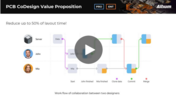
Expand your collaboration skills and stay ahead of the curve with PCB CoDesign. Design teams often grapple with prolonged design cycles and coordination issues, leading to delays and inefficiencies. In the current landscape, design processes are hindered by fragmented collaboration, resulting in increased layout times and difficulties in synchronizing design updates.