Welcome, Guest

Sign in to learn, create, and do more with the product you love.

News & Updates

Filters:
Tag
Blog
How to Maximize Copper in Your PCB Design: The Pros and Cons of Copper Pouring Versus Placing

There is a saying in copper pour PCB design, “Copper is free.” It means a PCB editor designer must think in reverse. A board starts off as solid copper, and the copper you don’t want is removed. It is faster to build, less consumptive, and less expensive to make a board that is mostly copper as compared to the same size board that is mostly bare. Picking the correct technique will make the difference between an effortless or frustrating experience.

Embedded thumbnail for Searching for Errors in Schematic
Searching for Errors in Schematic

Searching for Errors: Errors and mistakes happen to everyone - from beginners to professionals. So we always preach how it is paramount for your design to be validated before pushing it to the PCB. But luckily it’s pretty easy to find and analyze any errors using Altium Designer. We’ll take a look at how to find and analyze errors in your schematic.

Embedded thumbnail for Creating Net Classes
Juni 2, 2020
Creating Net Classes

A Net Class is a collection of nets that can be used for creating a targeted design rule. So for example, you may want all power and ground nets to have a minimum track width to handle a specific current rating. So we’ll show you how to assign these nets to a NetClass. 

Article preview
Blog Mai 14, 2020
How to Highlight Nets in Altium Designer to Simplify Schematic and PCB Designs

Highlighting nets will help you simplify your schematic and PCB design. In Altium , there are multiple options that enable you to leverage this capability to simplify the verification of connections and circuit paths and make sure that the design you send to your manufacturer accurately reflects the printed circuit board you need built.

Embedded thumbnail for How to Transfer Libraries to Concord Pro
New in Altium Designer 20 Mai 6, 2020
How to Transfer Libraries to Concord Pro

This video demonstrates how the Library Migrator can quickly move database and integrated libraries to the Concord Pro workspace. Your design can be organized and verified in the Library Migrator before pushing it to the cloud. After migration, the Messages panel will display any missing information.

Routed tracks
Blog Mai 5, 2020
Helpful Tips for Interactive Routing in Altium Designer

Before you jump into the software, you should know the types of things you’re going to want to look out for. Traces, connection lines, differential pair routing, and route paths can all affect the routing process of your board. Make sure that you’re equipped knowing, ultimately, what you want your board design to accomplish and furthermore, where you anticipate potential problem areas to be.

Embedded thumbnail for Improved Impedance Calculator
New in Altium Designer 20 Apr. 29, 2020
Improved Impedance Calculator

The impedance calculator in the Layer Stack Manager now supports single and differential coplanar structures. This video shows how the impedance calculator has been improved with new coplanar transmission line structures, greater control over the dimensional properties of the physical structure, and modeling of Conductor Surface Roughness using Surface Roughness and Roughness Factor values. 

Embedded thumbnail for Propagation Delay Support
New in Altium Designer 20 Apr. 27, 2020
Propagation Delay Support

In Altium Designer 20.0, you can now selectively monitor propagation delay along the whole connection or selected objects, such as tracks, pads, and vias.

Embedded thumbnail for New Routing Capabilities
New in Altium Designer 20 Apr. 23, 2020
New Routing Capabilities

Advanced routing capabilities help you complete the most basic, as well as the most difficult, routing challenges. In Altium Designer 20.0, we’ve added intelligent control over pad entries that are capable of working with any combination of pad geometry as well as a new any angle routing mode that allows you to make beautiful traces that smoothly contours around obstacles.

Blog Apr. 22, 2020
Any Angle Routing: When Should You Use It?

EDA tools have come a long way since the advent of personal computing. Now advanced routing features like auto-routers, interactive routing, length tuning, and pin-swapping are helping designers stay productive, especially as device and trace densities increase. Read full article in our blog:

Embedded thumbnail for New Length Tuning Engine
New in Altium Designer 20 Apr. 21, 2020
New Length Tuning Engine

The tuning engine in Altium Designer has been redesigned and is now better than ever. Tuning sections can be picked up and moved to new locations on the track. What is truly remarkable is that the tunings are completely dynamic and change shape and fill patterns depending on the boundaries and surroundings.

Embedded thumbnail for How to Assign Names to Polygons
Working with Polygons Apr. 3, 2020
How to Assign Names to Polygons

For some polygons, it is not always reasonable to use an automatically generated name so a custom name is needed. With a proper polygon name, you can quickly find the desired polygon in a list and correctly set the pour priority in relation to other polygons. By using unique names, you can create design rules that apply only to specified polygons.

Blog März 20, 2020
A Message from Altium on COVID-19

We understand that many of you, like ourselves, have transitioned to working remotely. This process comes with its challenges and we would like to offer all and any help we can to minimize disruptions for your teams and business.

Embedded thumbnail for How to Use View Mode in Altium Designer Without a License
How-To's März 16, 2020
How to Use View Mode in Altium Designer Without a License

In Altium Designer 20.0, you can use Altium Designer in Viewer mode when signed into your AltiumLive account and no active license is being used. The Altium Designer Viewer license can be used by anyone with an AltiumLive account and no other licenses or subscription is needed. The license can be activated from the License Management page. 

Blog März 2, 2020
About Altium Designer Home Page

With the new Altium Designer Home page, we are aiming to help users stay up to date with the latest features and productivity tricks available in Altium Designer. Learn more about the Home page in this documentation article.

Tag
Blog
What Is BOM Management? A Practical Guide to Avoiding Costly Part Mismatches

From design to production, effective Bill of Materials (BOM) management is critical to ensuring smooth collaboration between engineering, procurement, and manufacturing teams. In this practical guide, we break down proven strategies for structuring, maintaining, and synchronizing your BOM to prevent costly mistakes and accelerate time-to-market.

Blog
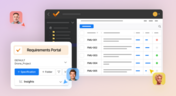
Requirements Portal Introductory Tutorials

This series of guided demos shows how the Altium Requirements Portal transforms scattered requirement spreadsheets and emails into traceable, version-controlled data that stays aligned with your PCB design efforts.

Blog
Bridging the Gap: When to Use Rigid-Flex Instead of Flex & Connector

Discover when a rigid-flex PCB is a better choice than a separate flex circuit and connector, especially for designs requiring compact packaging, repeated motion or high reliability. The article emphasizes that although rigid-flex needs more upfront planning and fabrication collaboration, it often pays off in simpler assemblies and improved performance.

Blog
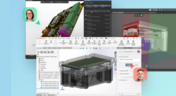
Bridging Mechanical and Electrical Teams for Smarter Automotive Design

As vehicles evolve into advanced electronic systems, the separation between electrical and mechanical design teams becomes a critical bottleneck. This article explores how synchronized ECAD–MCAD workflows help automotive projects move faster, reduce rework and maintain design integrity.

Blog
How Structural Electronics Enables 3D, Flexible, and Wearable Integration

Structural electronics integrates electronic functionality directly into the physical structure of a product, eliminating the need for traditional circuit boards. This article examines how advances in materials, additive manufacturing, and flexible substrates are enabling compact, 3D, and wearable systems with enhanced performance and design freedom.

Blog
Most Common Causes of PCB Assembly Rework and Scrap

Many PCB assemblies fail not because of exotic faults, but due to basic issues like incorrect BOM entries or footprint mismatches that force rework or scrap. This article dives into the most common causes and how to prevent costly defects in your design-to-manufacturing process.

Blog
Behind the Scenes with AI Embedded Development

Forget one-shot AI hacks Ari Mahpour shows the thoughtful, sustainable way to integrate AI into embedded firmware development. Learn the core principles (planning gate, HAL abstraction, observability, timeout design) that can help you push your efficiency 5-10 times in real hardware projects.

Blog
We're heading to PCB West 2025!

Join Altium at PCB West 2025 in Santa Clara, CA, on October 1! Stop by Booth 300 for the official launch of the new Altium platform, built on the foundation of Altium Designer and Altium 365. Be sure to check out our live demos of Altium Develop and Altium Agile.

Blog
Peak Electrical Performance in Multi-Board Designs With Advanced Simulation and Compliance Tools

Moving from single-board to multi-board systems is a leap in complexity. You must manage not just routing, but power, signal integrity, mechanical fit, and regulatory requirements across boards. In this article, you’ll discover how Altium’s advanced simulation and compliance tools help engineering teams overcome these challenges and deliver reliable multi-board solutions.

Blog
Executive Insights Into Electronic Product Development Gaps You Need To Close

Electronics hardware development is falling behind broader product development disciplines due to fragmented workflows, poor collaboration, and limited compliance visibility. This gap introduces risk, delays, and missed opportunities but executives see real business value in modernizing electronics development through better integration, traceability, and lifecycle visibility.

Blog
Sourcing For High-Mix Low-Volume Electronics Manufacturing

High-mix, low-volume (HMLV) electronics manufacturing requires agile sourcing strategies to handle shifting BOMs, erratic lead times, and component volatility. All while controlling costs and ensuring compliance. Cloud-based tools like Altium provide real-time component visibility, BOM collaboration, and supplier integrations to help navigate HMLV complexities.

Tag
Embedded thumbnail for Plane Connect - Direct in RF Design
How-To's
Plane Connect - Direct in RF Design

Designing high-frequency circuit boards requires a sharp eye toward maintaining signal integrity. Some signal connections are more prone to interruption than others. In this video, you can learn how Altium Designer's Polygon Connect Design Rule and the Thermal Relief option can help in the PCB design process.

Embedded thumbnail for Understanding and Correcting Violations
How To Work with Power Analyzer by Keysight
Understanding and Correcting Violations

When you finish the Power Analyzer by Keysight simulation process, you may find some design problems. In this video, we will learn how to understand and correct any violations that may arise on your board.

Embedded thumbnail for Routing Any Angle or Arc in RF Design
How-To's
Routing Any Angle or Arc in RF Design

High-frequency signals require special consideration when routing. Altium Designer allows you to add RF nets to a net class, then apply design rules. Learn how, as well as some other handy high-frequency routing tips, in this video.

Embedded thumbnail for Working with Power Analyzer Panel
How To Work with Power Analyzer by Keysight
Working with Power Analyzer Panel

Learn how to use the Power Analyzer software by Keysight panel. This video explains all the basic instructions and provides helpful hints for using the software effectively.

Embedded thumbnail for Which PCB Materials are used in RF Design
How-To's
Which PCB Materials are used in RF Design

High frequency signals are carried on circuit boards via transmission lines. Learn the differences between standard 50 ohm impedance microstrip lines and coplanar transmission lines in this video. We also explore the best-use cases for coplanar transmission lines, how they impact loss and interference, dielectric thicknesses, and more.

Embedded thumbnail for Configuring Autorecognition
How To Work with Power Analyzer by Keysight
Configuring Autorecognition

Before using the Power Analyzer by Keysight, it is important to configure certain parameters. In this video, we will demonstrate how to properly set up the software for auto-recognition.

Embedded thumbnail for Adding Power Nets for Simulation
How To Work with Power Analyzer by Keysight
Adding Power Nets for Simulation

One of the most important things when designing your PCB is to check and measure the quality of electrical power for your project. Power Analyzer by Keysight offers you the ability to simulate how power is distributed on your PCB. In this video, we will show you how to prepare power nets for simulation in Altium Designer.

Embedded thumbnail for How to Use Transmission Lines in RF Design
How-To's
How to Use Transmission Lines in RF Design

High frequency signals are carried on circuit boards via transmission lines. Learn the differences between standard 50 ohm impedance microstrip lines and coplanar transmission lines in this video. We also explore the best-use cases for coplanar transmission lines, how they impact loss and interference, dielectric thicknesses, and more.

Embedded thumbnail for How to Reverse Engineer a PCB from Gerber Files
How-To's
How to Reverse Engineer a PCB from Gerber Files

Have you ever done a reverse-engineering? In this video we walk you through the process how to prepare a PCB from Gerber files, using a variety of methods, including via CAMtastic in Altium Designer.

Embedded thumbnail for How to Use Power Regulator Circuits in Series and Parallel
How-To's
How to Use Power Regulator Circuits in Series and Parallel

In this tutorial video we show you two ways to get more power out of your power supply using power regulator circuits in series and in parallel.

NEW
Embedded thumbnail for Measuring in the PCB
How-To's
Measuring in the PCB

Altium Designer gives you fine grained control over how you measure object distances in the PCB. When spacing is such a critical aspect of board layout, this control is absolutely necessary. We'll show you how to utilize the measure distance command and measure selected objects, as well as how to measure tracks and faces of 3D bodies.

Embedded thumbnail for Polygon: Polygon Creation
How-To's
Polygon: Polygon Creation

Learn how to create polygon pours to ensure proper copper distribution on your board.

Embedded thumbnail for How to work with cursors in the simulation results?
How-To's
How to work with cursors in the simulation results?

Cursors are one of the most indispensable tools for modeling results. They do not require long study, are easy to use and give an instant answer to the main questions.

Embedded thumbnail for 3D view control
How-To's
3D view control

Learn how to use the 3D display mode of the PCB and learn to control the camera in this mode in this video.

Embedded thumbnail for Query Language: How to Easily Create Expressions
How-To's
Query Language: How to Easily Create Expressions

In this video the main tools which allow to simplify the process of building a query in Altium Designer will be considered. There are several such tools and each of them has its own limitations and peculiarities of use.

Embedded thumbnail for PCB Classes overview
How-To's
PCB Classes overview

Are there too many primitives on the board? Having trouble creating design rules? This video gives a brief overview of the classes of primitives that can be created on the board, as well as the possibilities for their further use.

Tag
Your search returns no results.