Welcome, Guest

Sign in to learn, create, and do more with the product you love.

News & Updates

Filters:
Tag
Blog
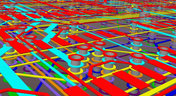
How to Maximize Copper in Your PCB Design: The Pros and Cons of Copper Pouring Versus Placing

There is a saying in copper pour PCB design, “Copper is free.” It means a PCB editor designer must think in reverse. A board starts off as solid copper, and the copper you don’t want is removed. It is faster to build, less consumptive, and less expensive to make a board that is mostly copper as compared to the same size board that is mostly bare. Picking the correct technique will make the difference between an effortless or frustrating experience.

Embedded thumbnail for Searching for Errors in Schematic
Searching for Errors in Schematic

Searching for Errors: Errors and mistakes happen to everyone - from beginners to professionals. So we always preach how it is paramount for your design to be validated before pushing it to the PCB. But luckily it’s pretty easy to find and analyze any errors using Altium Designer. We’ll take a look at how to find and analyze errors in your schematic.

Embedded thumbnail for Creating Net Classes
Juni 2, 2020
Creating Net Classes

A Net Class is a collection of nets that can be used for creating a targeted design rule. So for example, you may want all power and ground nets to have a minimum track width to handle a specific current rating. So we’ll show you how to assign these nets to a NetClass. 

Article preview
Blog Mai 14, 2020
How to Highlight Nets in Altium Designer to Simplify Schematic and PCB Designs

Highlighting nets will help you simplify your schematic and PCB design. In Altium , there are multiple options that enable you to leverage this capability to simplify the verification of connections and circuit paths and make sure that the design you send to your manufacturer accurately reflects the printed circuit board you need built.

Embedded thumbnail for How to Transfer Libraries to Concord Pro
New in Altium Designer 20 Mai 6, 2020
How to Transfer Libraries to Concord Pro

This video demonstrates how the Library Migrator can quickly move database and integrated libraries to the Concord Pro workspace. Your design can be organized and verified in the Library Migrator before pushing it to the cloud. After migration, the Messages panel will display any missing information.

Routed tracks
Blog Mai 5, 2020
Helpful Tips for Interactive Routing in Altium Designer

Before you jump into the software, you should know the types of things you’re going to want to look out for. Traces, connection lines, differential pair routing, and route paths can all affect the routing process of your board. Make sure that you’re equipped knowing, ultimately, what you want your board design to accomplish and furthermore, where you anticipate potential problem areas to be.

Embedded thumbnail for Improved Impedance Calculator
New in Altium Designer 20 Apr. 29, 2020
Improved Impedance Calculator

The impedance calculator in the Layer Stack Manager now supports single and differential coplanar structures. This video shows how the impedance calculator has been improved with new coplanar transmission line structures, greater control over the dimensional properties of the physical structure, and modeling of Conductor Surface Roughness using Surface Roughness and Roughness Factor values. 

Embedded thumbnail for Propagation Delay Support
New in Altium Designer 20 Apr. 27, 2020
Propagation Delay Support

In Altium Designer 20.0, you can now selectively monitor propagation delay along the whole connection or selected objects, such as tracks, pads, and vias.

Embedded thumbnail for New Routing Capabilities
New in Altium Designer 20 Apr. 23, 2020
New Routing Capabilities

Advanced routing capabilities help you complete the most basic, as well as the most difficult, routing challenges. In Altium Designer 20.0, we’ve added intelligent control over pad entries that are capable of working with any combination of pad geometry as well as a new any angle routing mode that allows you to make beautiful traces that smoothly contours around obstacles.

Blog Apr. 22, 2020
Any Angle Routing: When Should You Use It?

EDA tools have come a long way since the advent of personal computing. Now advanced routing features like auto-routers, interactive routing, length tuning, and pin-swapping are helping designers stay productive, especially as device and trace densities increase. Read full article in our blog:

Embedded thumbnail for New Length Tuning Engine
New in Altium Designer 20 Apr. 21, 2020
New Length Tuning Engine

The tuning engine in Altium Designer has been redesigned and is now better than ever. Tuning sections can be picked up and moved to new locations on the track. What is truly remarkable is that the tunings are completely dynamic and change shape and fill patterns depending on the boundaries and surroundings.

Embedded thumbnail for How to Assign Names to Polygons
Working with Polygons Apr. 3, 2020
How to Assign Names to Polygons

For some polygons, it is not always reasonable to use an automatically generated name so a custom name is needed. With a proper polygon name, you can quickly find the desired polygon in a list and correctly set the pour priority in relation to other polygons. By using unique names, you can create design rules that apply only to specified polygons.

Blog März 20, 2020
A Message from Altium on COVID-19

We understand that many of you, like ourselves, have transitioned to working remotely. This process comes with its challenges and we would like to offer all and any help we can to minimize disruptions for your teams and business.

Embedded thumbnail for How to Use View Mode in Altium Designer Without a License
How-To's März 16, 2020
How to Use View Mode in Altium Designer Without a License

In Altium Designer 20.0, you can use Altium Designer in Viewer mode when signed into your AltiumLive account and no active license is being used. The Altium Designer Viewer license can be used by anyone with an AltiumLive account and no other licenses or subscription is needed. The license can be activated from the License Management page. 

Blog März 2, 2020
About Altium Designer Home Page

With the new Altium Designer Home page, we are aiming to help users stay up to date with the latest features and productivity tricks available in Altium Designer. Learn more about the Home page in this documentation article.

Tag
Blog
Add USB Type-C Power Delivery to Your Designs!

We want to invite you to explore the fundamentals of USB Type-C Power Delivery which is now the most popular energy transmission in current times. We will show you how to easily incorporate a dedicated PD IC into your own designs. 

Blog
Design Phase – Lid Assembly Mechanics Part 1

It is time to delve deep into the mechanical design of our Open Source Laptop project. In this article we give you an update about the first part of fitting elements into the system. You will learn more about laptop lid, webcam integration, light sensor and microphones which will be used in this project.

Blog
How to Design for Test in Embedded Systems

Whether you're designing a high-speed PCB, or a complex embedded system, it will need some level of testing. In this article, we will show you some simple tricks that can make testing and debugging a prototype much easier. 

Blog
Crosstalk Basics in PCB Design

Crosstalk is one of the most common issues related to electronics. Learn the basics of this phenomenon in PCB design, and gain knowledge on how to avoid it in your projects.

Blog
Access to your Training Certificates on My Altium

Introduce an update on the My Altium user page that highlights your certificates and tracks your training progress, with one-click access to the Training Dashboard and Training Catalog pages. Easily view and share your certificates, keep an eye on your learning journey, and explore a variety of training resources.

Blog
Rigid-Flex PCBs: Advantages and Challenges

In this article, we will begin with a basic explanation of how rigid-flex technology differs from rigid board technology. We will then provide an overview of the advantages and conclude with a discussion of the challenges to be aware of.

Intrusive Soldering
Blog
When Should You Use Intrusive Soldering?

Through-hole components are frequently employed in power electronics, particularly when dealing with AC power from a wall outlet. In this article, you can delve into the intrusive soldering process and discover when it can be applied in PCB design.

Blog
What Makes a PCB Enclosure Rugged?

Whether you purchase products off-the-shelf or online, they all come housed within an enclosure. In some cases, these enclosures are intentionally ruggedized to withstand harsh environments or mechanical shocks. You can learn more about enclosures in this new and interesting article.

Blog
Concept Phase – Lid Assembly Design Part 2

We are continuing our journey through the lid assembly design phase of our Open Source Laptop project. In this section, we will discuss the layout of the test adapter and provide a demonstration of the first test for the display panel, along with the initial steps involved in assembling the boards.

Blog
Concept Phase – Lid Assembly Design Part 1

In the exciting next phase of the open-source laptop project we're (finally) diving into design, and getting hands-on with the display panel. Discover how we're selecting the right panel, integrating it seamlessly, and creating a custom DisplayPort adapter to illuminate the screen. Plus, learn how our choices impact features like microphones, webcams, and touch sensors, and how Altium can help bring it all to life. It’s not too late to join as we continue on this innovative journey!

Blog
Unleashing the Power of Concurrent PCB Design

Concurrent PCB Design is essential to unlocking the full potential of engineering teams and delivering innovative products that meet the demands of the modern world. Learn more about the main capabilities and the numerous benefits of this upcoming feature in Altium Designer.

Blog
Crosstalk Reduction and Elimination Techniques in Altium Designer

Whether you're designing a digital board with a ton of traces, or an RF board operating at very high frequencies, any electronic device with propagating signals will experience crosstalk. Learn more about some sure-fire ways you can reduce crosstalk in your high-speed designs.

Blog
Baxandall Volume Control for Audio

The Baxandall volume control is an especially useful, flexible, and simple-to-implement circuit for numerous audio designs. In this article, we will demonstrate how to design this type of equipment.

Tag
Embedded thumbnail for Impedance Calculations: Differential Pairs
Impedance calculation
Impedance Calculations: Differential Pairs

Altium designer makes it easy to calculate geometry when you need to calculate impedance for differential pairs. We’ll go over how differential pairs can help with a two layer and multi layer board, as well as what types you can create such as differential co-planar, and how to configure them for your specific design.

Embedded thumbnail for Creating and using templates
How to Work with Draftsman
Creating and using templates

Draftsman Templates are a quick way of laying out your Draftsman Document in Altium Designer. We’ll show you how to utilize them and the differences between sheet and document templates.

Embedded thumbnail for Adding 3D Assemblies to a Multi-Board Project
How to work with Multiboard
Adding 3D Assemblies to a Multi-Board Project

The next step in the multiboard design process is adding 3D PCB Assemblies. We’ll show you how to add them to your design and how to work with the Assembly Editor.

Embedded thumbnail for Altium 365 - Design Collaboration | Tasks
Getting Started with A365
Altium 365 - Design Collaboration | Tasks

The Tasks feature brings lightweight task tracking to further enhance design collaboration in Altium 365. With Tasks, you will never lose an important action item and easily gain a high-level view of the state of your project, all without leaving your design environment. 

Embedded thumbnail for Adding Additional Views in a Draftsman Document
How to Work with Draftsman
Adding Additional Views in a Draftsman Document

If you need additional views in your documentation, Altium Designer’s Draftsman Document editor can help. We’ll show you how to add and configure different views including the component view, the section view, the detail view, the isometric view, variants, the legend for the layer stack, the board region view, and the board realistic view.

Embedded thumbnail for Draftsman Document Views - Fabrication and Drill Drawings
How to Work with Draftsman
Draftsman Document Views - Fabrication and Drill Drawings

The Draftsman Document Editor allows you to add a fabrication view and a drill drawing view to your outjob files. We’ll show you how to get them set up and details you can control from the properties panel.

Embedded thumbnail for Altium 365 - Version Control | Project History
Getting Started with A365
Altium 365 - Version Control | Project History

Project History in a Nutshell: - Presents events in a chronological timeline (Creation, Commits, Releases, Clones, and MCAD Exchanges) - Auto-generates Differences Summary to view the differing entities (e.g., replaced components) - Even a non-expert can act on a revision (Download, View, Revert)

Embedded thumbnail for Resolving Conflicts in Multi-board Schematics
How to work with Multiboard
Resolving Conflicts in Multi-board Schematics

When mismatched pin names in your multi-board schematic cause disconnects and conflicts you can use Altium Designer’s tools to resolve these conflicts. We’ll show you the Connection Manager and the various solutions to solve your connection issues.

Embedded thumbnail for Draftsman Document Board Assembly View
How to Work with Draftsman
Draftsman Document Board Assembly View

The Draftsman Document can include a Board Assembly View. We’ll show you how to add it and the properties you can change to create the exact view or views you need.

Embedded thumbnail for Placing Connections Between Boards
How to work with Multiboard
Placing Connections Between Boards

A multi-board design requires relationships between several board designs referred to as interboard connections. We’ll show you the different types of connections and how to connect your boards using the proper connection type.

Embedded thumbnail for Show the Net Connections Between Select Components
How-To's
Show the Net Connections Between Select Components

This video demonstrates how to show net-specific component connections. This is helpful when routing as you’re able to reduce clutter and focus on the connections on which you are working.

Embedded thumbnail for Draftsman Editor Settings
How to Work with Draftsman
Draftsman Editor Settings

In this video we’ll go over the Draftsman editor settings and properties so you know how to set up the editor to be exactly what you need.

Embedded thumbnail for Assuring Your Board Is Large Enough to House All Components
How-To's
Assuring Your Board Is Large Enough to House All Components

This video covers how to make sure your board is big enough to house all your components.

Embedded thumbnail for How to Create an Interactive PDF of a Schematic Diagram
How-To's
How to Create an Interactive PDF of a Schematic Diagram

This video shows how to create an interactive PDF using the Smart PDF Wizard.

Embedded thumbnail for What is the Draftsman Document?
How to Work with Draftsman
What is the Draftsman Document?

Once your PCB layout is finished it’s time for review. This is where the Draftsman Document and Altium Designer’s Draftsman Editor comes in.

Embedded thumbnail for Adding Project Modules to a Multi-board Schematic
How to work with Multiboard
Adding Project Modules to a Multi-board Schematic

If you’re using multiple PCBs in your Multi-board design, Altium Designer allows you to add existing projects directly to your schematic with modules. We’ll show you how to quickly and efficiently add these projects to your Multi-board design.

Tag
Your search returns no results.