Welcome, Guest

Sign in to learn, create, and do more with the product you love.

News & Updates

Filters:
Tag
NEW
Blog
BOM Cost Optimization During Schematic Capture

Engineering and sourcing teams work best when BOM decisions happen with live market data in view. This article explains how integrated cost and availability insights help teams collaborate earlier and avoid redesigns driven by supply chain issues.

NEW
Embedded thumbnail for Coming Soon: Design Rule Sets
New in Altium's Software
Coming Soon: Design Rule Sets

Soon, PCB design rules in Altium will be organized into reusable Rule Sets within the PCB Rules and Constraints Editor. These rule sets can be created, duplicated, enabled or disabled, renamed, deleted, imported, and exported, making it easier to manage rules for specific interfaces, manufacturing requirements, or unique design constraints.

NEW
Embedded thumbnail for Decoupling Capacitor Routing: When to Use Vias vs Traces
How-To's
Decoupling Capacitor Routing: When to Use Vias vs Traces

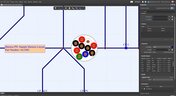
Check out this video, a follow-up to the decoupling capacitor placement series, exploring the inductance tradeoffs between trace routing and via connections. Using real component examples from an Ethernet switch design in Altium, the video demonstrates how different routing choices can impact overall performance.

Embedded thumbnail for Coming Soon: Interactive Dynamic Phase Tuning
New in Altium's Software
Coming Soon: Interactive Dynamic Phase Tuning

The Interactive Length Tuning tool allows you to manually tune a single net in a differential pair while maintaining equal pair length and phase alignment across the entire route. This enables more efficient differential signal transmission, greater control during manual tuning, and faster pattern creation within defined phase tolerance limits.

Blog
How to Use a Multicad Viewer for Seamless Collaboration

Because ECAD formats are typically incompatible, teams often struggle with versioning, conversions, and fragmented review processes. This article breaks down how multi-CAD viewers provide a unified, read-only environment that supports structured design reviews, comments, and task assignment across disciplines.

Embedded thumbnail for AI PCB Layout vs. Human Design: The Honest Truth
How-To's
AI PCB Layout vs. Human Design: The Honest Truth

The question is: Can AI really route a PCB as well as an experienced human designer? In this video, we set out to find the answer. Our expert, Zach Peterson, puts it to the test in a side-by-side layout review. The challenge is based on a LinkedIn post where viewers had to guess which board was AI-generated and which was designed by a human.

Embedded thumbnail for Improve Your 3D Wire Bonding Workflow
New in Altium's Software
Improve Your 3D Wire Bonding Workflow

Check out the video where we showcase enhanced wire bonding features, including precise bond wire shape definition, improved clearance checking, streamlined import and export workflows, and efficient management of wire bonding objects.

Blog
Rigid-Flex PCBs in Consumer Electronics

Rigid-flex PCBs help modern devices get smaller, lighter, and more compact by eliminating connectors and fitting into tight 3D spaces. This article explains how to design them properly to avoid common reliability issues.

Blog
From Design to First Assembly: Complete Your BOM & Plan Your Build

This webinar walks through the complete post-release workflow, from generating a managed BOM to sourcing components and assembling the first prototype. It demonstrates how integrated tools streamline data enrichment, supplier selection, and guided assembly to reduce delays and errors.

Blog
The Future of BOM Management: Trends and Innovations

BOM management is no longer just a checklist. It’s becoming a real-time engine for smarter decisions! Discover how AI, automation, and connected systems are transforming BOMs into powerful tools for navigating supply chain uncertainty.

Embedded thumbnail for Customize Your ODB++ Output for Each Partner
New in Altium's Software
Customize Your ODB++ Output for Each Partner

You can now precisely control what design data is included in your ODB++ outputs for different manufacturing recipients. Choose which signal layers to export, decide how the netlist is handled (included, disabled, or neutralized), and control whether component data is removed or shared without properties.

Embedded thumbnail for Proper Voltage Built a Universal Battery Platform with Altium
Altium Stories
Proper Voltage Built a Universal Battery Platform with Altium

Watch our latest customer success story to see how Proper Voltage partnered with Altium to accelerate high-power battery development for next-generation robotics. With our software, they streamlined collaboration, sped up design reviews, improved sourcing visibility, and reduced risk.

Embedded thumbnail for Improve Readability with Custom Pin Spacing
New in Altium's Software
Improve Readability with Custom Pin Spacing

You can now control the vertical spacing of a pin’s designator and name with a custom margin. This setting can be applied globally via Schematic Preferences or adjusted individually in the Pin properties.

Tag
Migrating Data From Other Version Control Systems
Blog
Migrating Data From Other Version Control Systems

The development of electronic devices always involves the release of many different types of files. And these files are not static - they change as the project progresses. When filling a project with data, a user creates new files, modifies outdated files that have become irrelevant. Managing project data is a separate task, especially for large developments where several participants with different specializations are involved in the process.

Properties Panel Tuning
Blog
Properties Panel Tuning

High-speed PCBs often require tuning groups of tracks, both single and differential. Altium Designer includes powerful tools that allow you to solve such tasks quickly and with high quality. Study this document and achieve the desired result even faster.

Reflectionless Matching vs. Conjugate Matching: An Apparent Contradiction
Blog
Reflectionless Matching vs. Conjugate Matching: An Apparent Contradiction

There is one confusion related to impedance matching that comes up again and again, and it appears to be a fundamental confusion between reflection and power delivery. This leads to an apparent contradiction that arises when we try to generalize power delivery to wave reflection, despite the fact that the two were not meant to be related.

Properties Panel Routing
Blog
Properties Panel Routing

Routing is one of the most time-consuming stages of PCB design. Altium Designer has a large set of tools that allow you to do it as accurately and quickly as possible. This document will help you to learn how to manage your routing effectively and use it to its fullest extent.

Quarter-Wave Transformer Design For Real and Reactive Loads
Blog
Quarter-Wave Transformer Design For Real and Reactive Loads

RF systems operate with specific impedance values across entire interconnects, including on PCBs. Not all RF components are packaged in integrated circuits with defined impedances, so impedance matching circuits and line sections are needed to ensure signal transmission between different sections of an interconnect. One of these impedance matching techniques is the quarter-wave impedance transformer, which can be implemented as a printed trace with specific impedance.

Schematic
Blog
Altium Designer 22.10 Update

We are happy to announce that the Altium Designer 22.10 update is now available. Altium Designer 22.10 continues to focus on improving the user experience, as well as performance and stability of the software, based on feedback from our users. Check out the key new features in the What's New section on the left side of this window!

Component Warpage Causes in a PCB
Blog
Component Warpage Causes in a PCB

A staff member at a PCB manufacturer once explained to me that they thought we were having an issue with a package warping. Unfortunately, component warping can occur both in a PCB and in components. In this article, we'll give an overview of warpage in a PCB, specifically in the circuit board and in the components.

Link Budget Calculator
Blog
RF Signal Chain and Link Budget Basics

If you're designing a wireless IoT device, and you know how to calculate the link budget, you can reasonably estimate whether your signal will reach its destination and be read by the receiver. To calculate the link budget, the designer needs to know something about all other sources of gain and loss in the system. Once link budget is determined, the designer can judge whether some modification is needed in their RF signal chain. 

How to Calculate SMD Pad Sizes?
Blog
Best Methods for Calculating SMD Pad Size in PCB Design

SMD components require precisely sized pads for soldering during assembly. The designer is responsible for ensuring pad sizes are correct, either by calculating them and comparing with footprint data, looking through datasheets, or by memorizing SMD pad size standards. If you have a component and you don't have access to the footprint, and you decide to biuld the footprint yourself, what resources are available to ensure you have the correct pad size?

Can You Fix a Warped PCB?
Blog
Can You Fix a Warped PCB?

Before we get too deep into this article, I’ll give you the simple answer. You probably can’t fix warping in your PCB after it’s already been fabricated. You can prevent an unwarped board from becoming warped during assembly, but only as long as materials were selected properly and the board is put into reflow correctly. We’ll run over some of these points in this article, and I’ll examine some points that might help you recover a warped board.

What is an Eye Diagram?
Blog
What is an Eye Diagram?

The eye diagram is a useful measurement or simulation as part of channel compliance. The measurement shows many different factors that can affect signal behavior simultaneously, ultimately allowing for qualification of errors and losses in a channel. In this article, I’ll run over some of the fundamental measurements that you could manually extract from an eye diagram and how they reveal some strategies for improving channel designs.

Skills for Today's PCB Designers
Blog
What Skills Are Needed to be a PCB Layout Designer?

To readers who have been working in the PCB industry for most of your career, you have probably seen a very diverse group of professionals with varied skill sets and backgrounds. Designers might get started as engineers or as technicians, and some designers learn how to create beautiful PCB layouts in university. No matter how you got into PCB design, there are some important skills to know that will take you a long way towards advancing your career.

How to Fix the Top PCB Design Mistakes
Blog
Beginner PCB Design Mistakes and How To Avoid Them

When starting out with PCB design, it’s common to treat the process as simply ‘connecting the dots’: as long as connections are made, it’s not particularly important how these connections are made. Having reviewed quite a number of PCBs of other PCB design engineers over the last few years, there are common, unfortunately erroneous, occurrences between a lot of them. This article aims to illustrate the top five beginner PCB design mistakes and what we can do to avoid making them. Let’s get started!

Top 5 Questions Regarding Stack Up
Blog
SAP (Semi-Additive PCB Process) – Top 5 Questions Regarding Stack Up

As the PCB design community embraces the benefits of this new printed circuit board fabrication technique, there are of course many questions to be answered.  Today’s blog will address some of the most commonly asked questions related to circuit layer stack up as people are introduced to this new technology.

Design Reuse Blocks Update
Blog
Altium Designer 22.9 Update

We are happy to announce that the Altium Designer 22.9 update is now available. Altium Designer 22.9 continues to focus on improving the user experience, as well as performance and stability of the software, based on feedback from our users. Check out the key new features in the What's New section on the left side of this window!

Dual Rail Voltage Supply
Blog
Dual Rail Voltage Supply

The highest performing operational amplifiers often need a split supply with positive and negative voltages connected to the op amps supply rails. In this project, we’re going to be building a positive/negative dual rail power supply for a differential oscilloscope probe I’m designing. I’m making the power supply a separate project, as a dual rail supply is quite useful to have, and I’m sure I’ll find multiple uses for it in the future.

Tag
Embedded thumbnail for Checking for Creepage in High Voltage Designs
How-To's
Checking for Creepage in High Voltage Designs

High voltage devices have leakage currents that propage over the surface of the board. In such devices, it's important to consider not only the standard gap between the two topological elements, but also the shortest possible path between them, taking into account cut-outs and holes. With Altium Designer 20, you can check for creepage using the new creepage distance rule.

Embedded thumbnail for Creating BGA Footprints with the Footprint Wizard
How to create a PCB Footprint
Creating BGA Footprints with the Footprint Wizard

Altium Designer makes it easy to create a BGA footprint using our IPC compliant footprint wizard. We'll show you how easily you can create and modify a BGA footprint using the footprint wizard.

Embedded thumbnail for How to Remove Unused Pad Shapes
How-To's
How to Remove Unused Pad Shapes

Unused pad shapes can cause distortion among other problems so it is best to exclude them from your designs. This video shows how to remove unused pad shapes.

Embedded thumbnail for Stackup Presets and Templates
How to work with Layer Stack Manager
Stackup Presets and Templates

In this video, we will learn how to apply predefined layer stacks to the board, as well as how to save the layer stack file as a template.

Embedded thumbnail for Creating a PCB Footprint Assembly Drawing
How to create a PCB Footprint
Creating a PCB Footprint Assembly Drawing

If you need to create an assembly drawing of your PCB Footprint for your outjob files we can show you how in Altium Designer. We’ll walk through all the different options for your assembly drawing in your Draftsman document, how to create your assembly drawing and assign it designators.

Embedded thumbnail for Using the ActiveBOM
How-To's
Using the ActiveBOM

Using the ActiveBOM: The Bill of Materials (BOM) contains a list of all the components with their designators, part numbers, values, and other parameters. An ActiveBOM manages the mapping from the design component (part) to the part that is purchased. This video describes how to use the ActiveBOM document to create an up-to-date list of components needed for your project.

Embedded thumbnail for Using Back Drills in your Stackup
How to work with Layer Stack Manager
Using Back Drills in your Stackup

In this video, we will learn about Back Drilling technology, how to set up back drilling using the layer stack manager, and how to set up the Stub Length sizes for back drilling by specifying applicable nets using the Design Rules Editor.

Embedded thumbnail for How to Customize The Properties Panel
How-To's
How to Customize The Properties Panel

How to Customize The Properties Panel: This video will go over how to customize the look and feel of the properties panel in Altium Designer. By being able to personalize your workspace you can greatly improve your efficiency

Embedded thumbnail for How to Create and Use Impedance Profiles
How to work with Layer Stack Manager
How to Create and Use Impedance Profiles

Using the Altium Designer Layer Stack Manager, we will show how to create impedance profiles for transmission lines and how to apply them to the circuit board using the PCB Rules and Constraints Editor.

Embedded thumbnail for Creating a PCB Footprint Courtyard
How to create a PCB Footprint
Creating a PCB Footprint Courtyard

The courtyard is an essential piece when you want to create a PCB Footprint in Altium Designer. We’ll talk about what a courtyard is, how to create a courtyard, and how to format a courtyard correctly for your PCB footprint.

Embedded thumbnail for How to Edit Existing Tracks in Altium Designer
How-To's
How to Edit Existing Tracks in Altium Designer

This new design rule flags a violation when the creepage distance across non-conductive surface and edge regions of the board, between the targeted signals, is equal to or less than the specified Creepage distance.

Embedded thumbnail for Creating a PCB Footprint Silkscreen Overlay
How to create a PCB Footprint
Creating a PCB Footprint Silkscreen Overlay

When creating a PCB footprint in Altium Designer creating a silkscreen overlay is an important requirement. We’ll go over the standards for creating a silkscreen overlay for a footprint and the steps to creating one, such as constructing lines and measuring distance of objects and primitives.

Tuning
What's New in 22.7
更改调节对象层属性功能

本次发布后,即可更加轻松地进行高速PCB设计。现在,当您需要将调节元件快速移动到其他层时,仅需单击一次即可从Properties面板中执行此操作。

Tuning
What's New in 22.7
Ability to Change Tuning Object Layer Properties

Design of high-speed PCBs becomes easier with this latest release. Now, when you need to quickly move tuning elements to a different layer, you can do so from the Properties panel with a single click.

Simulation models
What's New in 22.7
自动分配不含模型的元件仿真模型

最新版Altium Designer将确保您能够更加轻松地进行原理图仿真。系统智能自动识别 SPICE 模型并将其分配给可用来源的元件。

Simulation models
What's New in 22.7
Auto-assign Simulation Models for Components without Models

This latest version of Altium Designer makes schematic simulation even easier. System intelligence automatically recognizes SPICE models and assigns them to components from available sources.

Tag
Integrating Requirements June 2025 Webinar
On-Demand Webinar Mai 28, 2025
Integrating Requirements into Your PCB Design Workflow
Join our webinar where you will learn about integrated requirements tools who can help you eliminate late-stage design changes, AI support through system requirements and integration of design requirements directly in PCB Design. Don't miss it, register now!
Streamlining Team Collaboration
On-Demand Webinar Apr. 17, 2025
Streamlining Team Collaboration in Industrial PCB Projects
Join us for our upcoming webinar to discover how Altium Designer and Altium 365 can transform your team’s collaboration and take your PCB design projects to the next level. Attend for a chance to win free access to the Altium 365 Training Bundle.
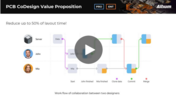
PCB CoDesign Webinar
On-Demand Webinar Jan. 24, 2024
Discover How Altium Designer 24 Revolutionizes Team Dynamics in PCB Design
Expand your collaboration skills and stay ahead of the curve with PCB CoDesign. Design teams often grapple with prolonged design cycles and coordination issues, leading to delays and inefficiencies. In the current landscape, design processes are hindered by fragmented collaboration, resulting in increased layout times and difficulties in synchronizing design updates.